
This Karachi photo essay brings together 125 photographs of the city: its working hands, expressive streets, food stalls, layered buildings, harbour boats, and open shoreline. Each frame has its own short story. Together, they form a visual journey through the details that give Karachi its character. कराची
Curated by Zeeshan · Karachi, Pakistan
Photos 001–025 · Photos 026–050 · Photos 051–075 · Photos 076–100 · Photos 101–125
Karachi – The City at Eye Level
001 · Hands That Shape the City – Kimari
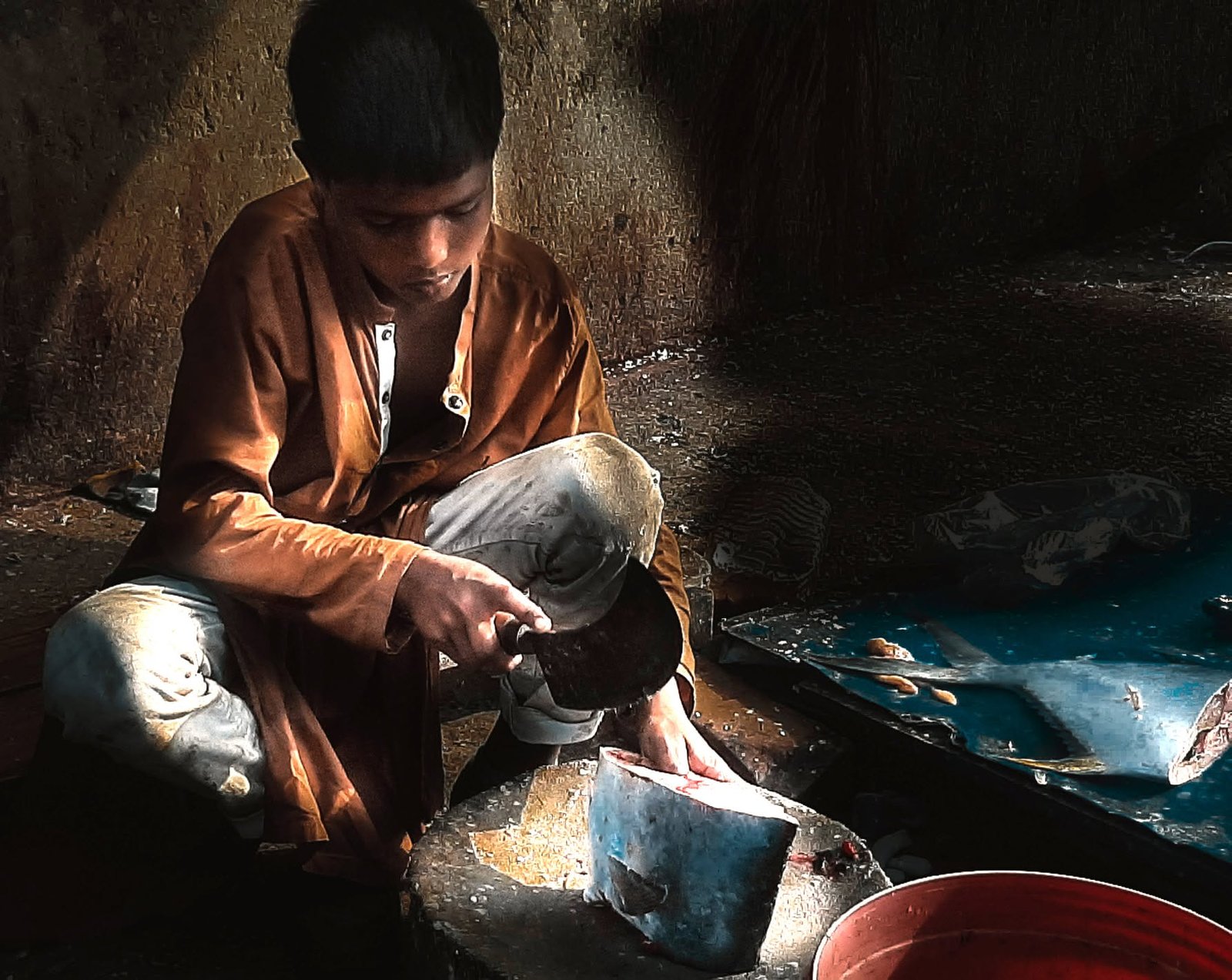
Light falls across a small workspace, bringing the hands and their careful movement into focus. Karachi is often pictured through its skyline, yet its character is also shaped here, in the patient work that happens beyond the main roads. This quiet frame gives that labour room to be seen.
002 · Above the Shopfronts – Burns Road
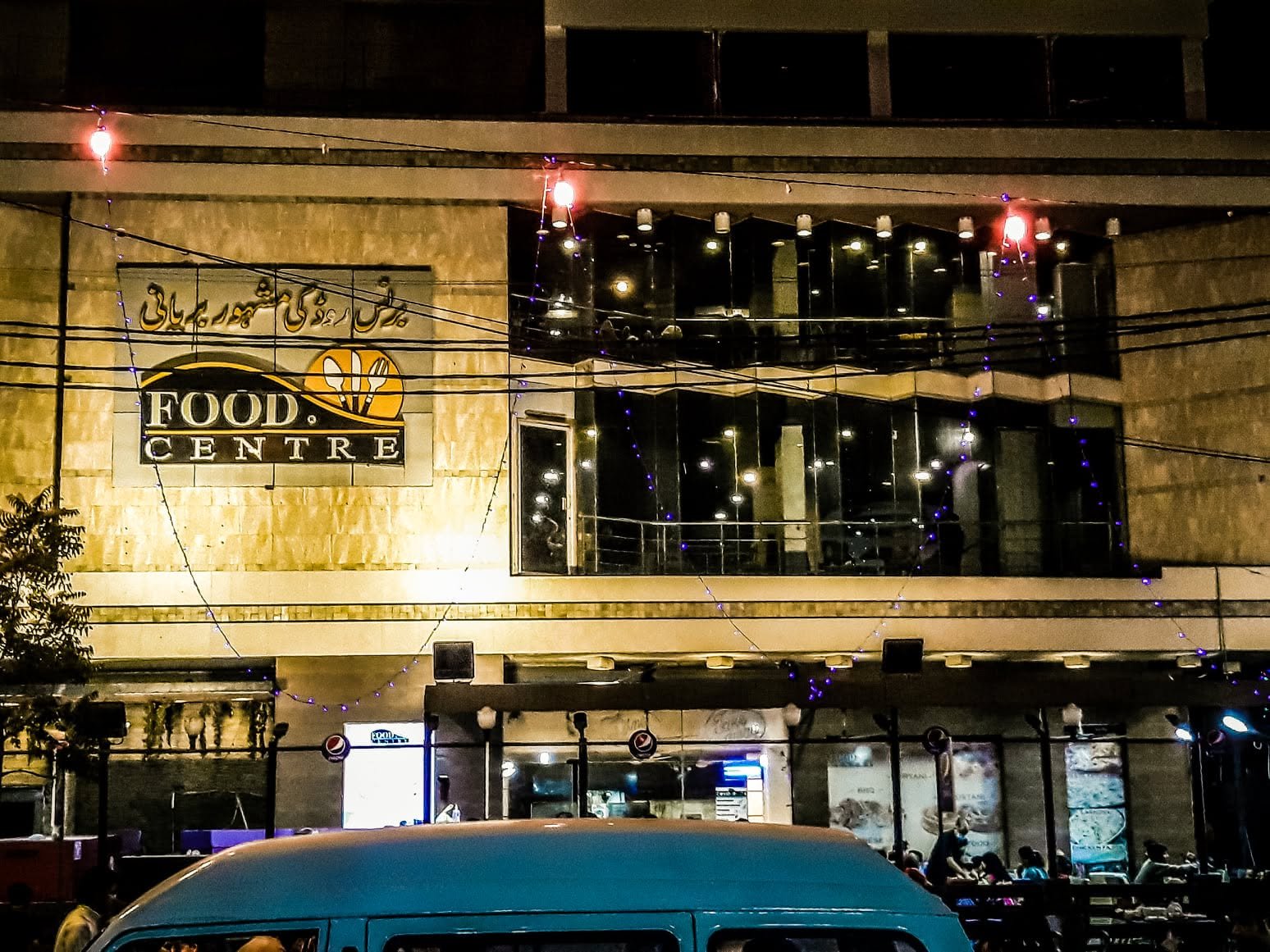
The shop signs belong to the present; the building above them seems to carry a much longer conversation. Windows, ledges, and layers of use give this Karachi street its texture. Looking upward reveals a second city, one that shares the pavement’s energy without needing to move.
003 · Lines Against the Blue – PSO House, Clifton, Karachi
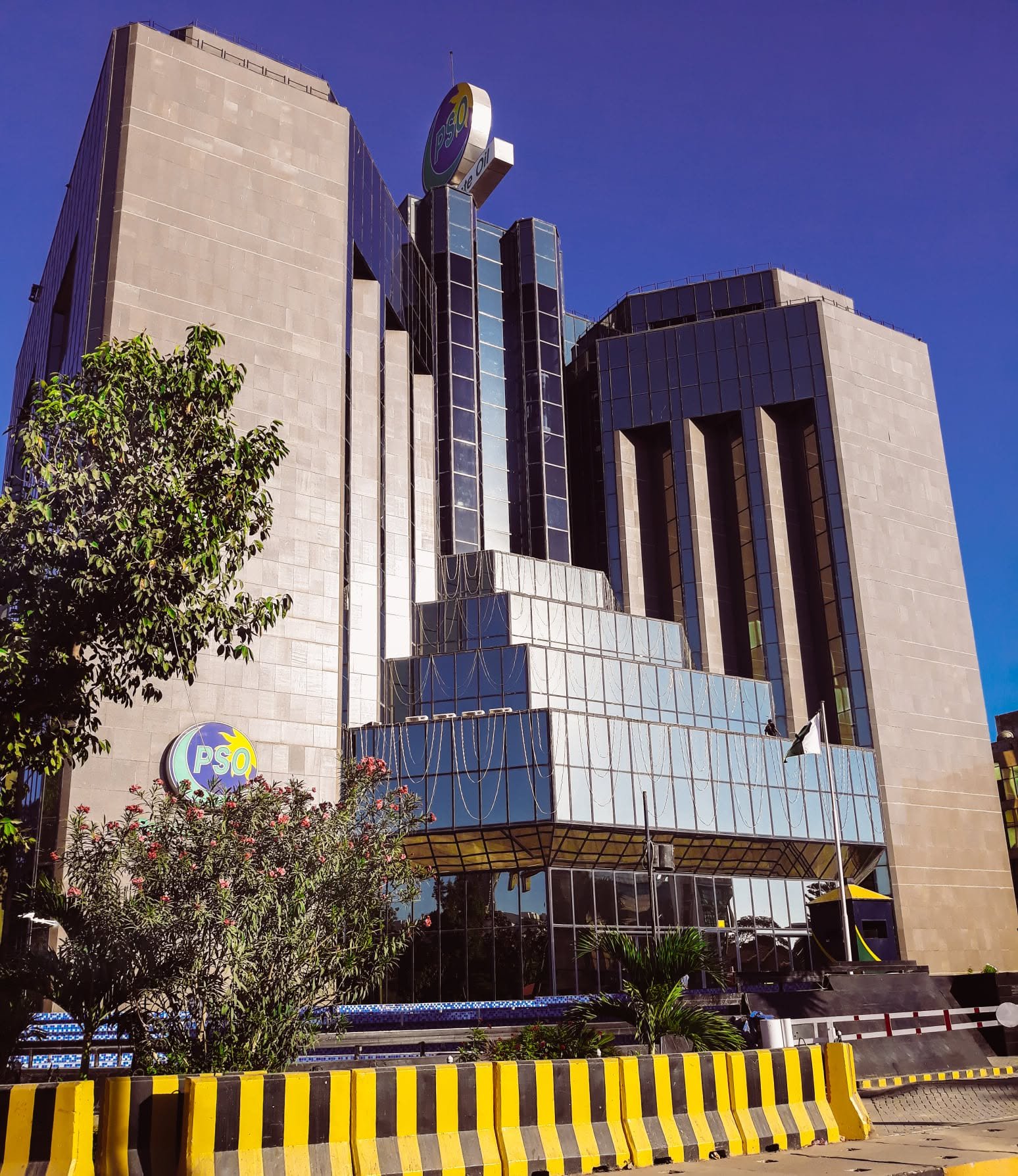
A change of angle turns a tower into a study of edges and sky. Its pale surfaces and deep shadows show another side of Karachi’s architectural personality. Between the building’s solid lines and the open blue above, the photograph finds a moment of unexpected calm.
004 · A Stall Full of Possibilities – Saddar Karachi
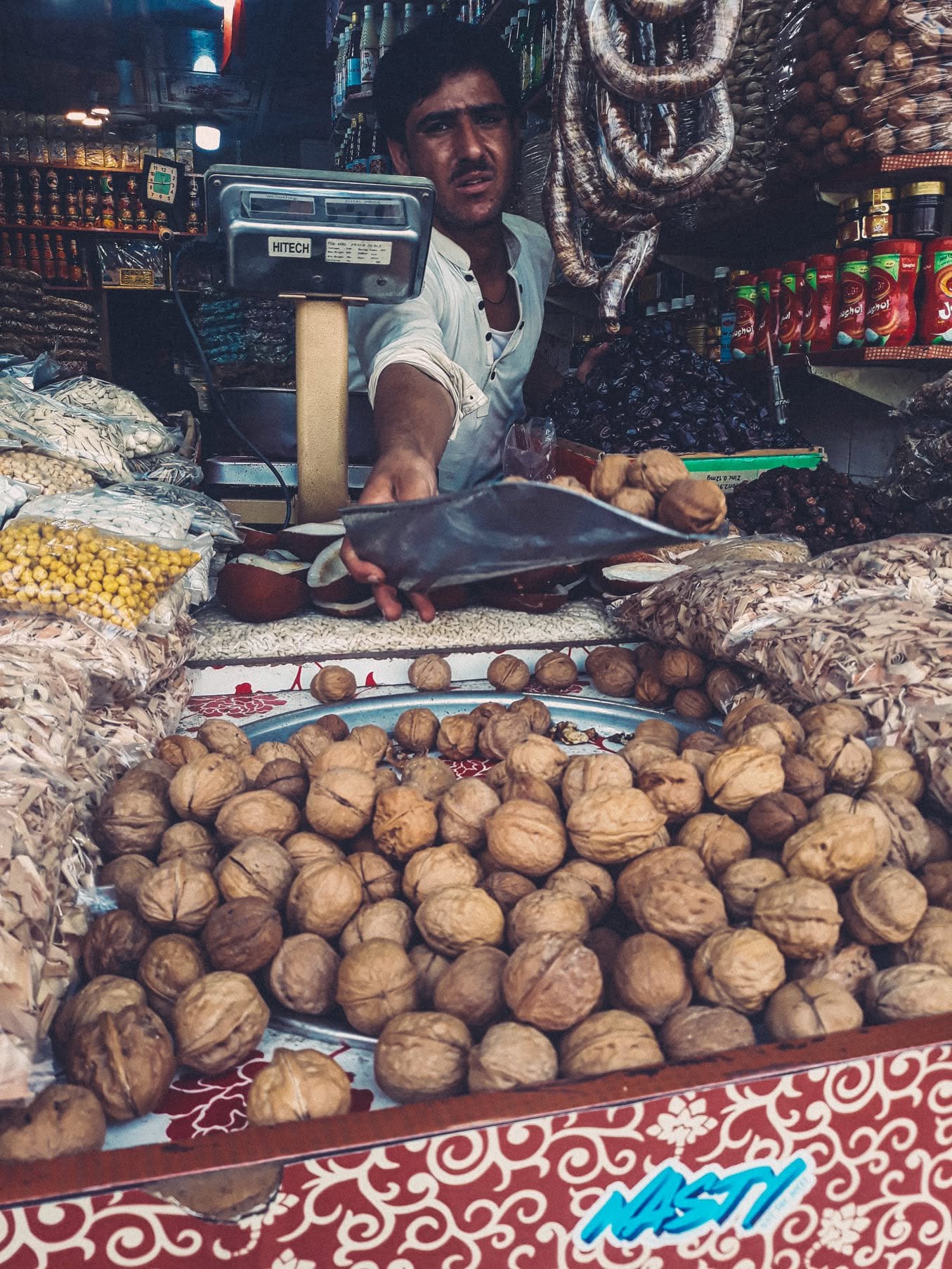
There is no single centre to this market scene: the eye travels from one small detail to the next. Goods gather in dense layers, each waiting for someone to stop and look. It is a portrait of Karachi through accumulation, where abundance becomes its own kind of visual language.
005 · Life Beneath the Flyover – Shahra-e-Faisal, Lucky Star कराची
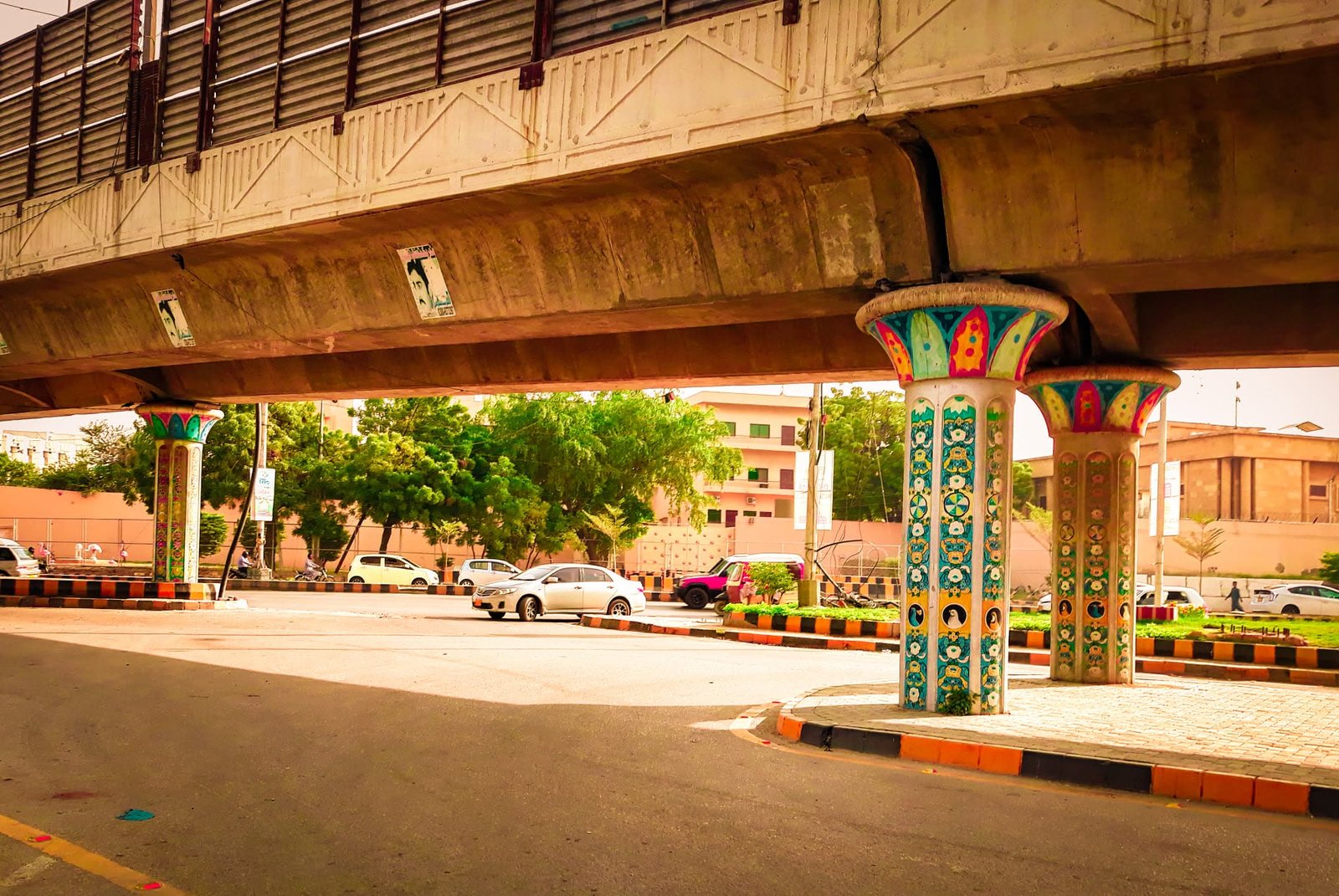
A flyover can look like a boundary from a distance, but underneath it the city keeps unfolding. Light slips between concrete supports and settles on the road below. This photograph follows Karachi at ground level, where even the spaces between major routes have a rhythm of their own.
006 · A Moving Canvas
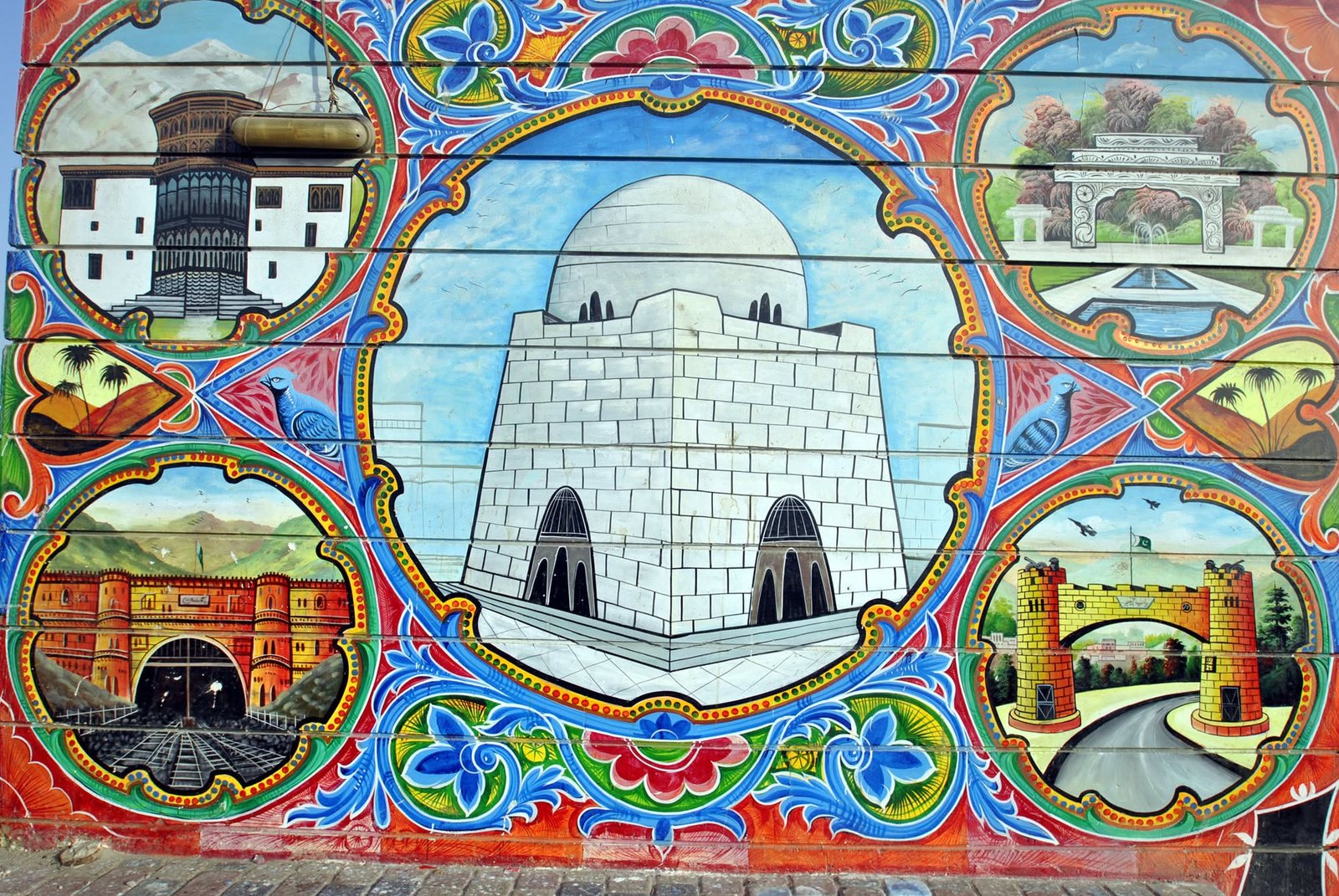
Painted borders, vivid colours, and a central scene turn a vehicle’s surface into a travelling picture. The ornament asks for more than a passing glance. In this Karachi photo essay, truck art becomes a reminder that useful things can also carry imagination, pride, and painstaking detail.
007 · A Pocket of Green – Nursery, PECHS Block 6
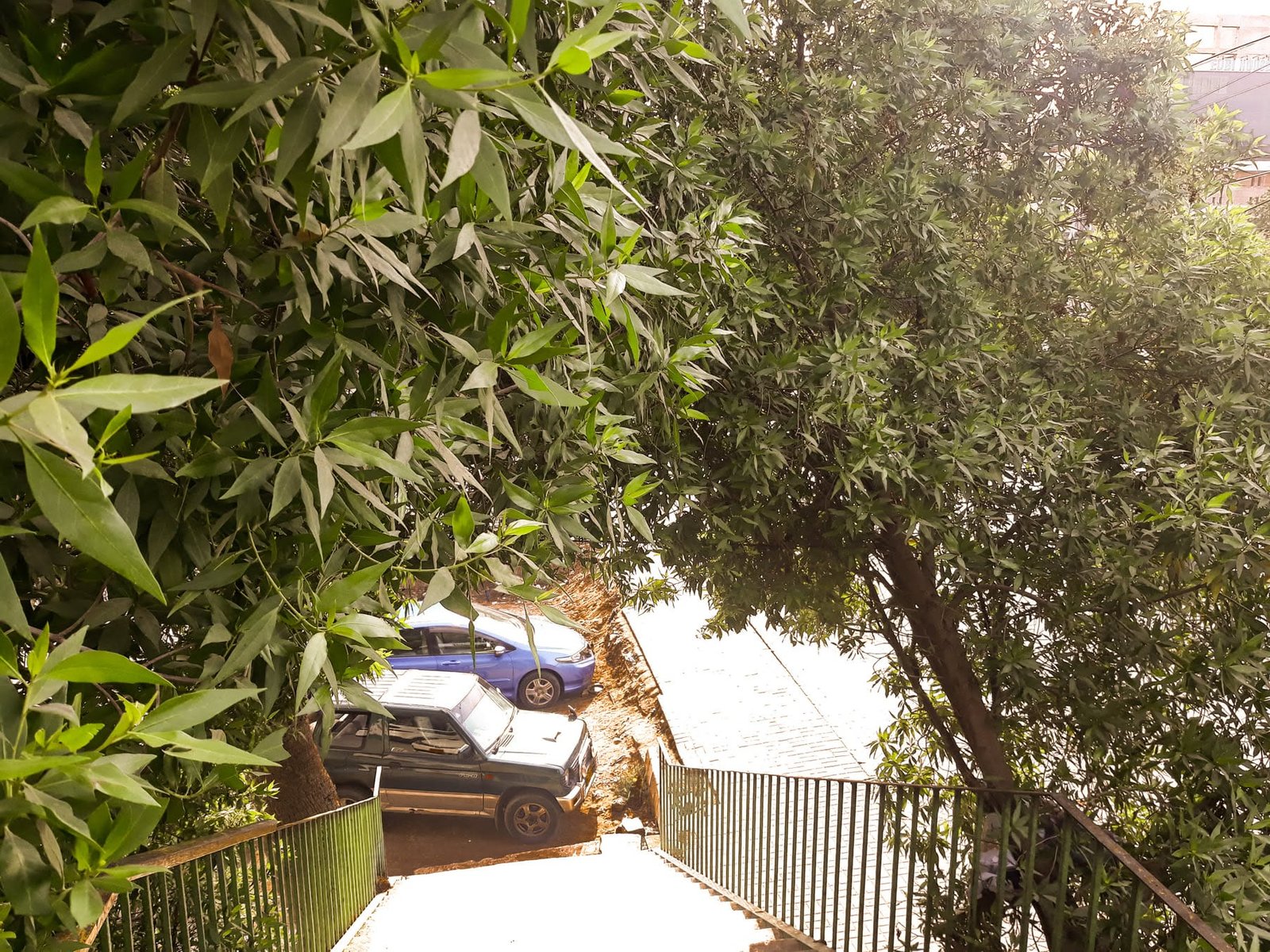
Green leaves soften the edges of the city and change the feeling of the light. For a moment, traffic and shopfronts give way to shade. This small outdoor scene offers another way of seeing Karachi, through the places where a busy day can briefly loosen its grip.
008 · The Everyday Counter – Delhi Colony
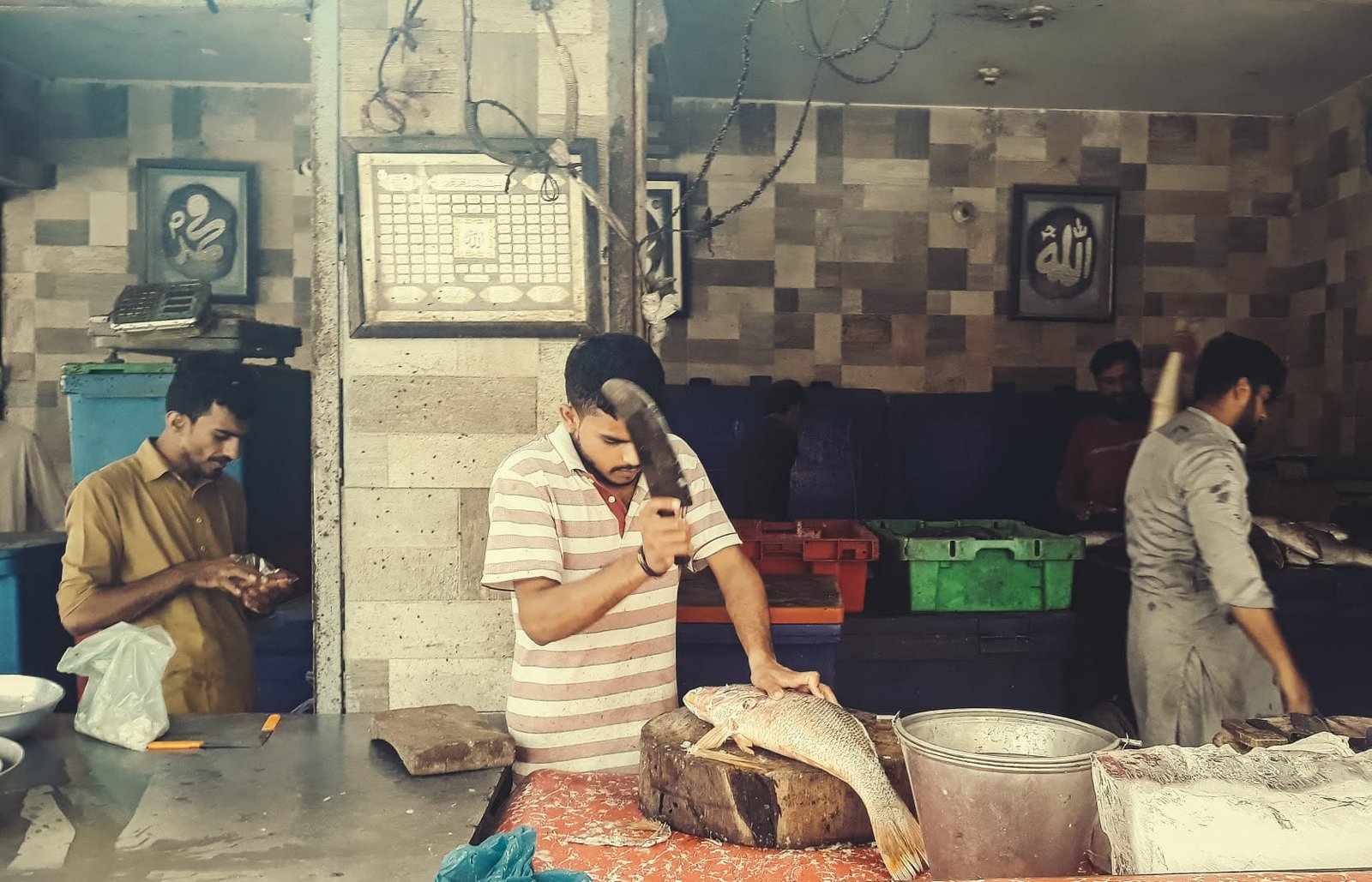
A counter holds a small arrangement of objects, and a working day gathers around them. Nothing in the frame needs to announce itself to feel important. The photograph stays with an ordinary scene, finding Karachi’s personality in the routines that keep neighbourhood life close and familiar.
009 · When the Street Lights Up – Yaseenabad Food Street
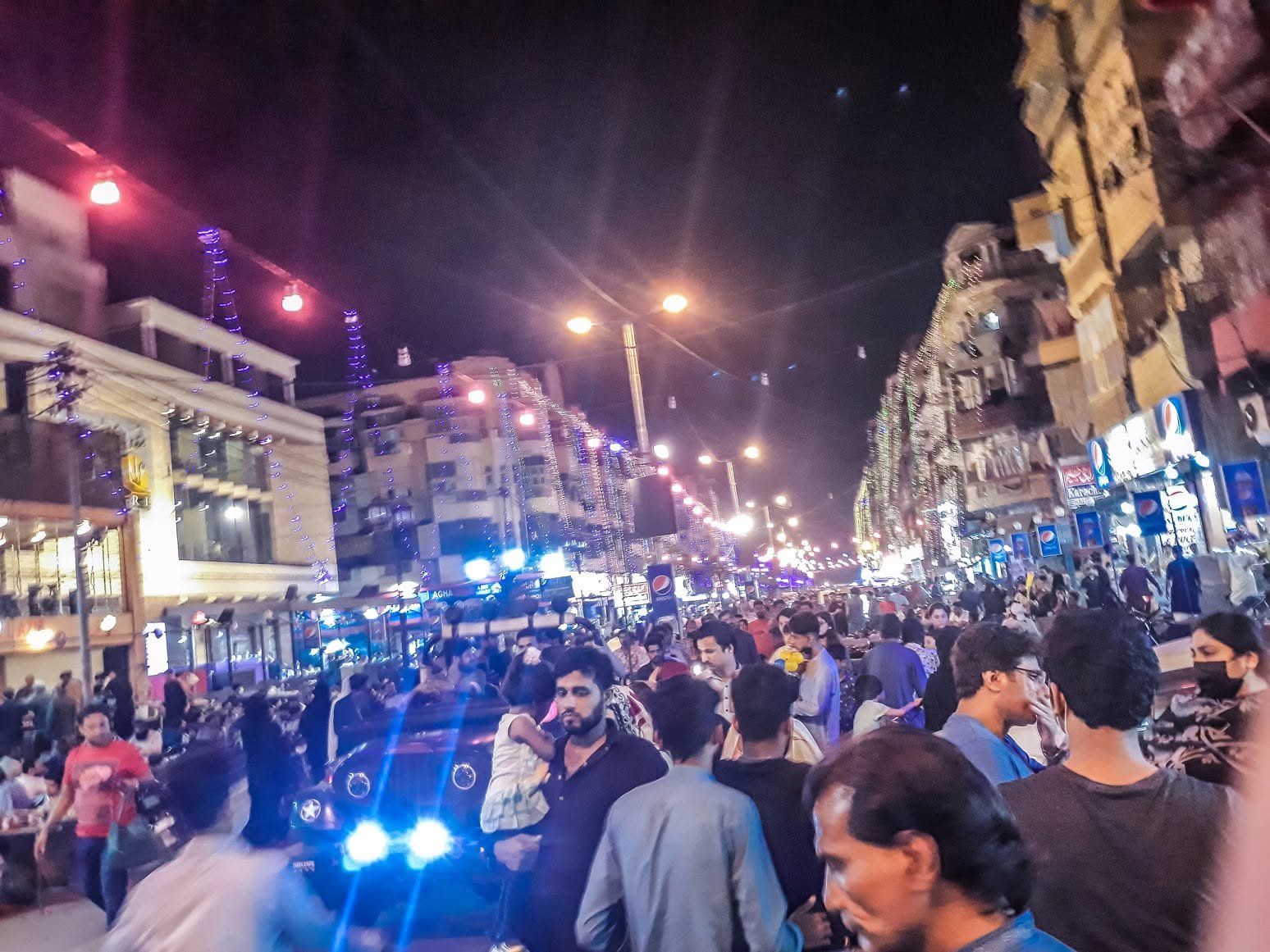
By evening, signs and lamps begin to draw their own map across the street. People and vehicles pass through patches of colour, adding movement to the glow. Karachi’s night scene feels layered rather than still: every light seems to open another small story beyond the edge of the frame.
010 · Beside the Working Boats – Fishery Karachi
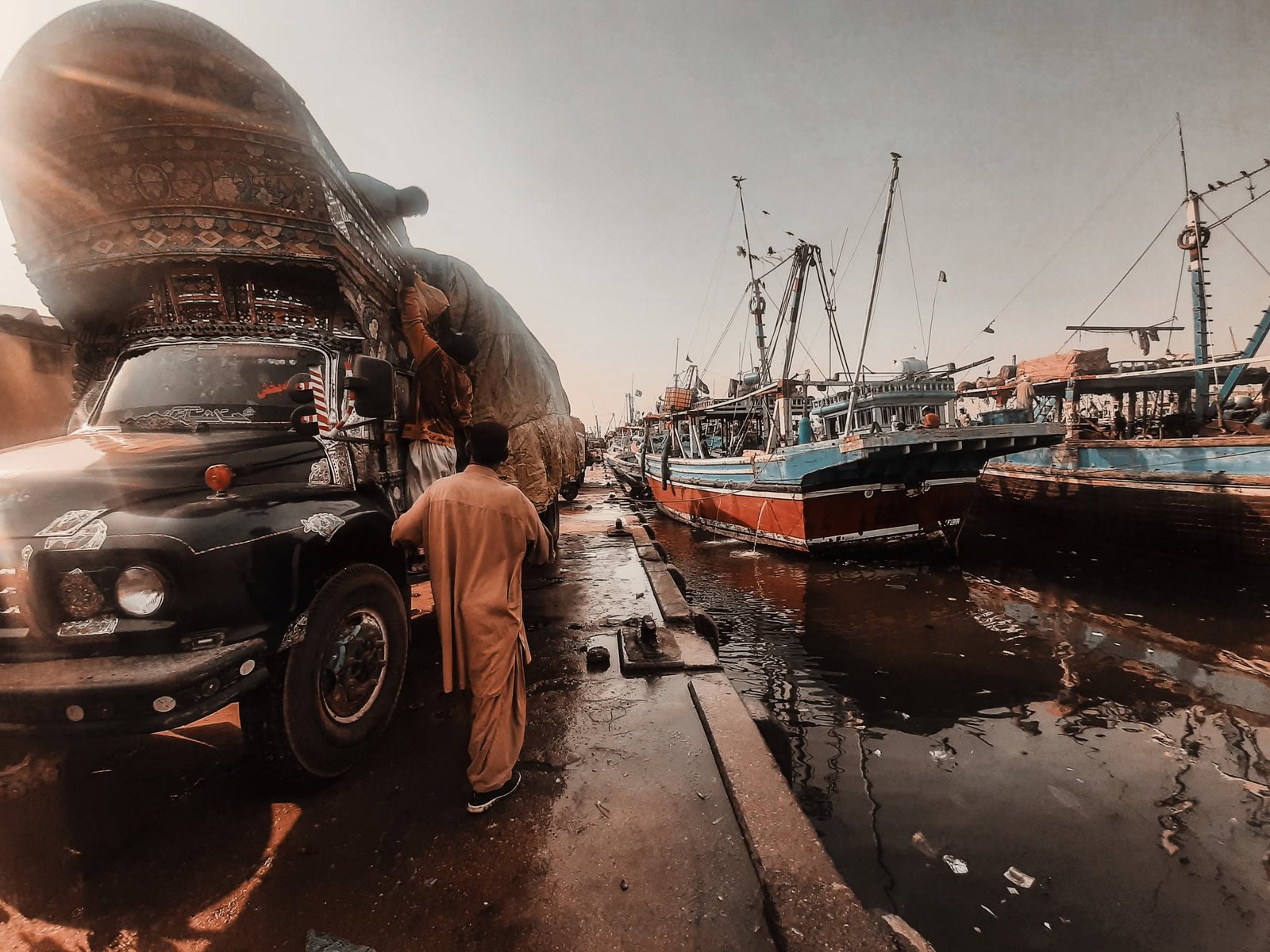
Boats rest close to the water while a figure anchors the foreground in everyday life. The harbour appears here as a working place, full of practical surfaces and waiting journeys. This photograph connects Karachi to the sea through the people and vessels that move between the two.
011 · Flavours Behind the Signs – Choudhary Farzand Ali Famous Kulfi in Karachi
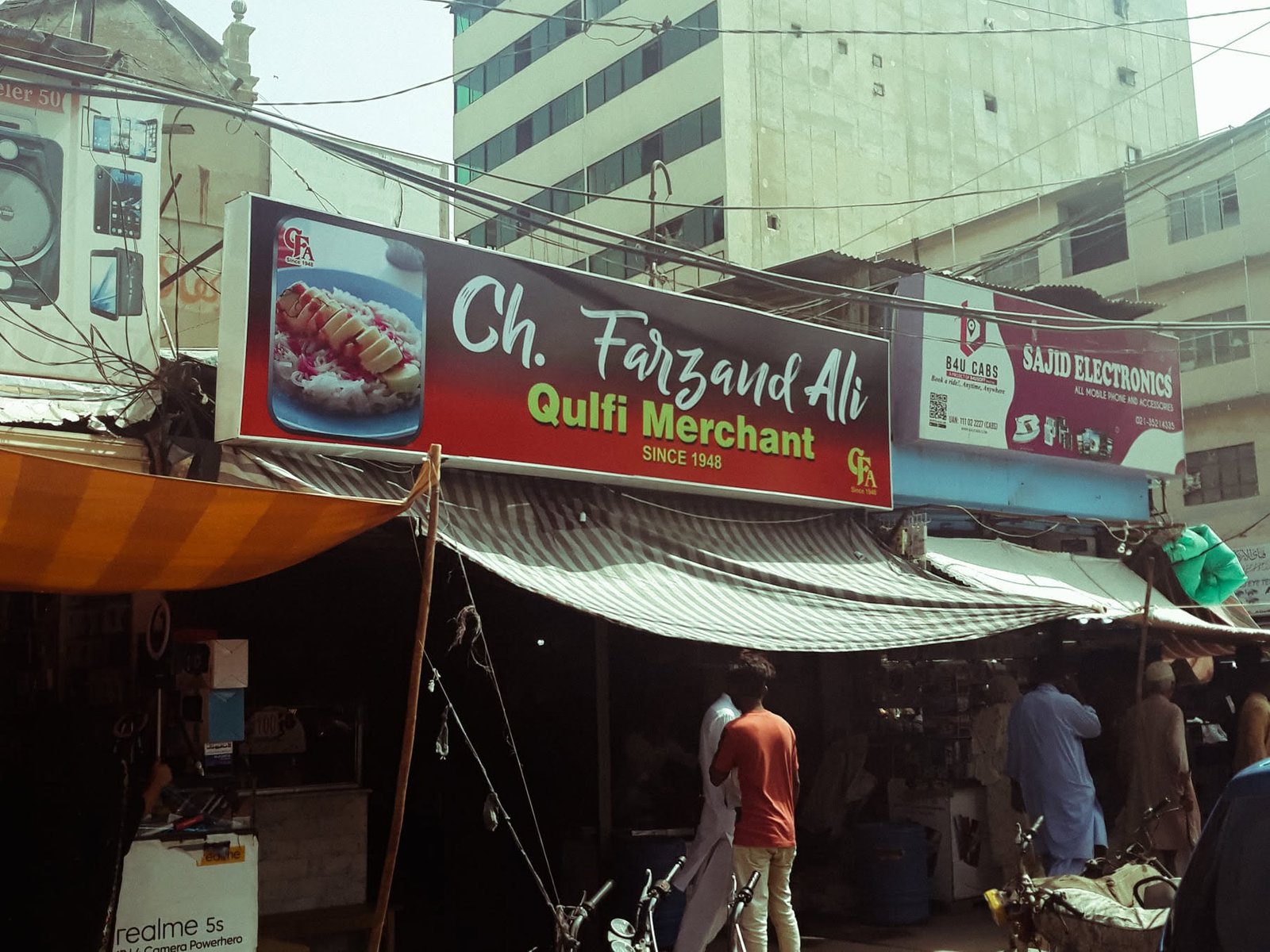
A shaded frontage and familiar food signs make this a place to pause rather than merely pass. The photograph catches the welcoming scale of a neighbourhood eatery. In Karachi, a street can be remembered as much through its meals and meeting places as through its larger buildings.
012 · Into the Bazaar – Arambagh
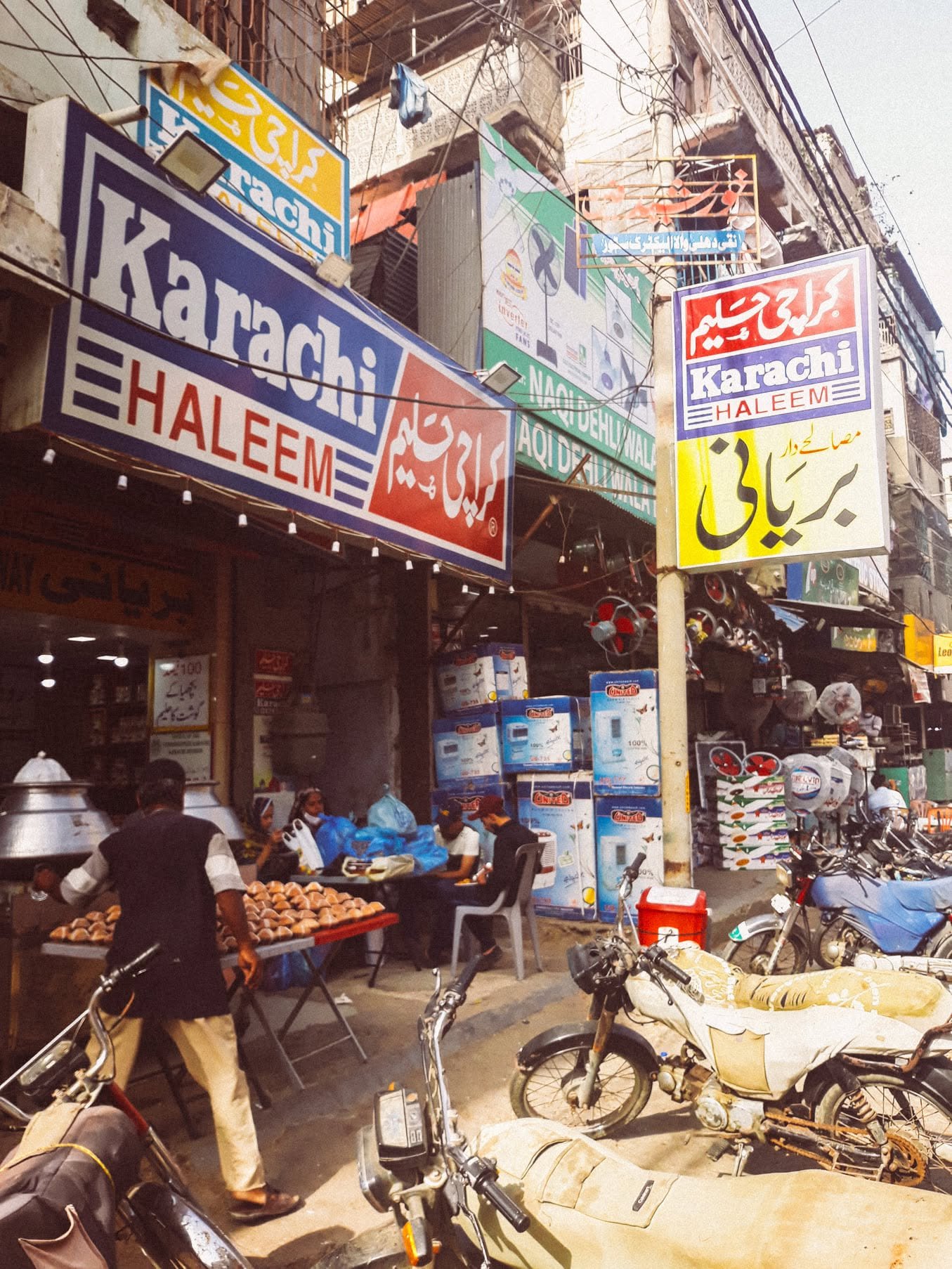
The street draws the eye inward through a close arrangement of shops and signs. Every surface offers something else to read, buy, or notice. This bazaar scene holds the pleasure of walking without a fixed destination, letting Karachi reveal itself a little at a time.
013 · Colour on the Road – Lyari Karachi
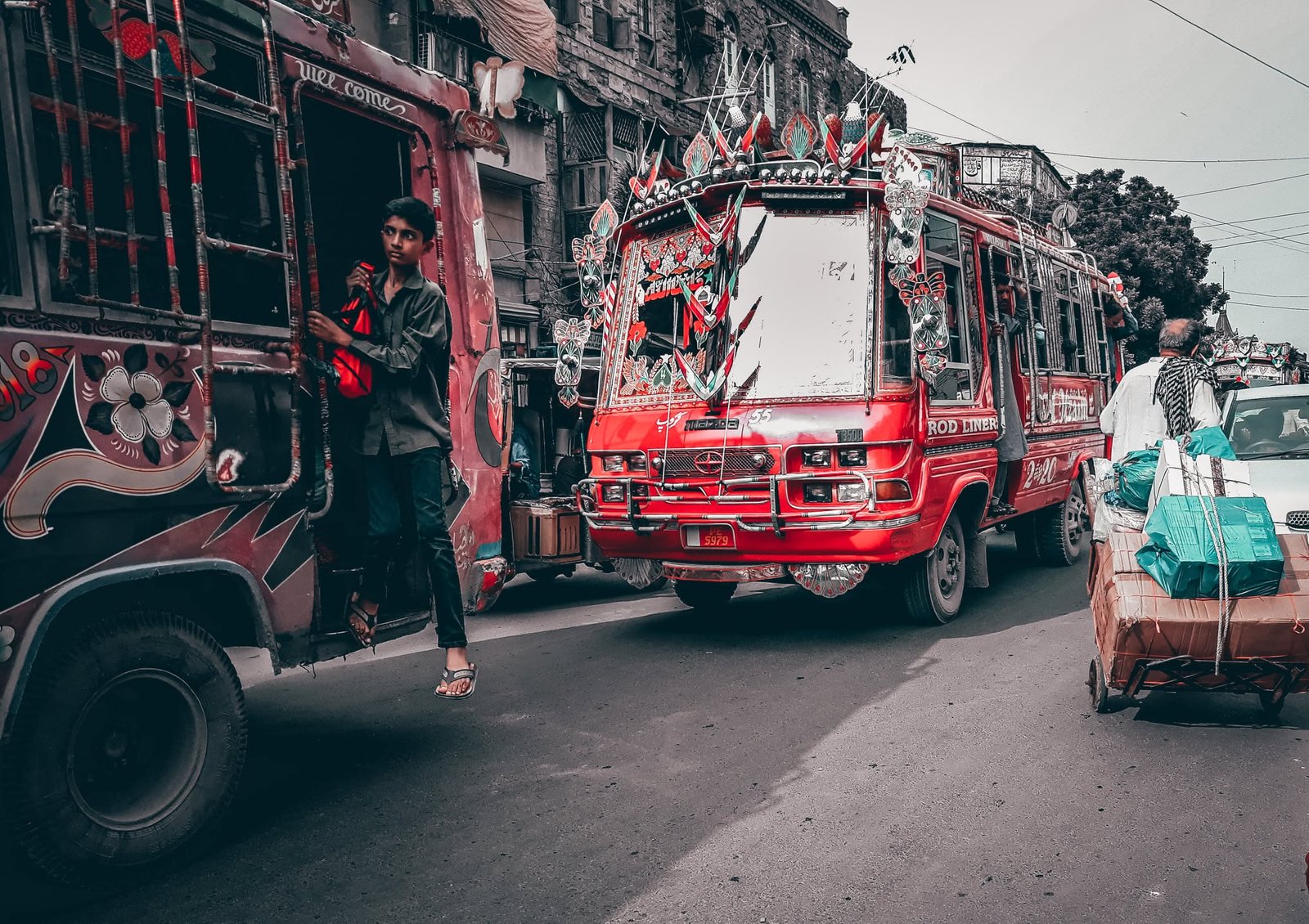
Painted buses bring a rich layer of colour into the flow of traffic. They are both everyday transport and some of the most expressive objects on the road. Here, Karachi’s movement becomes part of its visual identity, carrying ornament alongside the ordinary business of getting somewhere.
014 · The Shape of the Catch – Ibrahim Hyderi
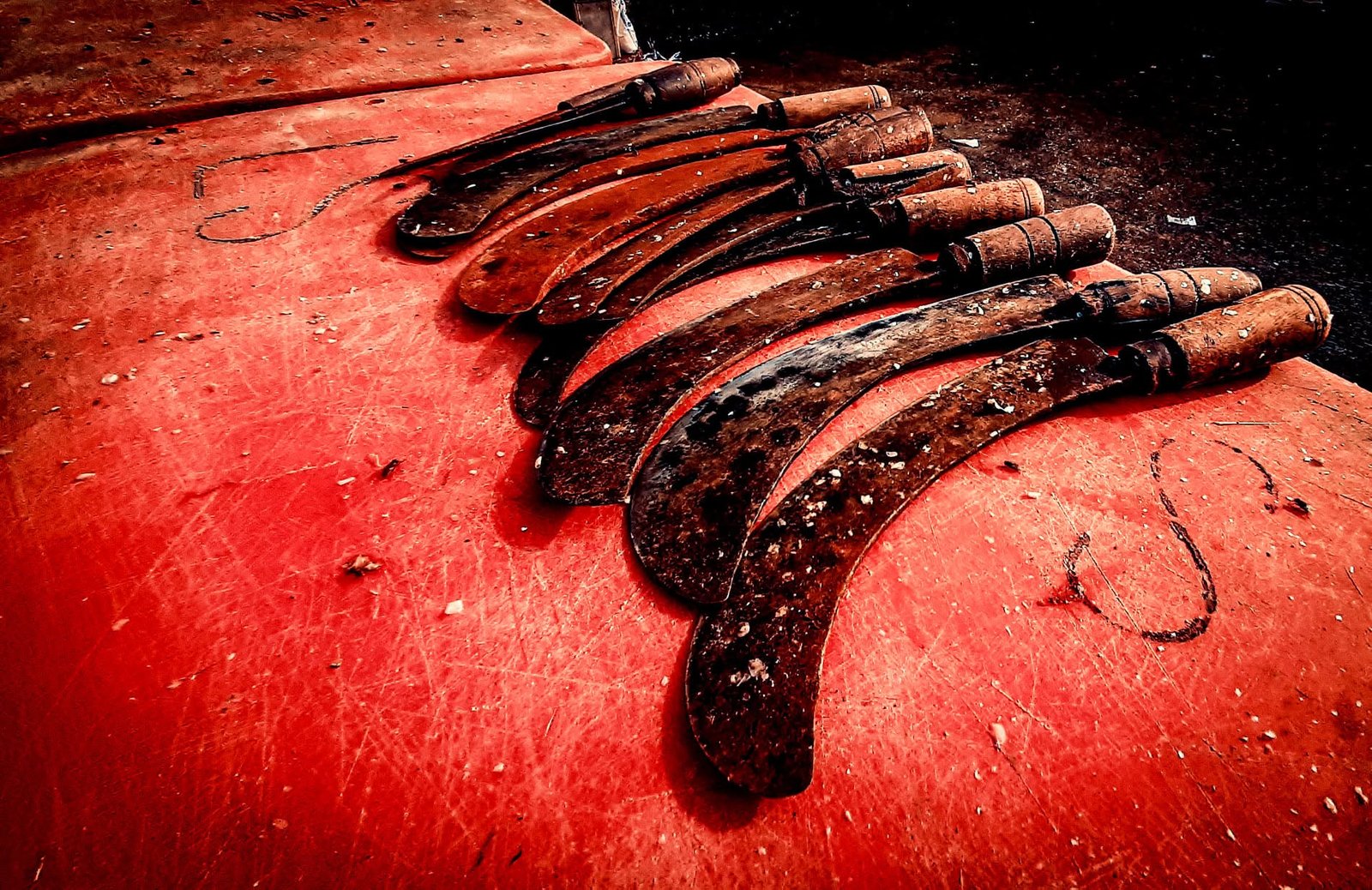
Against a vivid red ground, the fish become a pattern of curves, edges, and shining surfaces. The arrangement is direct, practical, and unexpectedly graphic. It is a market photograph that brings Karachi’s relationship with the sea into the language of colour and composition.
015 · An Afternoon Passing – Rainbow Center
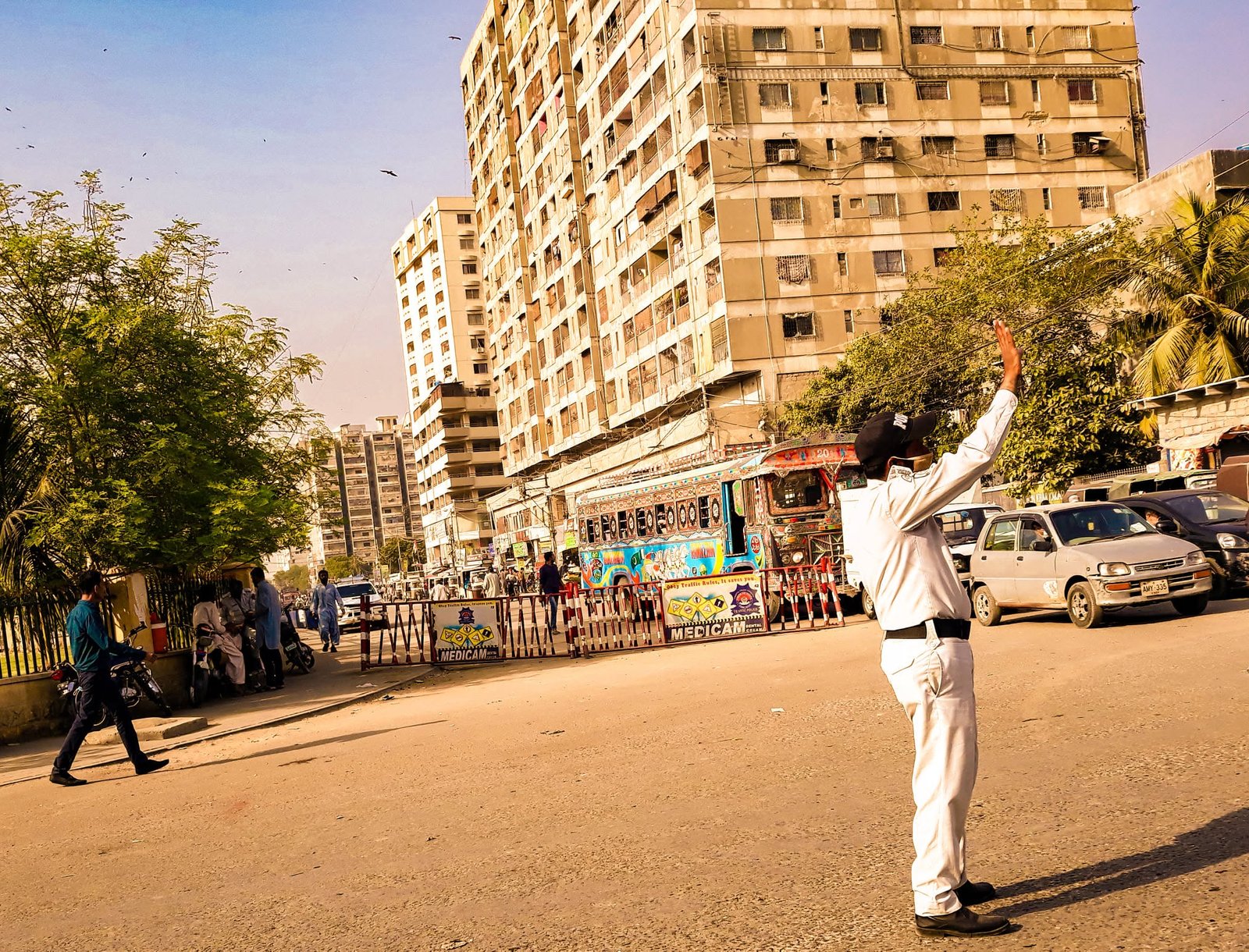
A figure moves across an open stretch of street, briefly giving scale to the buildings behind. The city feels spacious in this frame, with room for light to settle between its shapes. Karachi’s architecture and everyday movement meet in a scene that is both ordinary and carefully balanced.
016 · Writing at the Water’s Edge – Manora Beach

A hand reaches toward the sand while water waits nearby to change the surface again. The gesture feels temporary, and that is part of its beauty. At the shore, Karachi offers moments that do not need to last long to become a clear memory.
017 · Windows Over the Street – Rainbow Center
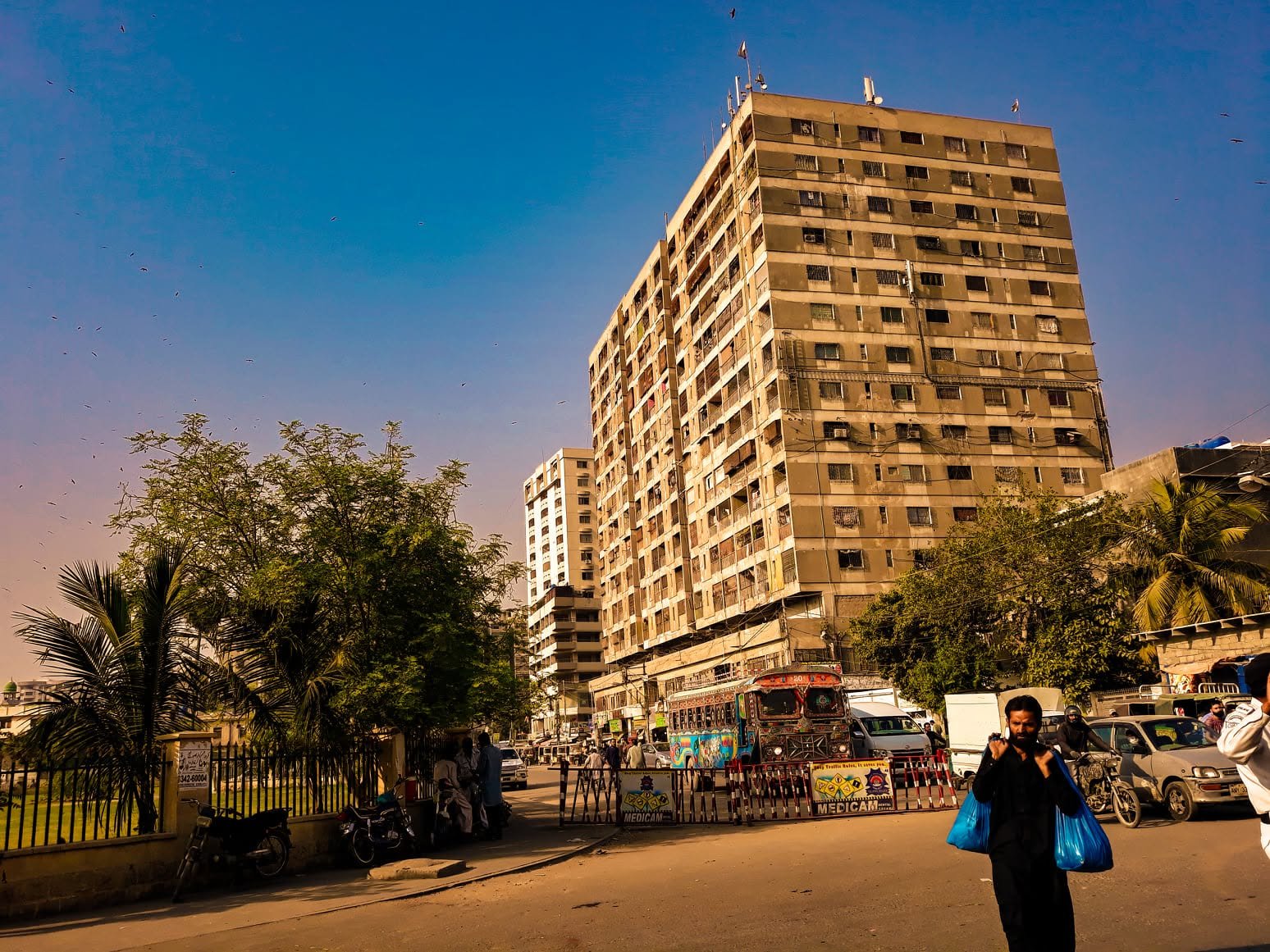
Rows of windows catch the sun above the street’s smaller movements. The building’s scale invites the eye upward, but the road below keeps the scene grounded. This is Karachi as a meeting of distances: the city seen from across an avenue and lived one step at a time.
018 · Facades with Memory – Paper Market Karachi
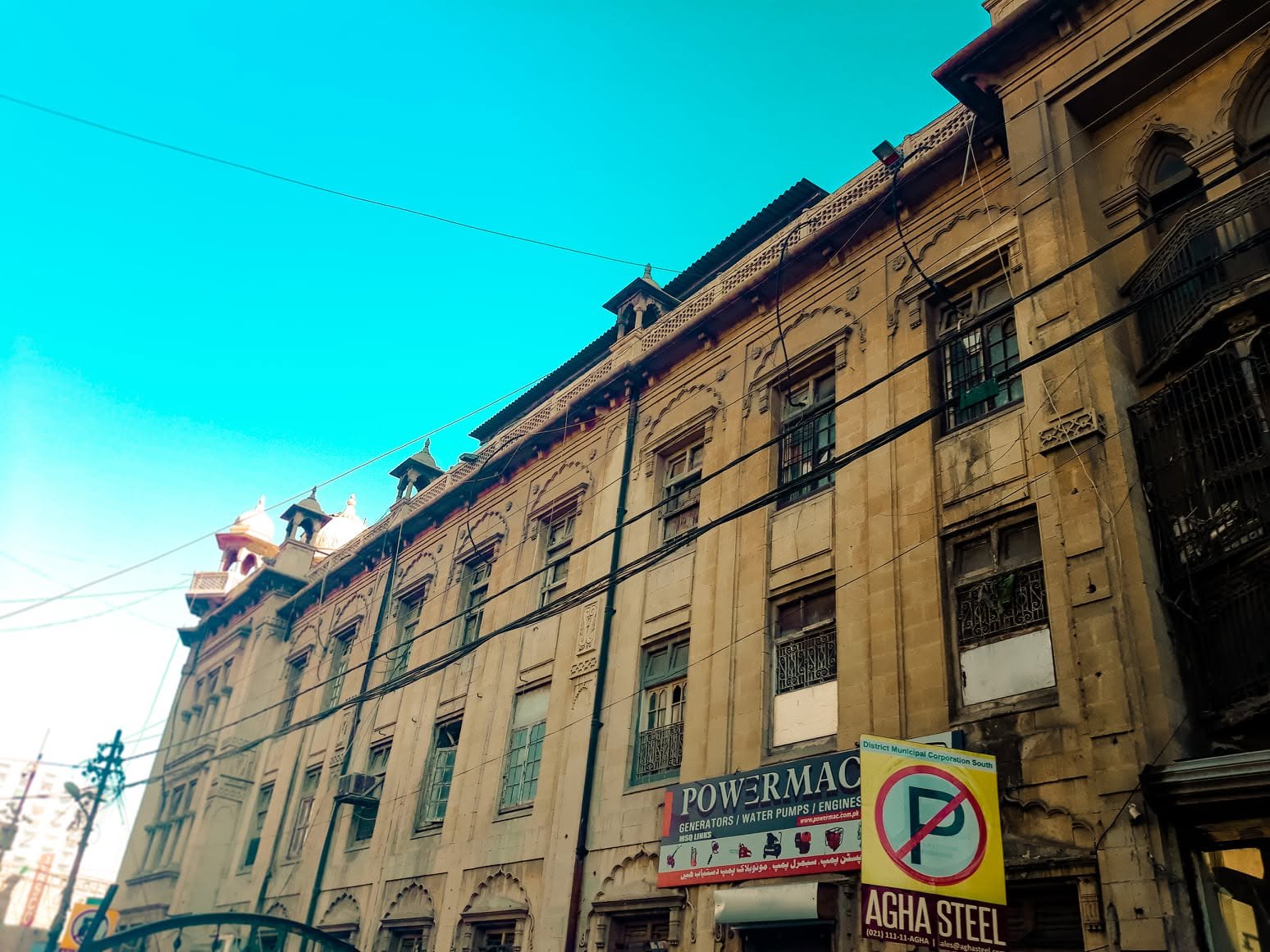
Repeated windows lead the eye along a facade marked by years of use. Shops continue their daily work below, keeping the building connected to the present. Rather than separating old Karachi from new Karachi, the photograph shows how both can occupy the same address.
019 · Silver in the Market – Fishery Karachi
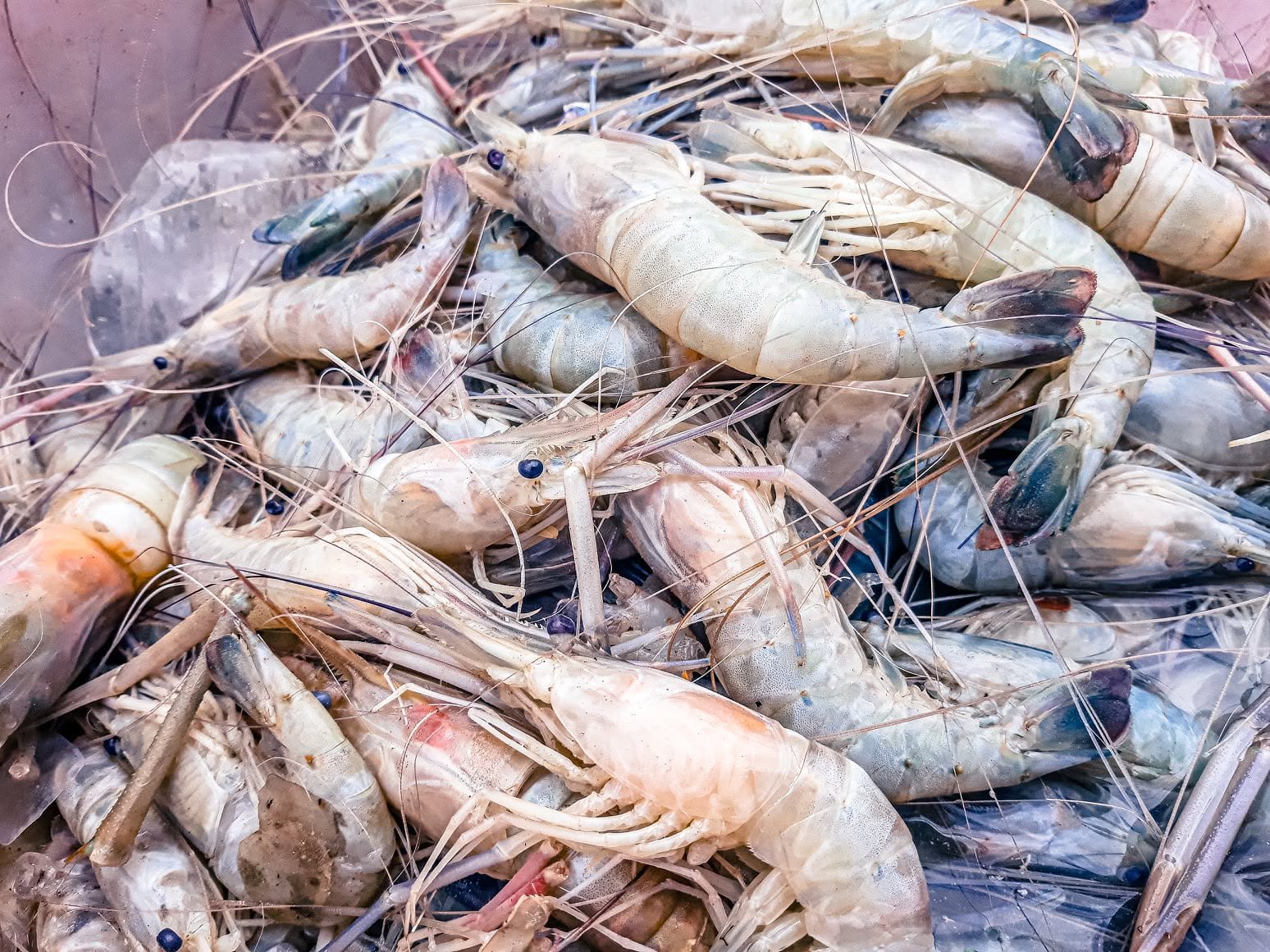
The market’s fish catch the light in overlapping flashes of silver. Seen close up, their textures create a landscape of scales, fins, and curved bodies. This frame stays with the material detail of the catch, making the city’s connection to coastal work feel immediate.
020 · In the Stonework – Karachi Factory
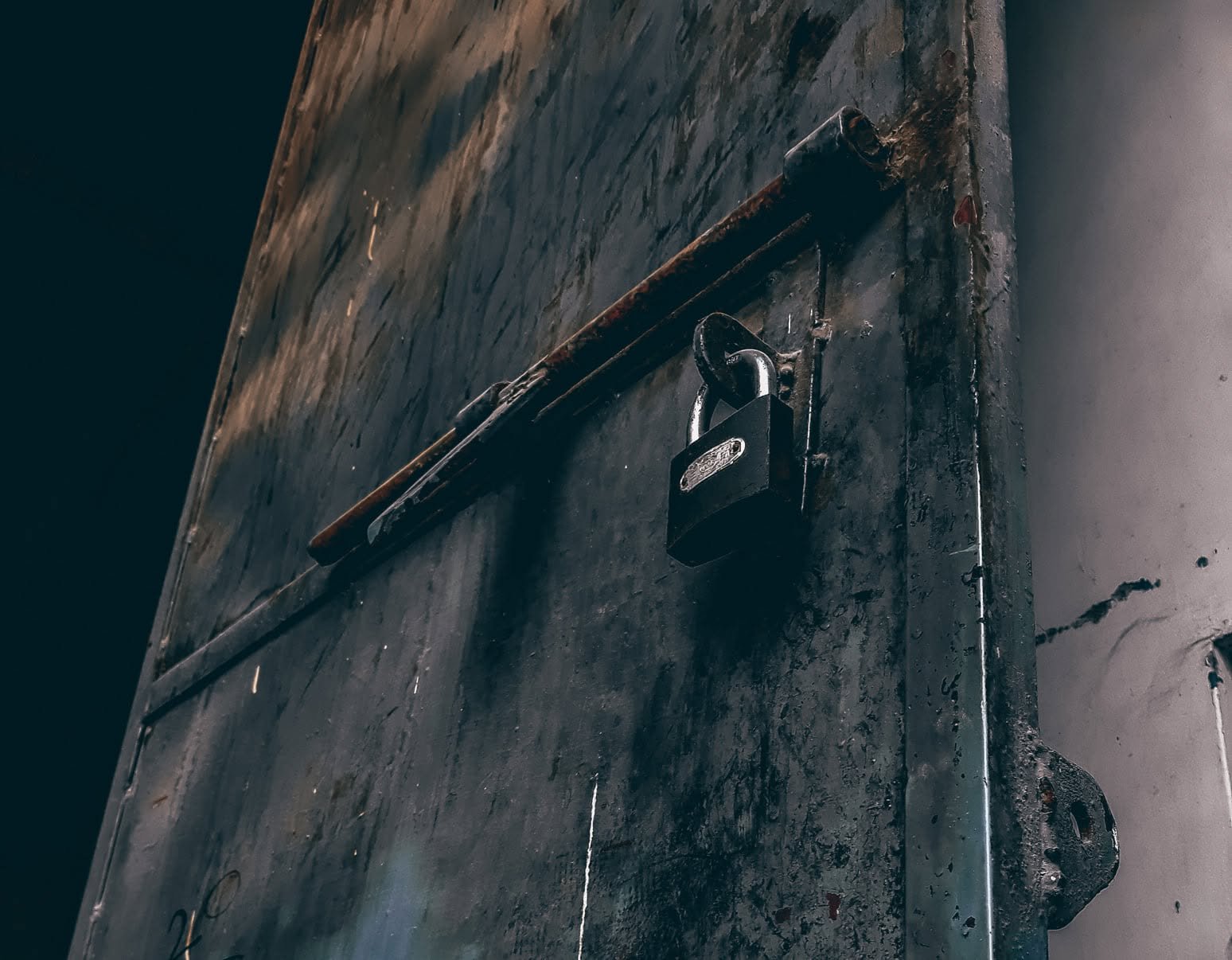
A weathered surface asks the viewer to slow down. Shadows settle into recesses, and small changes in texture begin to matter as much as the overall form. This Karachi architectural photograph finds its story in a fragment, showing how much character a closer look can uncover.
021 · Sun Along the Avenue – Kharadar
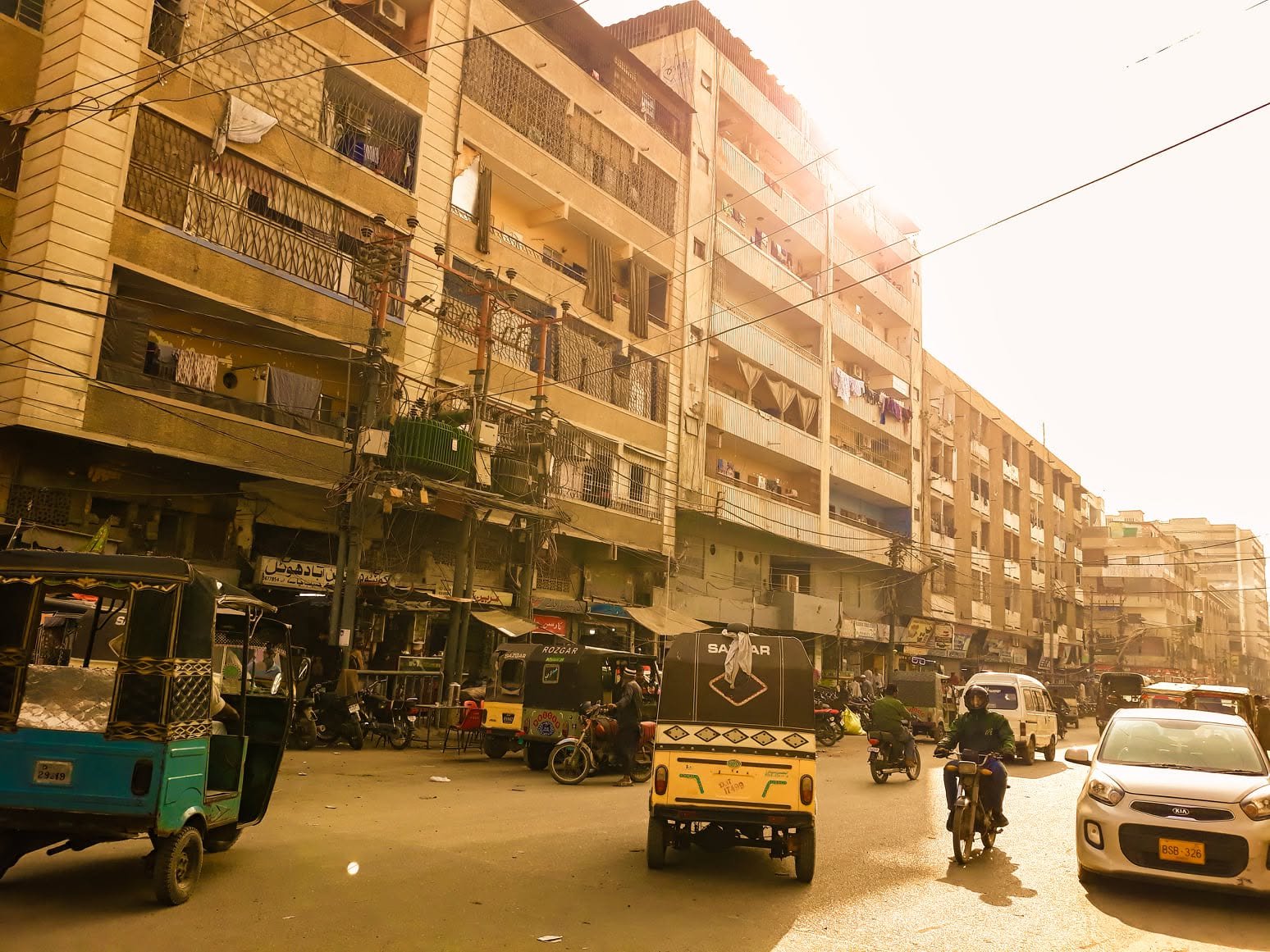
Sunlight gives the buildings a warm edge while traffic continues underneath. The street seems to hold several eras in one view, each visible in a different facade or vehicle. This is the pleasure of Karachi’s avenues: they are routes through the city and long, unfolding pictures of it.
022 · A Plate Worth Pausing For – Best Biryani in Karachi
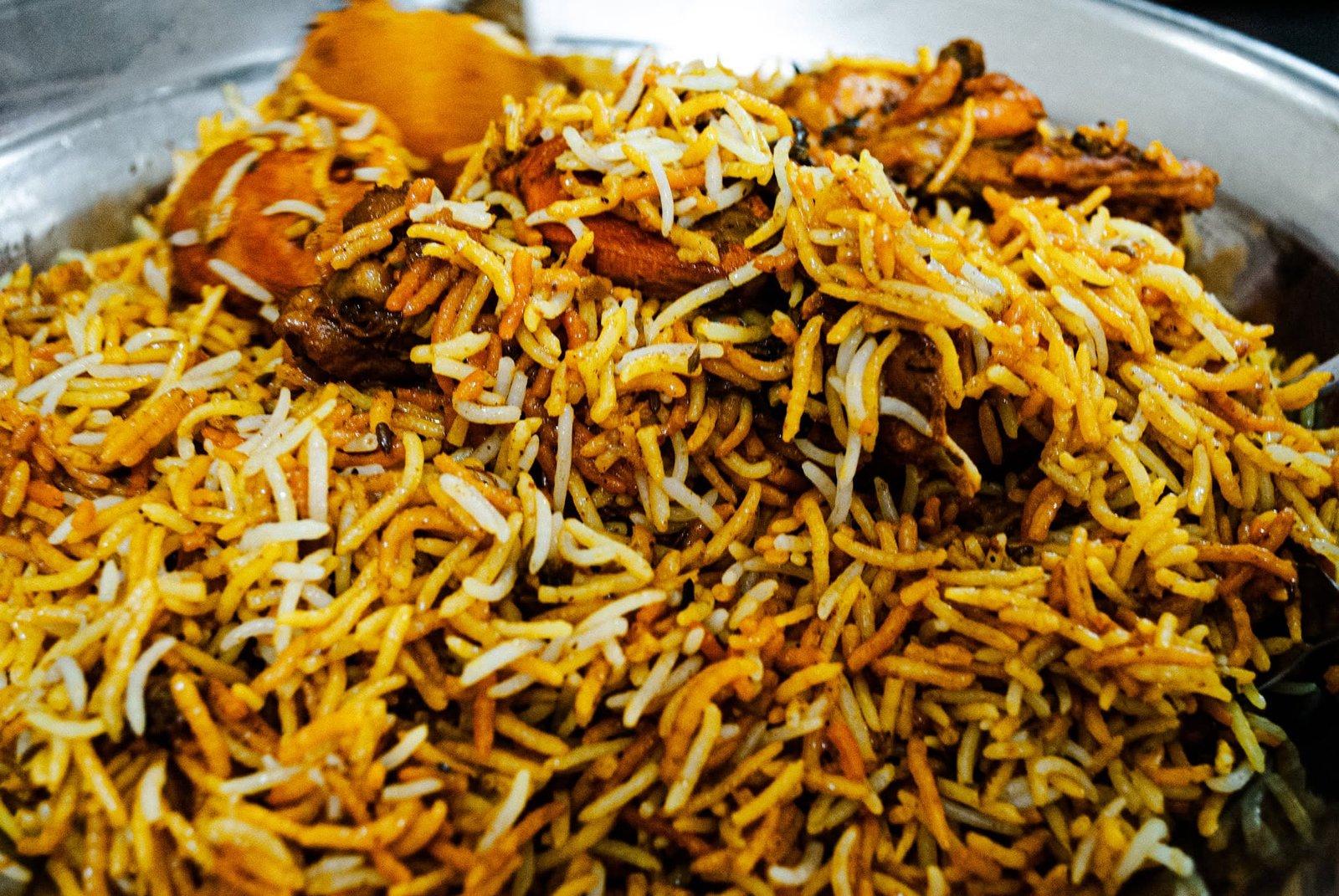
Rice, meat, and the colours of spice fill the frame with an invitation to stop. The photograph needs no table setting to suggest the pleasure of a shared meal. In this Karachi photo essay, biryani becomes a small, generous portrait of the city’s food culture.
023 · Colour in Clay – Clay pots in Karachi
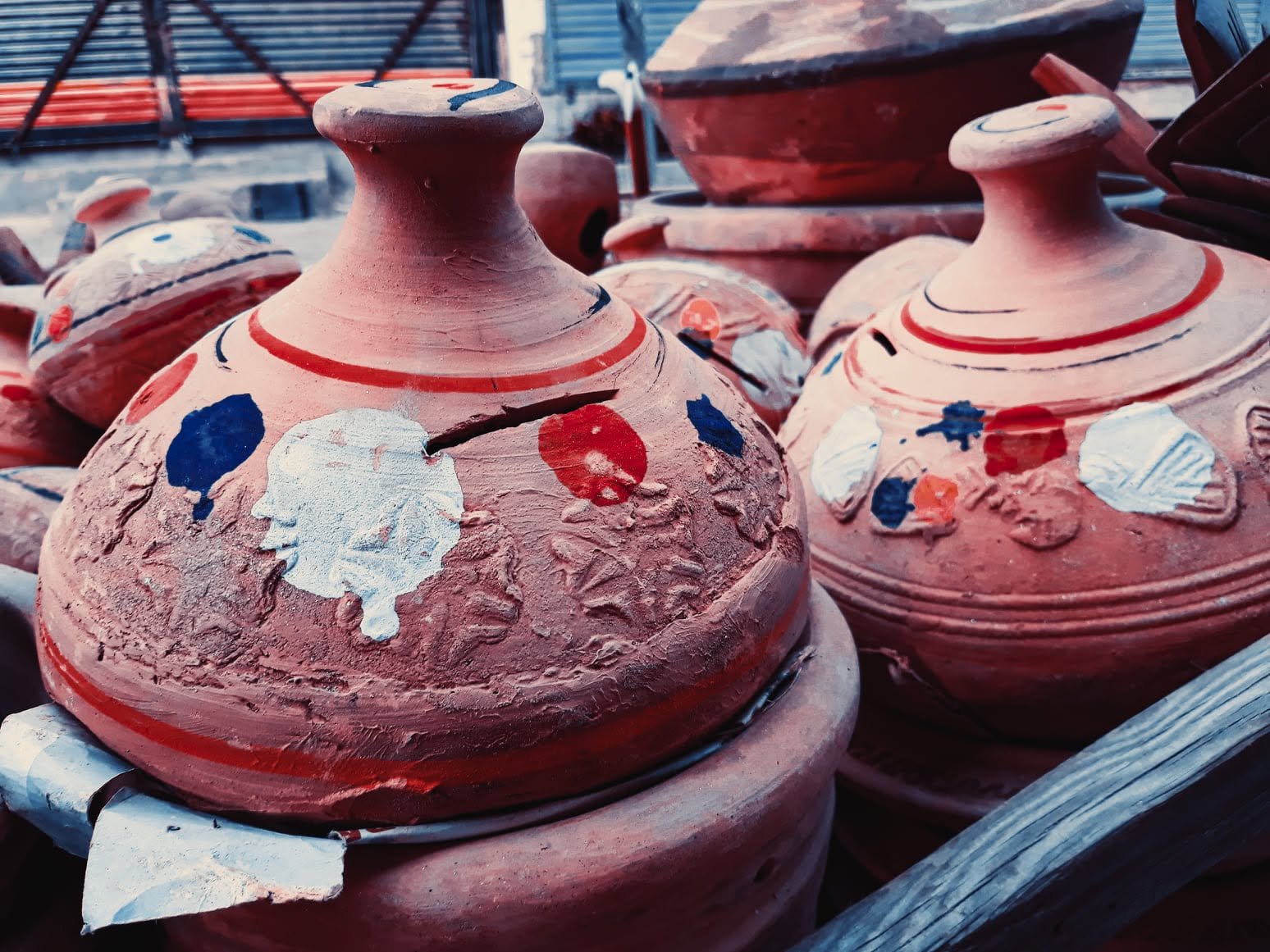
Soft earthen forms carry bright painted details, each pot echoing its neighbours without becoming identical. The display brings craft into the everyday objects of a home. Karachi’s market scenes often reward this kind of close attention, where colour and usefulness sit comfortably side by side.
024 · Fruit at the Corner – Habib University Karachi
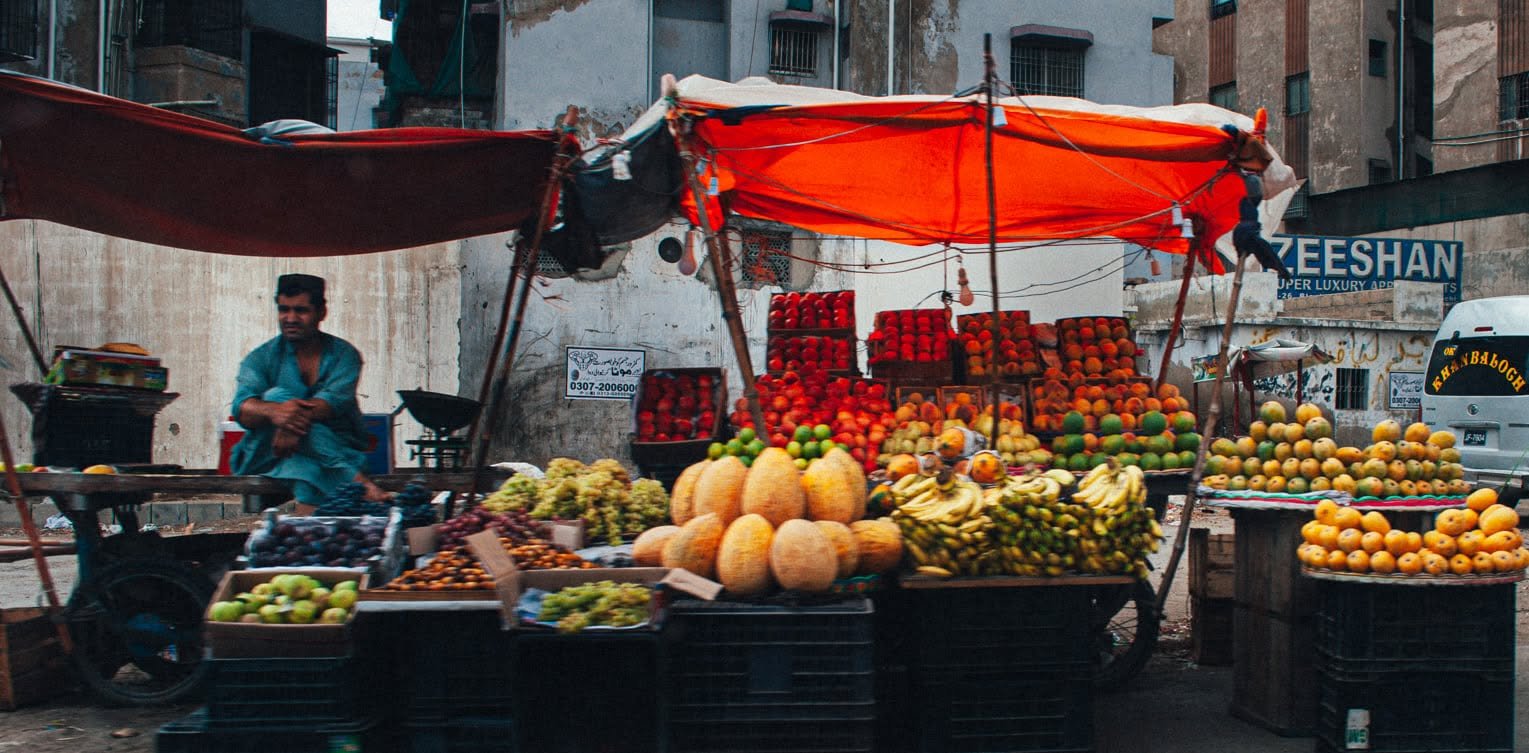
Fresh fruit adds a bright patch of colour to the roadside. Behind the display is a familiar city arrangement: something to sell, somewhere to stop, and a steady flow of passers-by. The photograph turns a small stall into a portrait of neighbourhood exchange.
025 · The Vertical City – HBL Building, Clifton Karachi
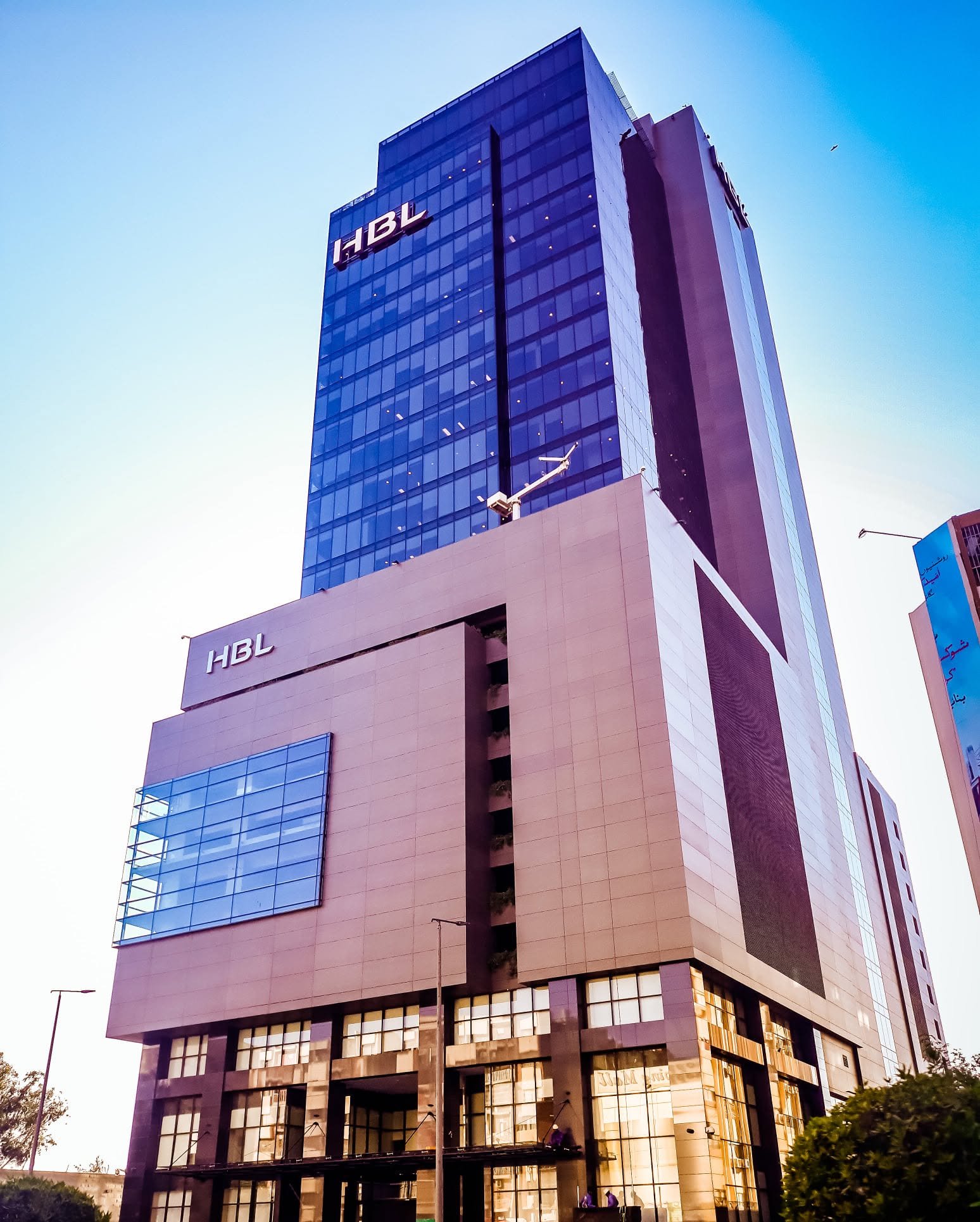
From below, the tower stretches into a set of strong diagonals. Its surfaces catch the sky, giving the building a different character from each angle. Karachi’s vertical growth appears here as a visual experience, a moment when an everyday skyline becomes almost abstract.
Small Encounters, Pakistan City
026 · After the Rush – Industrial Area Karachi
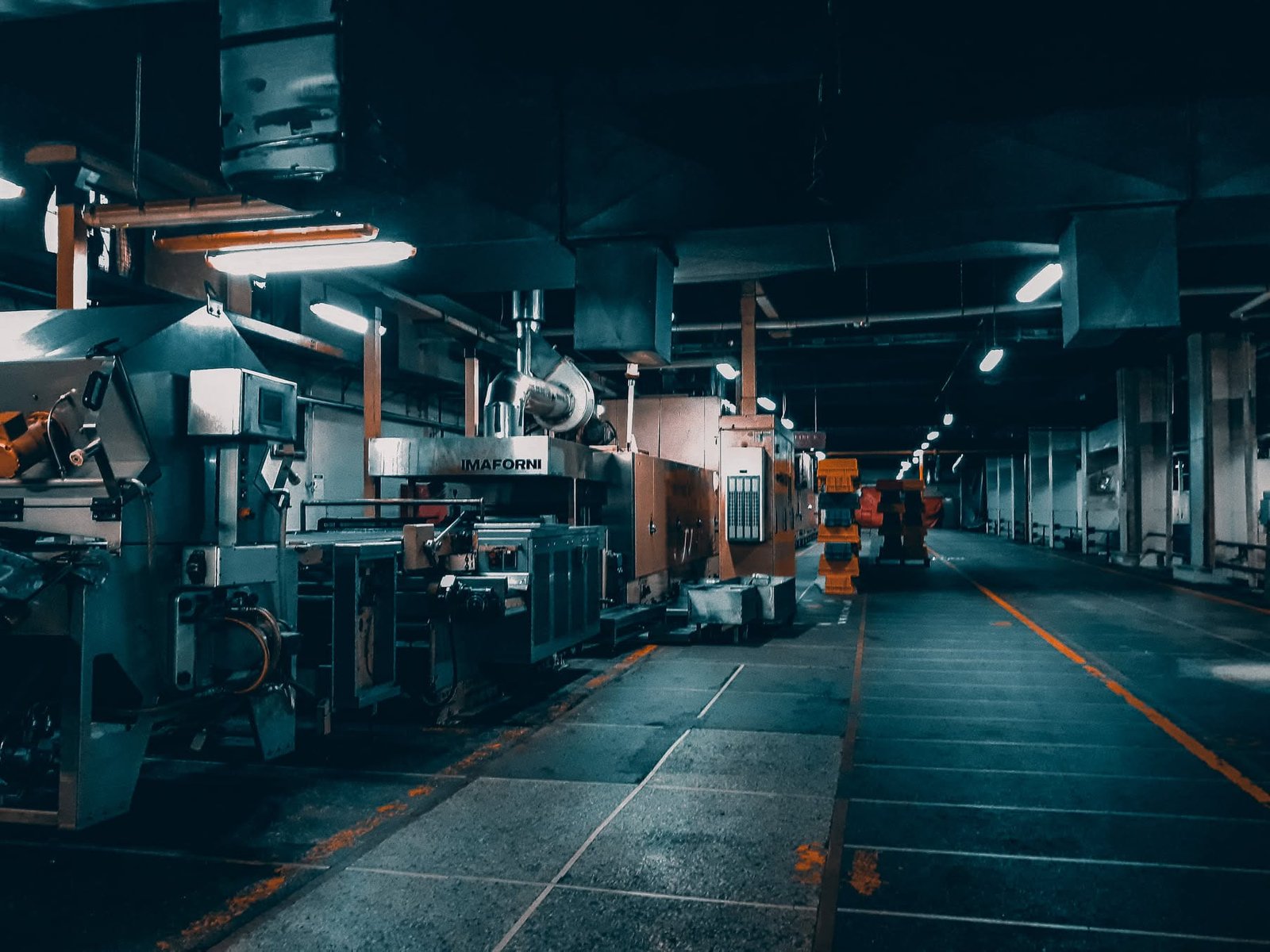
Darkness changes the street’s proportions. A few illuminated spaces stand out while the rest becomes a quieter backdrop, drawing attention to small movements and human presence. This night photograph finds Karachi between bright spectacle and stillness, in the softer hours around the edges of activity.
027 · Care in the Workshop – Workshop Karachi
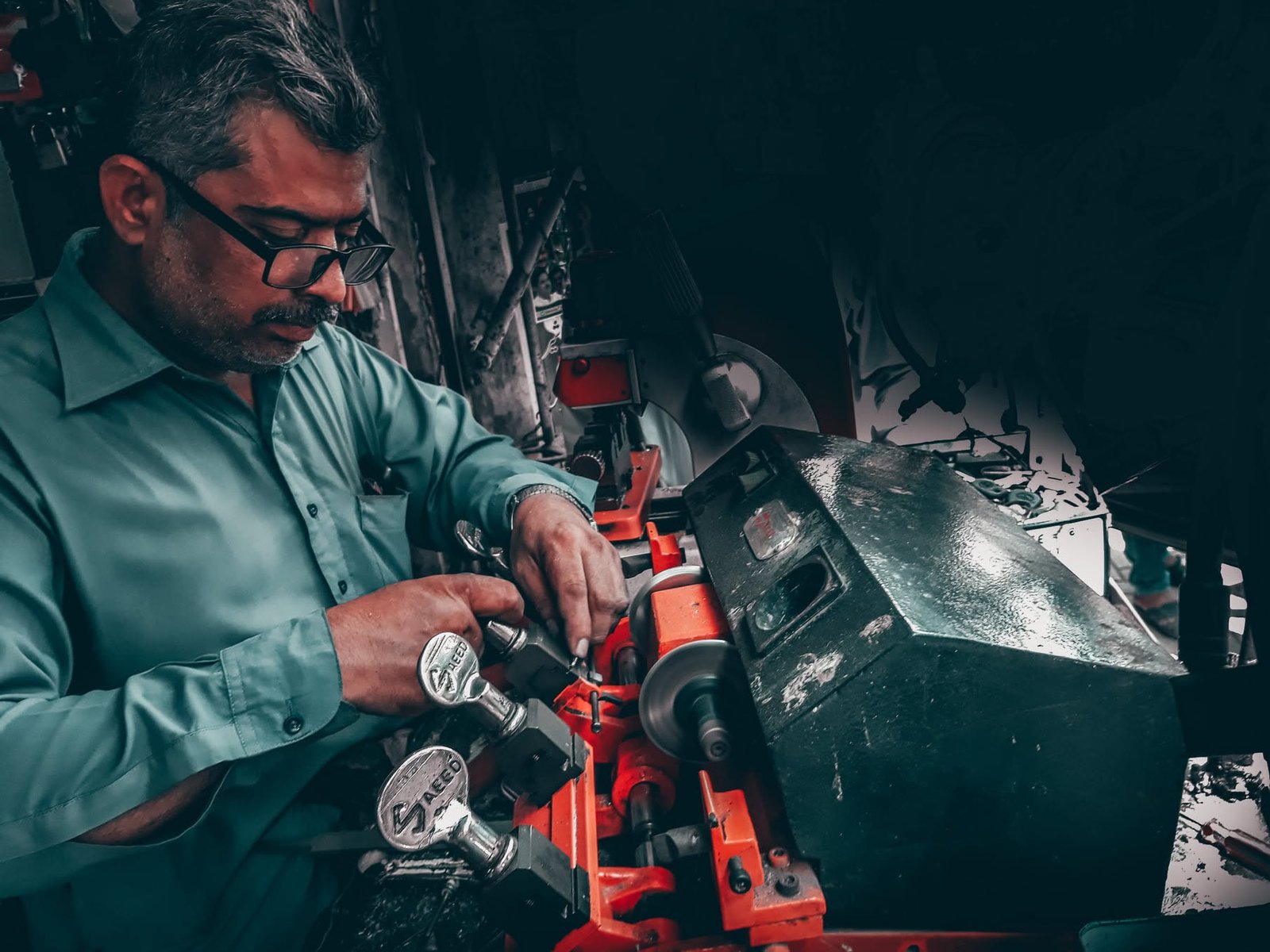
The workbench gathers tools, surfaces, and the marks of repeated use. At its centre, concentration gives the scene a quiet intensity. This is a portrait of craft through attention: a reminder that the city’s daily life depends on skills that are often easiest to overlook.
028 · Across the Open Road – Aisha Bawani School Karachi
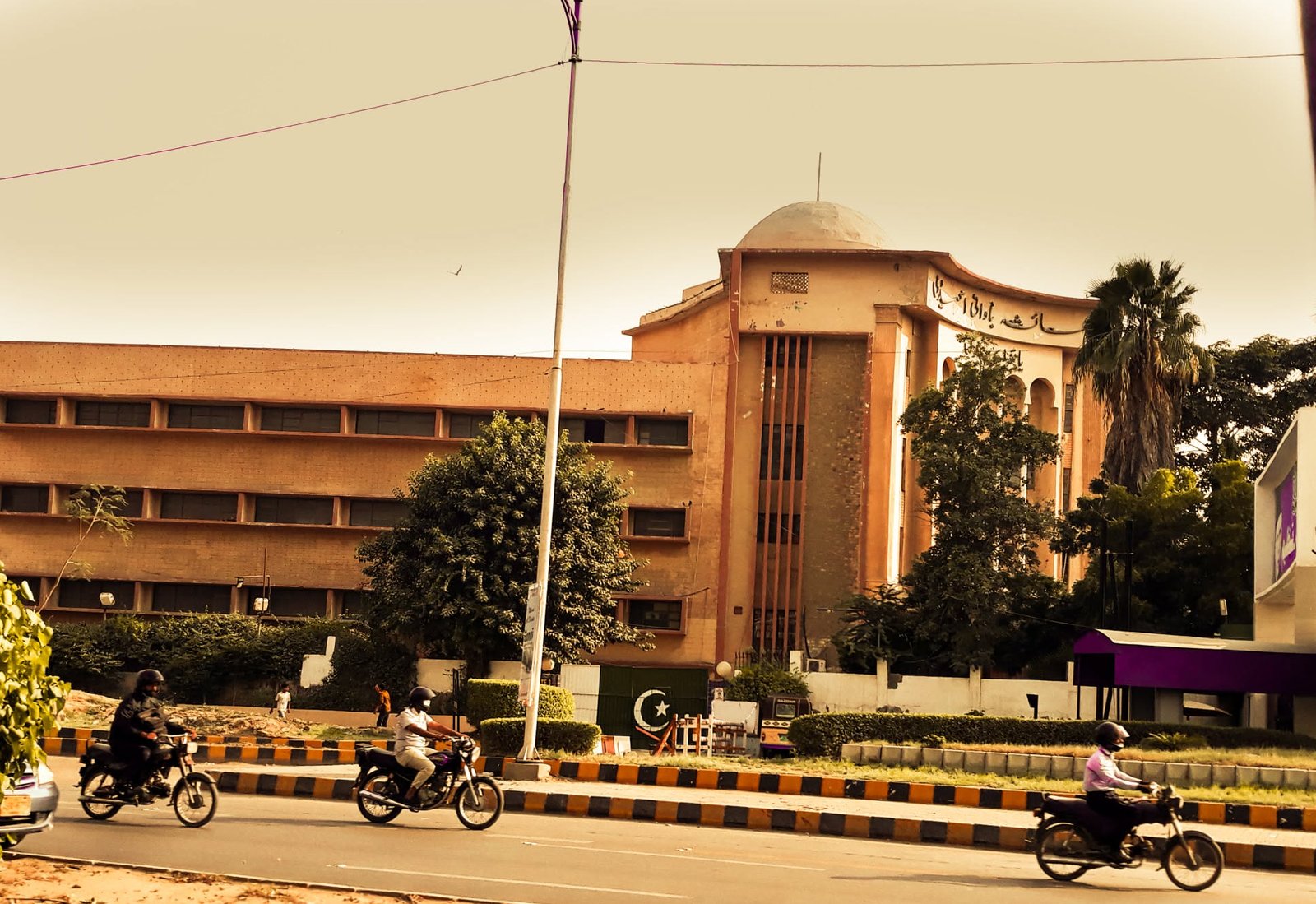
The road opens a clear view toward the building beyond it. Vehicles pass across the foreground, keeping the composition connected to the present moment. Karachi appears here through a familiar urban balance, where substantial architecture and fleeting movement share the same stretch of light.
029 · A Shop of Small Discoveries – Hawker in Karachi
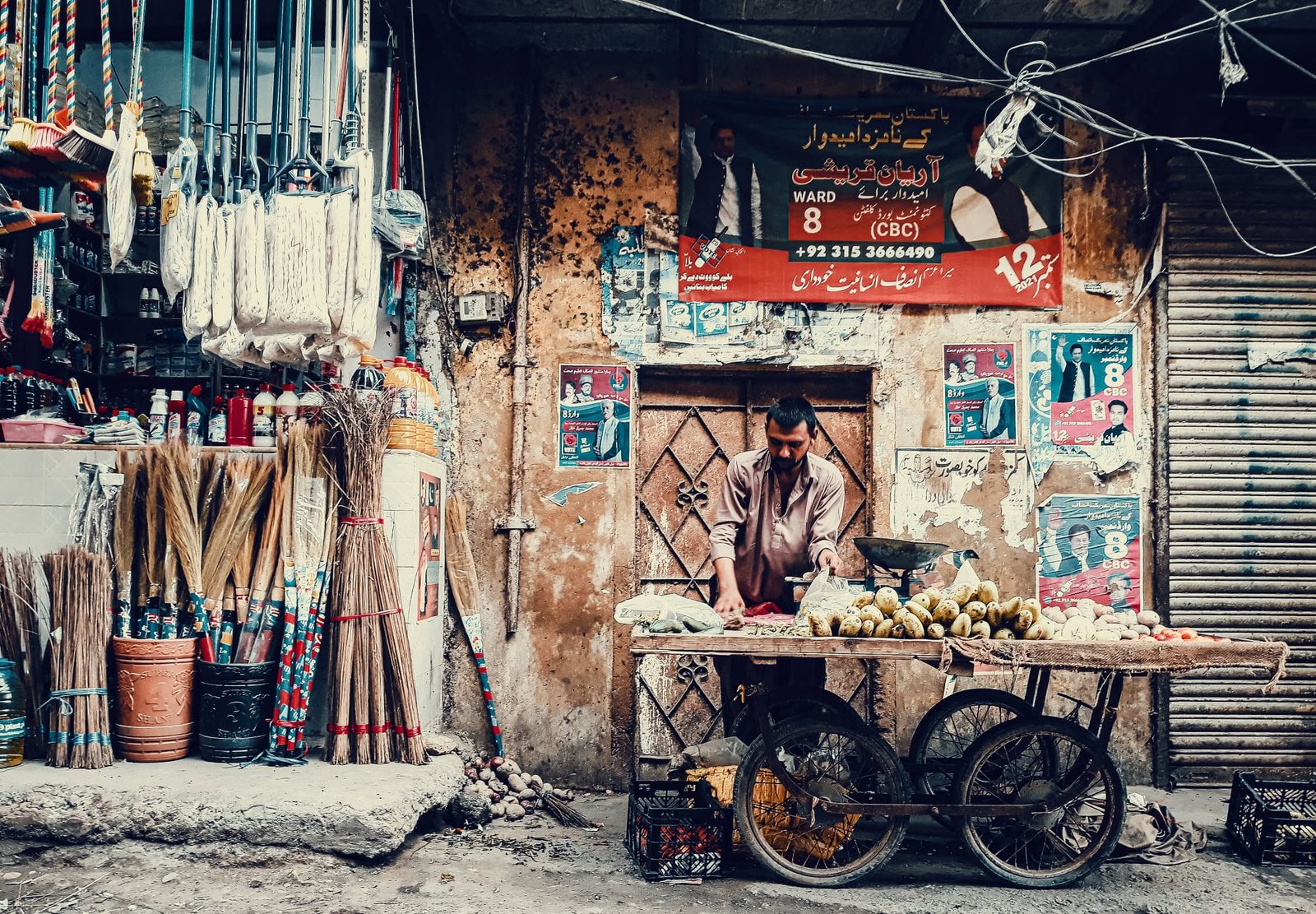
Hanging goods and small objects create a dense invitation to browse. The display has its own practical order, even when it first appears overflowing. In this Karachi market photograph, the pleasure lies in discovery, in allowing the eye to wander before deciding what it has found.
030 · The Maker and the Bench – Camera Repair in Karachi
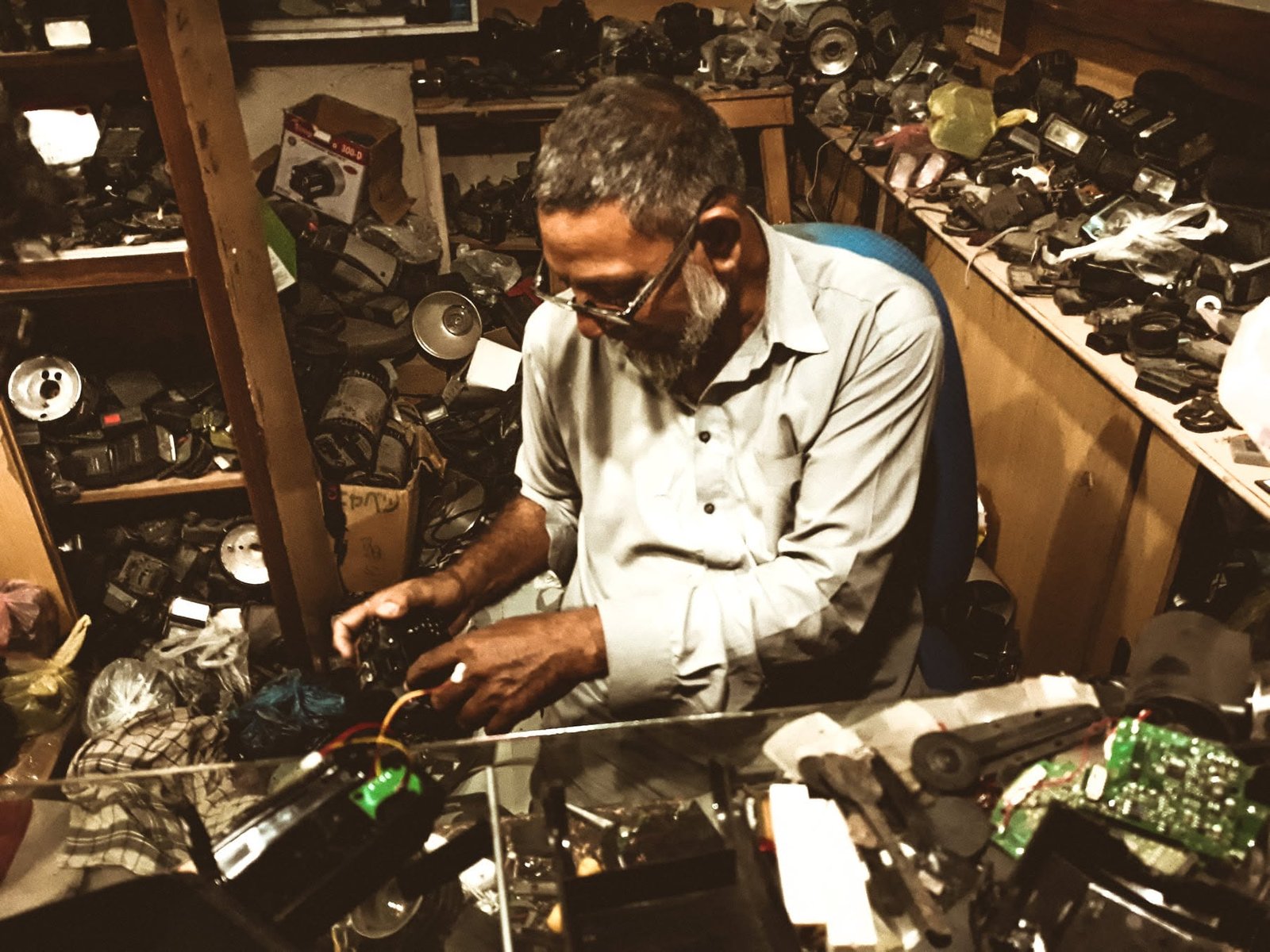
The bench is close, the tools are within reach, and the worker’s attention stays with the task. It is an intimate view of a place organised around making. The photograph honours that concentration without needing to know the whole story beyond the frame.
031 · Modern Lines, Leafy Shade – National Hospital, DHA, Karachi
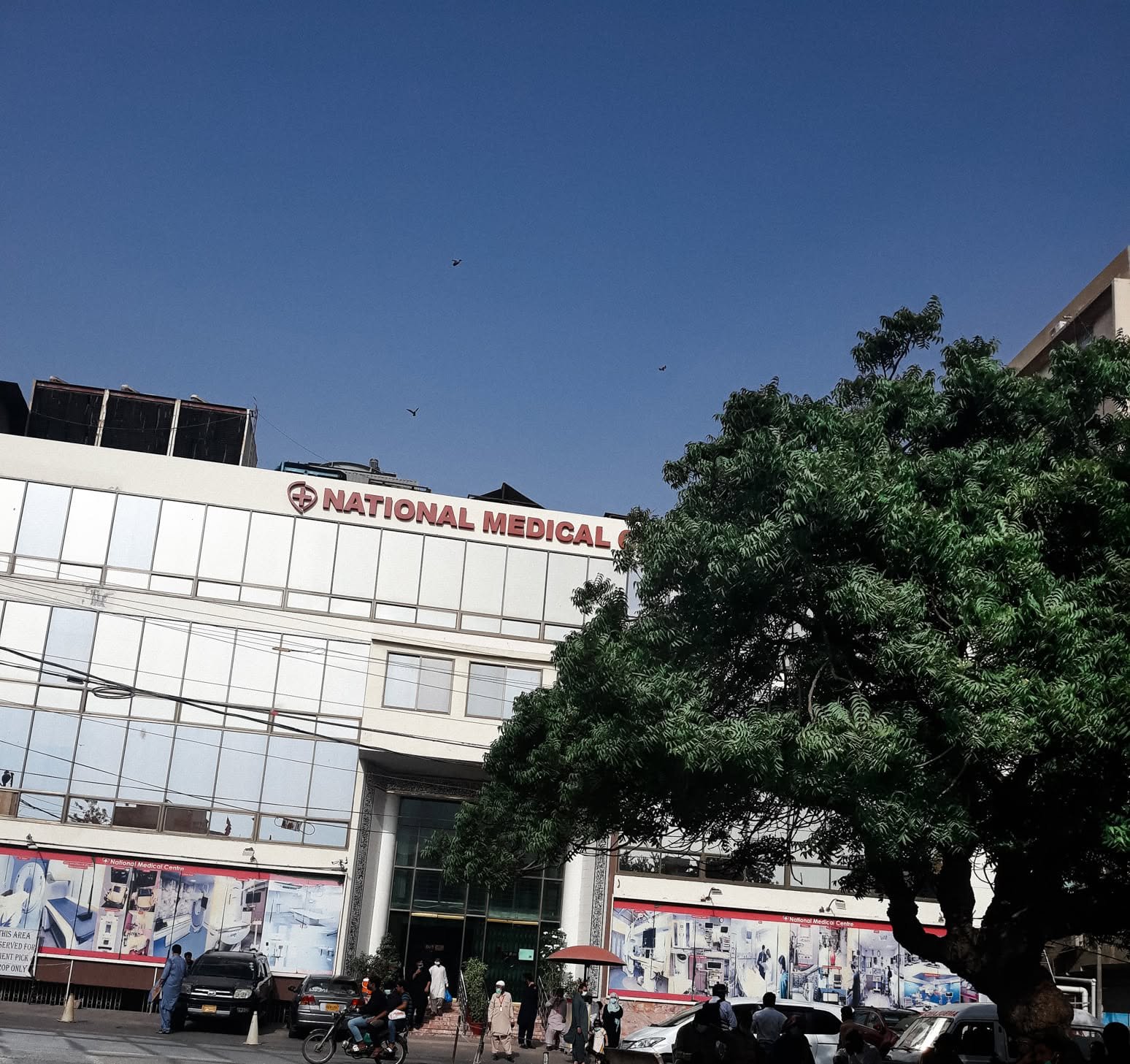
A building’s clean lines meet the irregular shapes of nearby leaves. The contrast gives both elements more presence: structure becomes clearer beside foliage, and greenery feels softer beside the facade. This small architectural view finds Karachi in a conversation between designed space and growing shade.
032 · Objects Made to Be Used – Punjab Colony
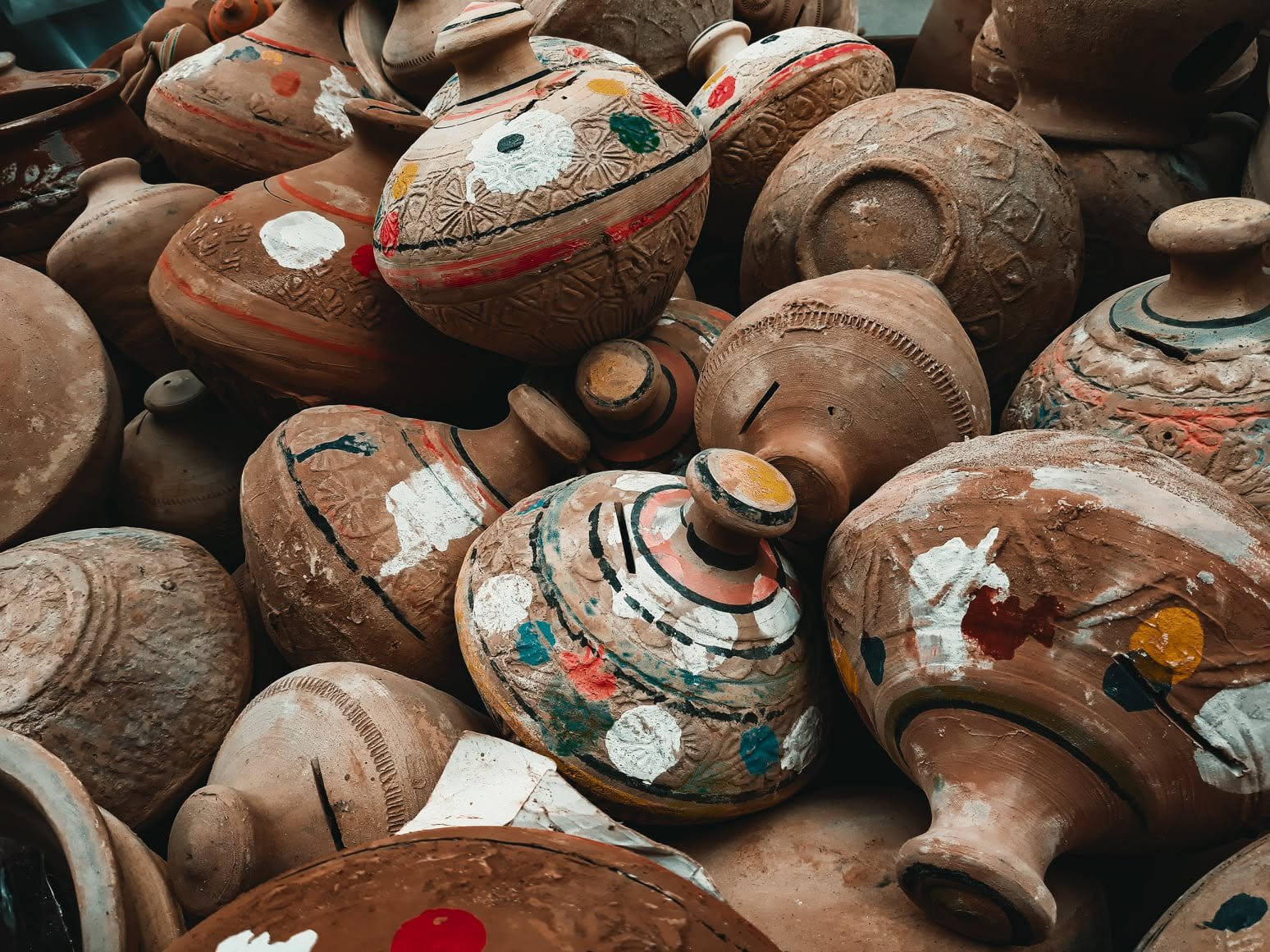
Clay vessels gather in close company, their painted surfaces giving each one a little individuality. These are objects made for use, yet their details invite admiration before anything else. The photograph finds a warm link between the market, the maker, and the home an object may eventually enter.
033 · A Landmark Along the Way – Do Talwar
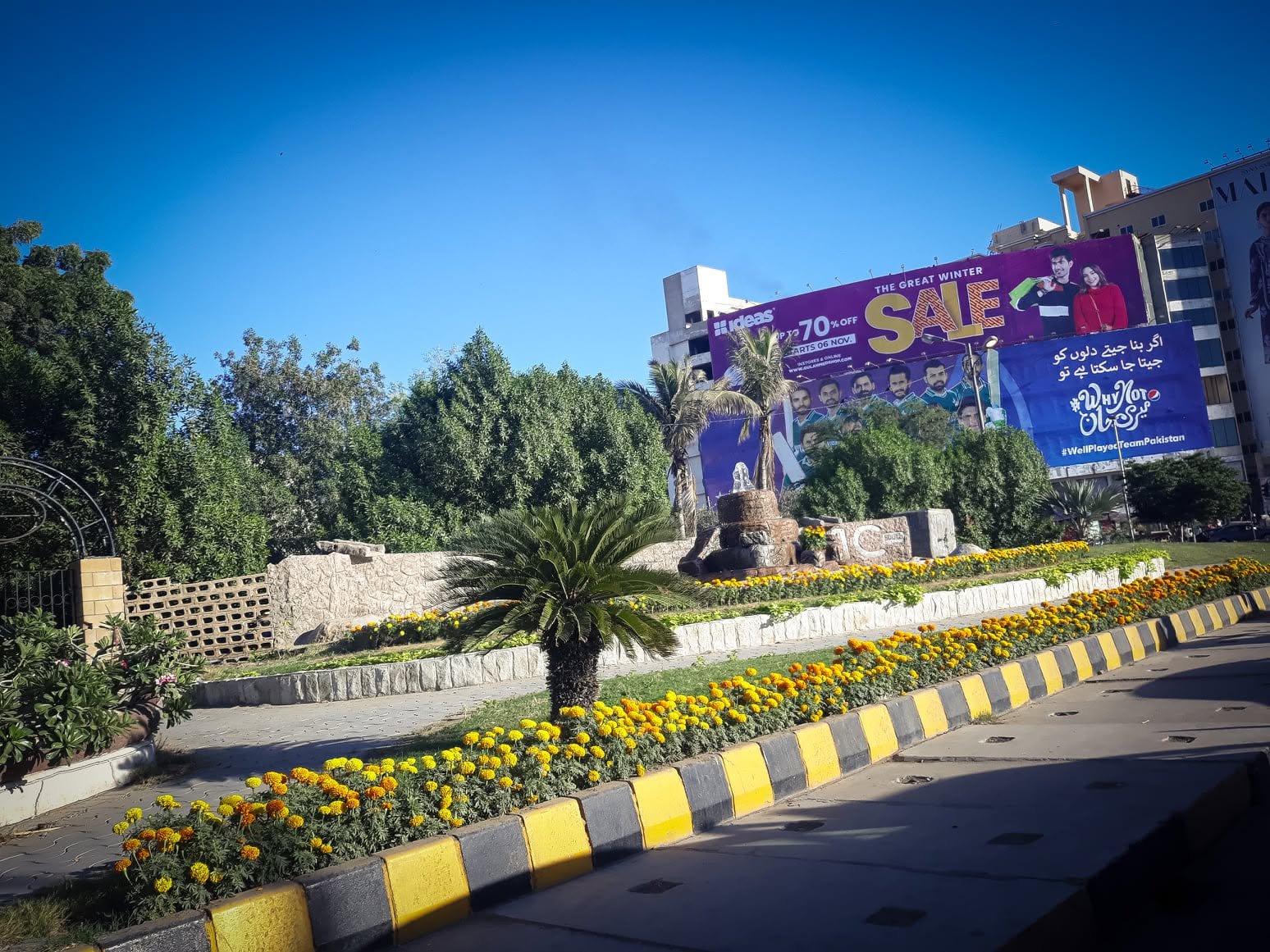
A roadside sign marks a passing place, while the planted verge adds a band of colour and care. It is the sort of view often noticed only from the corner of the eye. Here, one ordinary stretch of Karachi becomes worth a deliberate pause.
034 · The Street as a Meeting Place – Burns Road
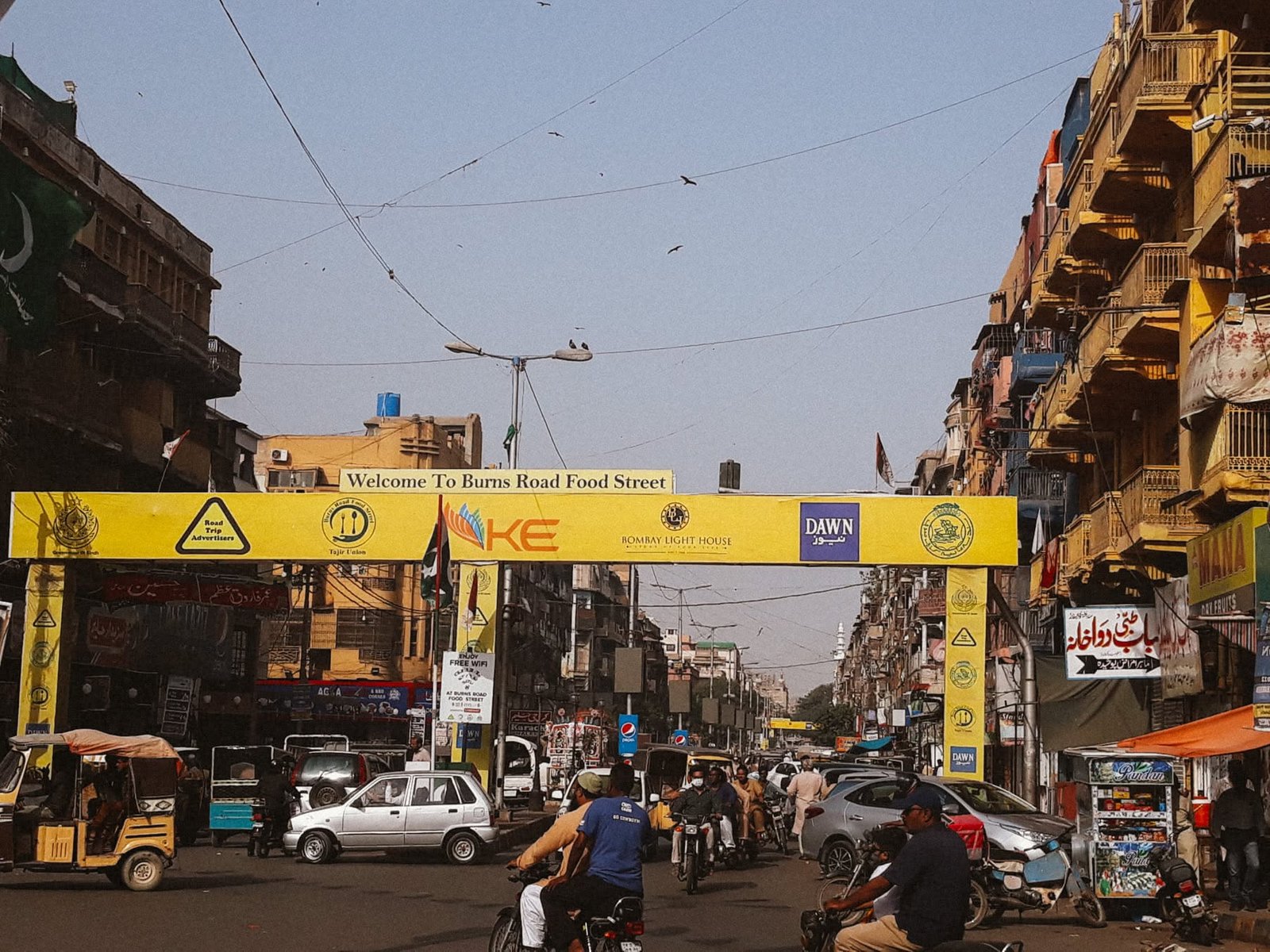
The frame is full of arrivals, departures, and brief crossings of paths. Shopfronts line the background, but people give the street its scale and feeling. Karachi’s public life appears as something continually made together, one encounter and one passing moment after another.
035 · Fruit Under Warm Lights – Saddar Karachi

Night gathers around a cart while its fruit stays bright under the lamps. The display becomes a small island of warmth, visible from well beyond the stall itself. This Karachi street scene shows how a modest source of light can change the mood of an entire corner.
036 · The Long View of Traffic – Main Korangi Road
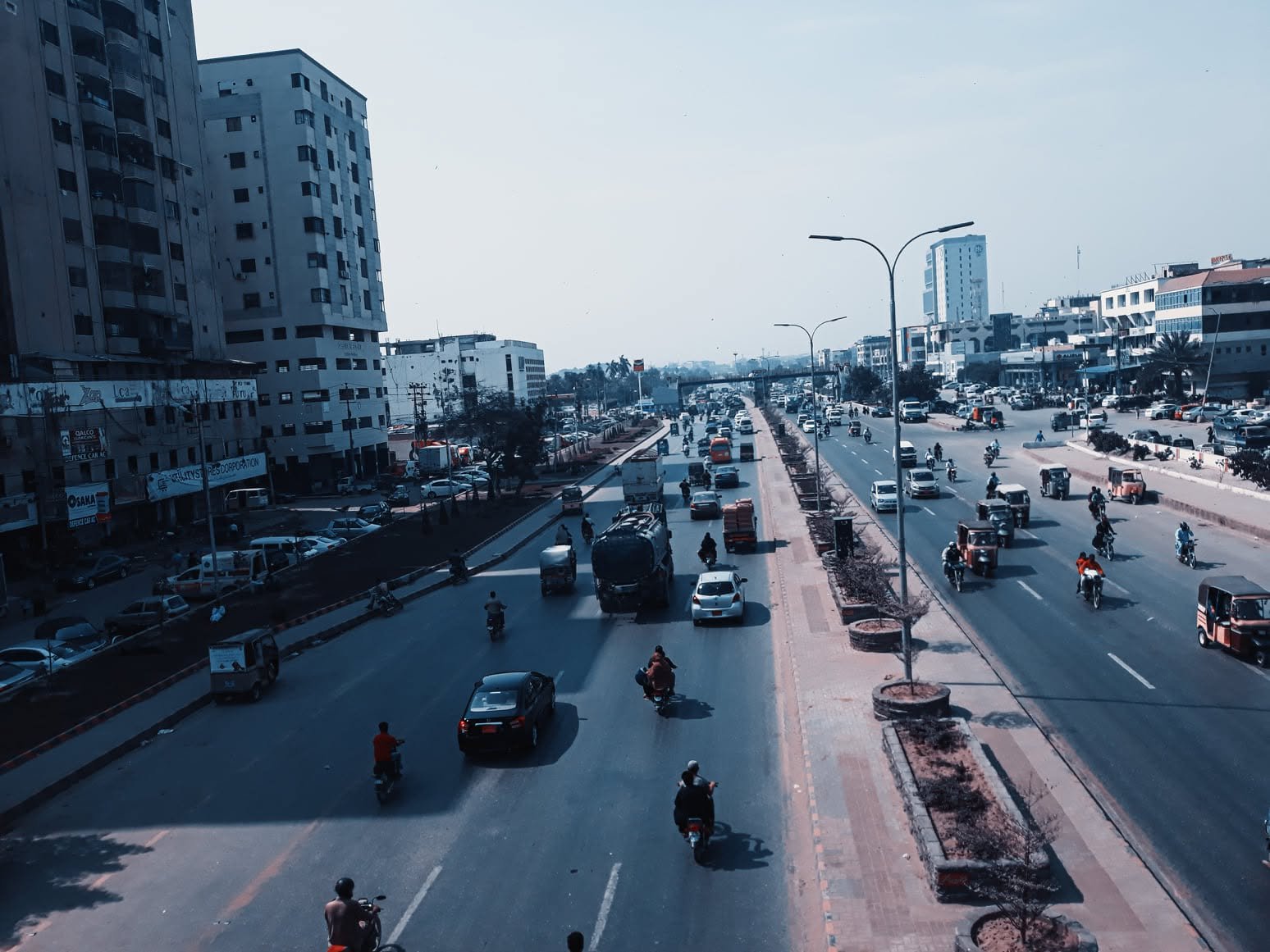
Seen from above, traffic becomes a pattern of spacing, direction, and repeated movement. Individual journeys are still there, though the photograph briefly gathers them into one larger rhythm. The road offers a different portrait of Karachi, drawn through the routes people share.
037 · At Street Level – Fisheries Karachi
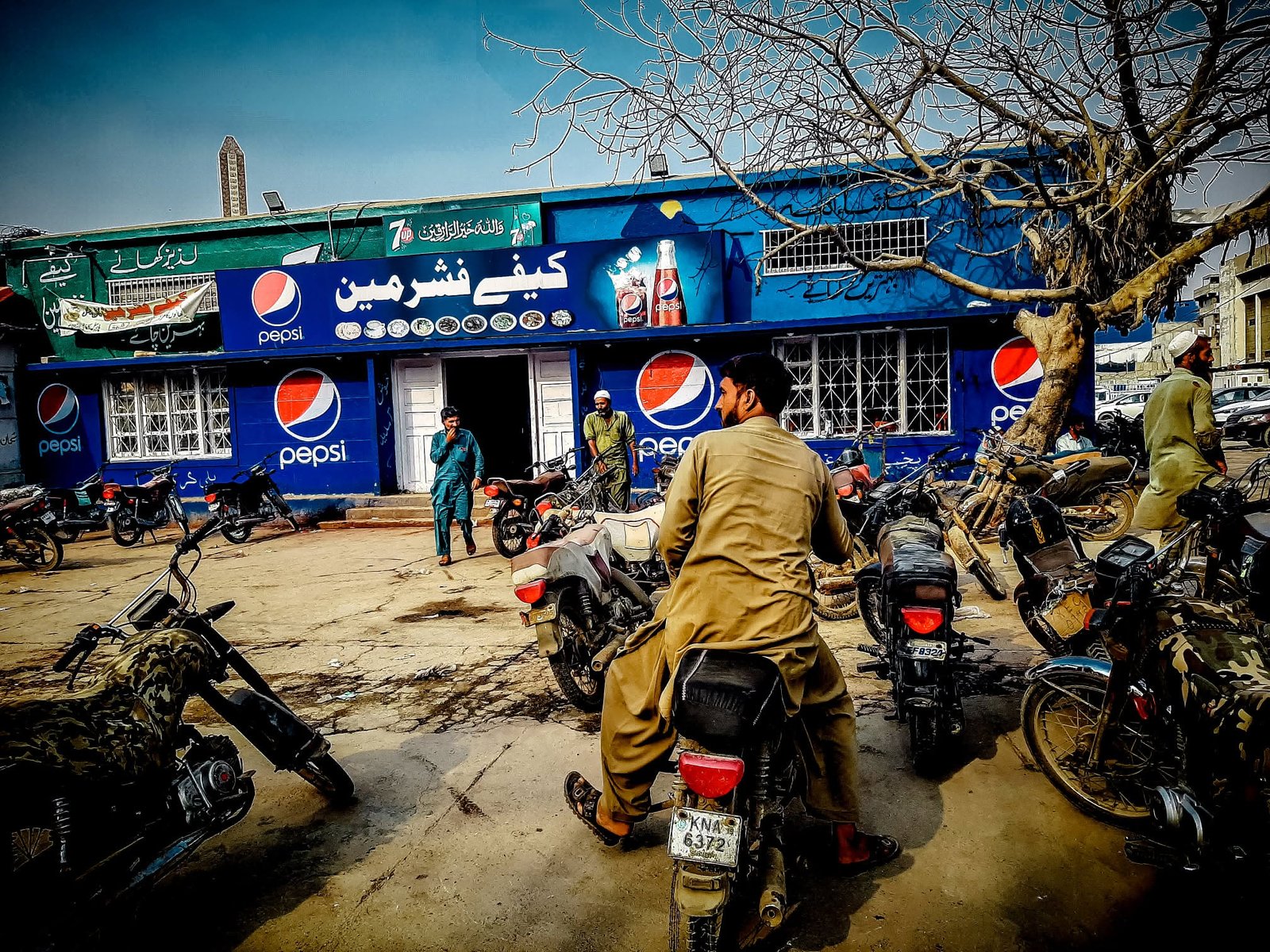
At street level, the city arrives all at once: signs overhead, wheels nearby, and people negotiating the space between. This photograph keeps that closeness rather than smoothing it away. Karachi feels vivid here because the frame allows its different movements to overlap.
038 · A Pattern of Windows – Habib Bank Plaza, karachi pakistan
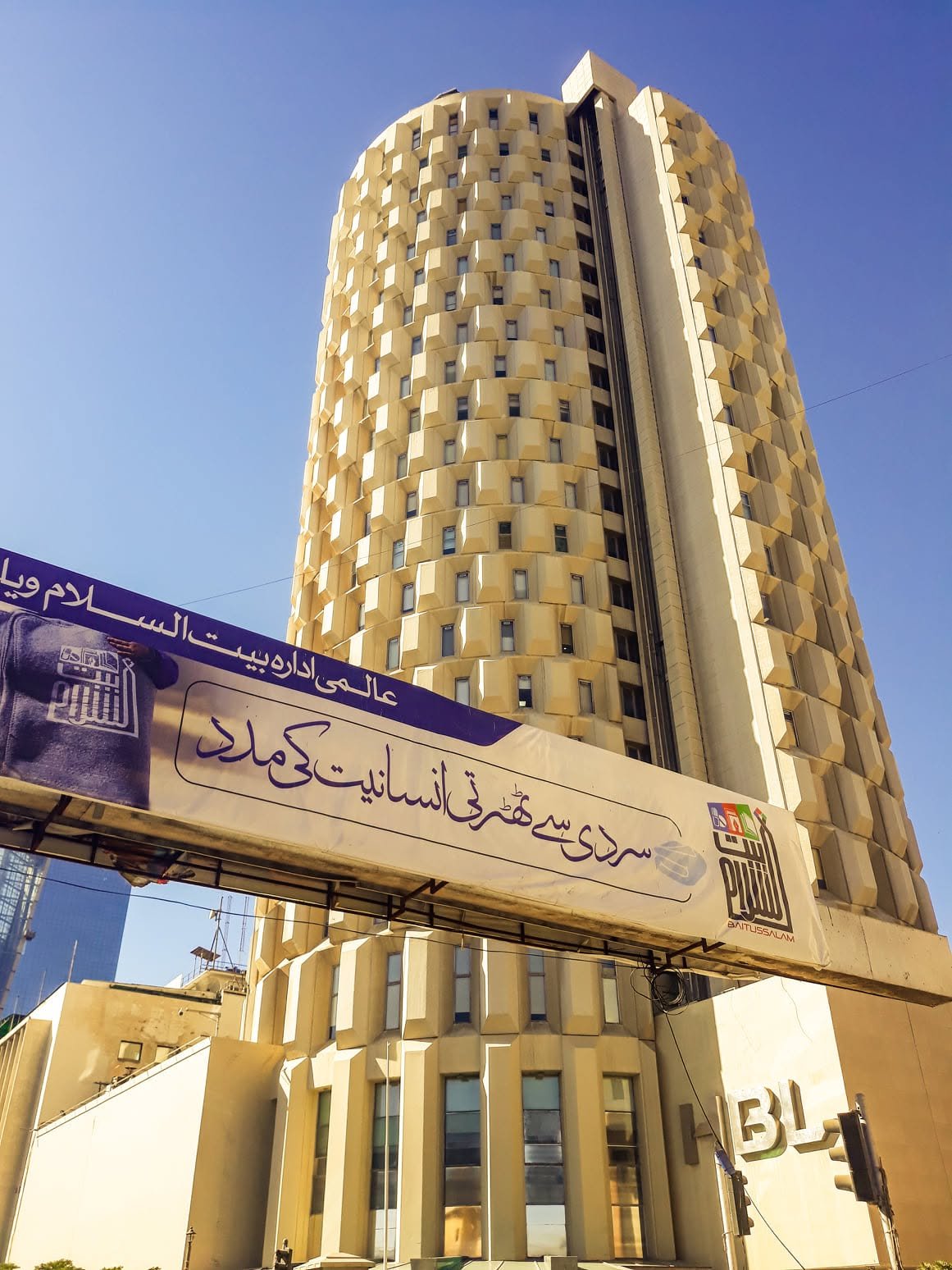
Repeating window shapes give the tower a distinctive surface, almost like a woven pattern enlarged to the scale of a building. The sky provides a simple backdrop that lets the design stand out. It is a photograph about looking up and noticing the geometry above everyday routes.
039 · Working-Day Architecture – Institute of Engineering Karachi
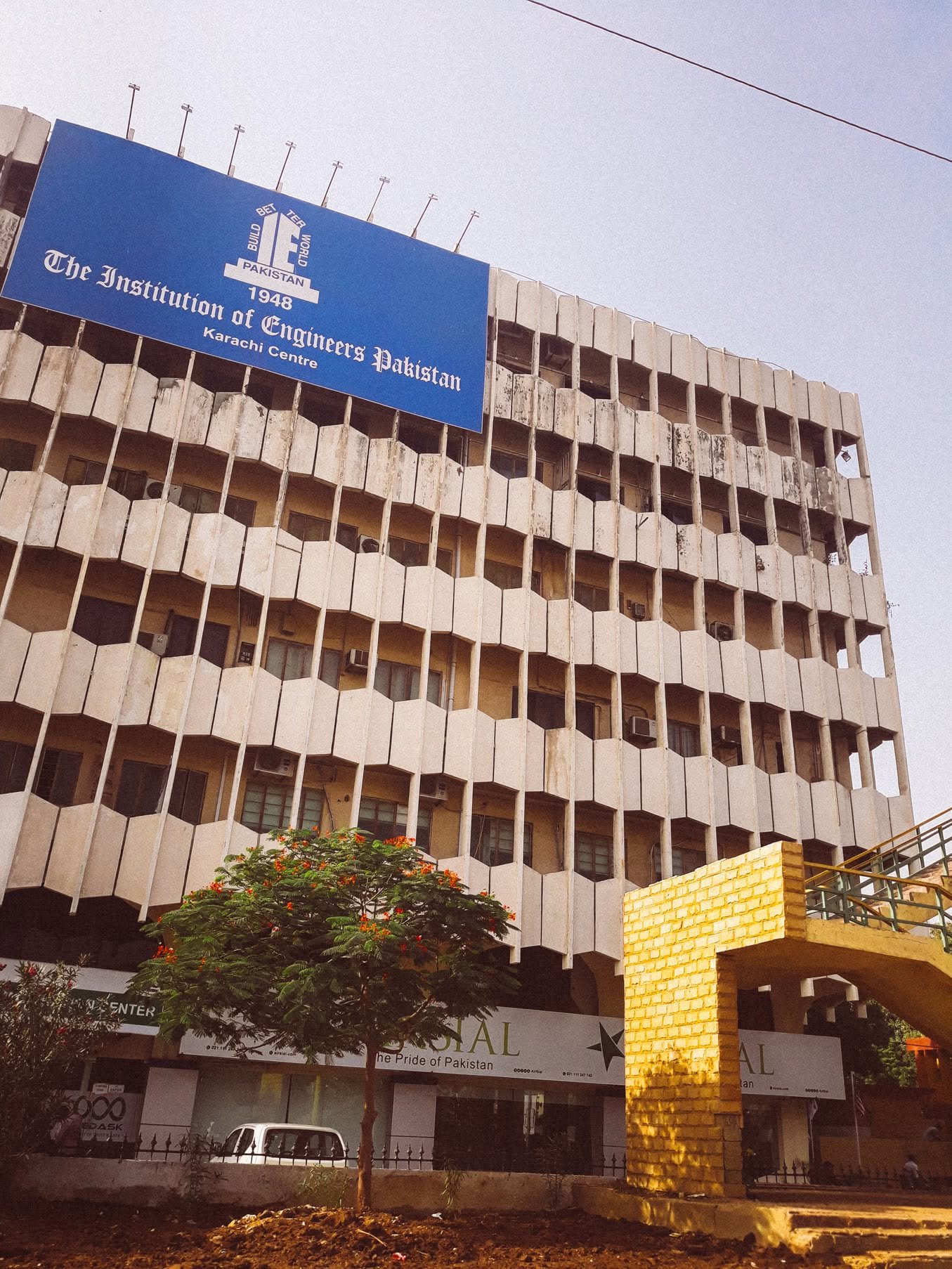
The building’s regular facade suggests the measured rhythm of a working day. Down at street level, the city adds a less predictable layer of movement and detail. This Karachi view brings those two scales together, making an ordinary office block part of a larger urban story.
040 · Behind a Familiar Meal – Beef in Karachi

Before a meal reaches the customer, there is this moment of preparation. Hands, ingredients, and a well-used counter make the scene feel immediate. The photograph follows Karachi’s food culture into the working space behind the plate, where everyday care gives familiar meals their meaning.
041 · Signs of a Good Stop – Matka Kulfi
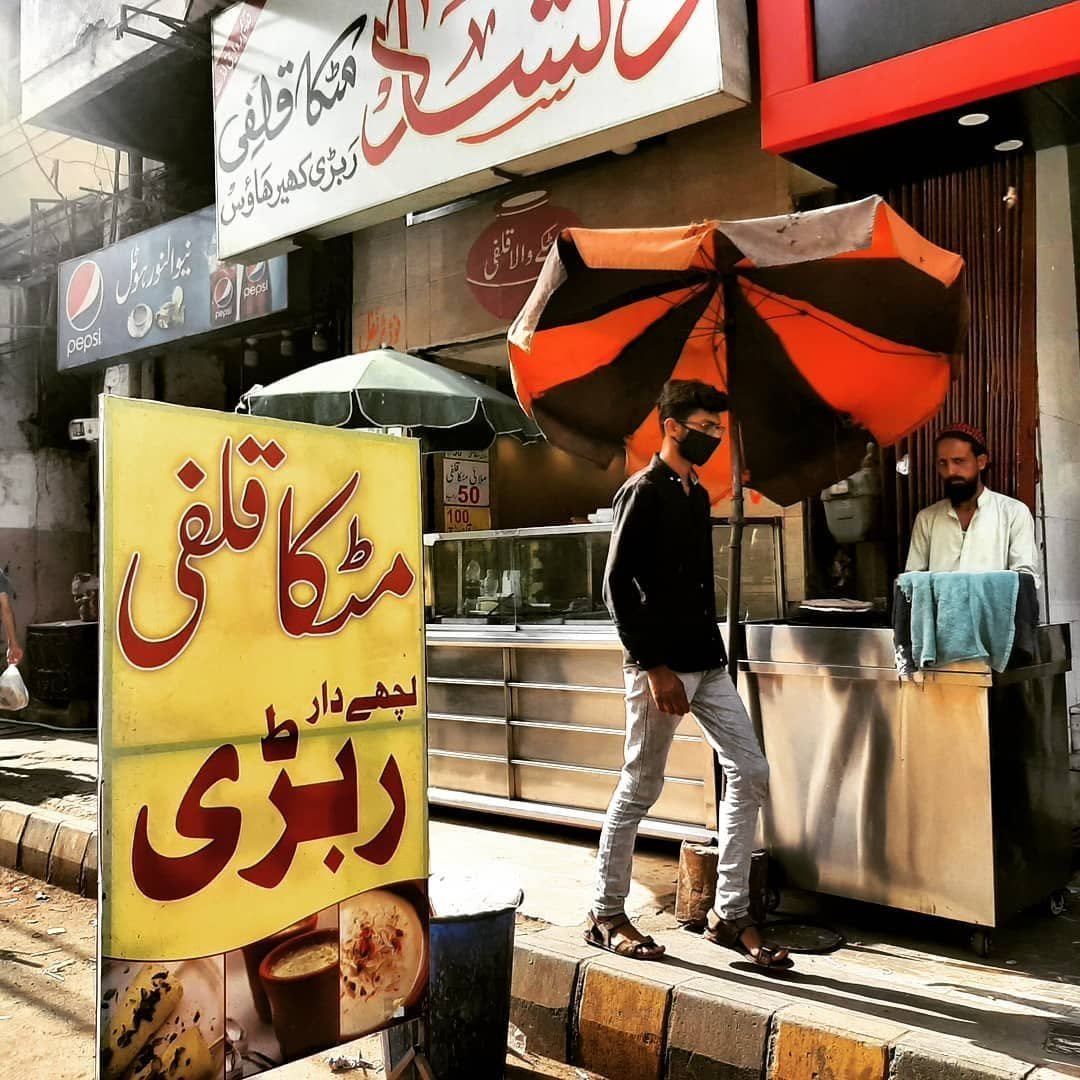
Signs gather around the entrance, offering the practical promise of something to eat. Their colours and lettering belong to the same streetscape as the traffic and shopfronts nearby. This frame finds the charm of a city food stop in the details that regular customers may barely notice.
042 · A Horse in the City – Horse in Karachi
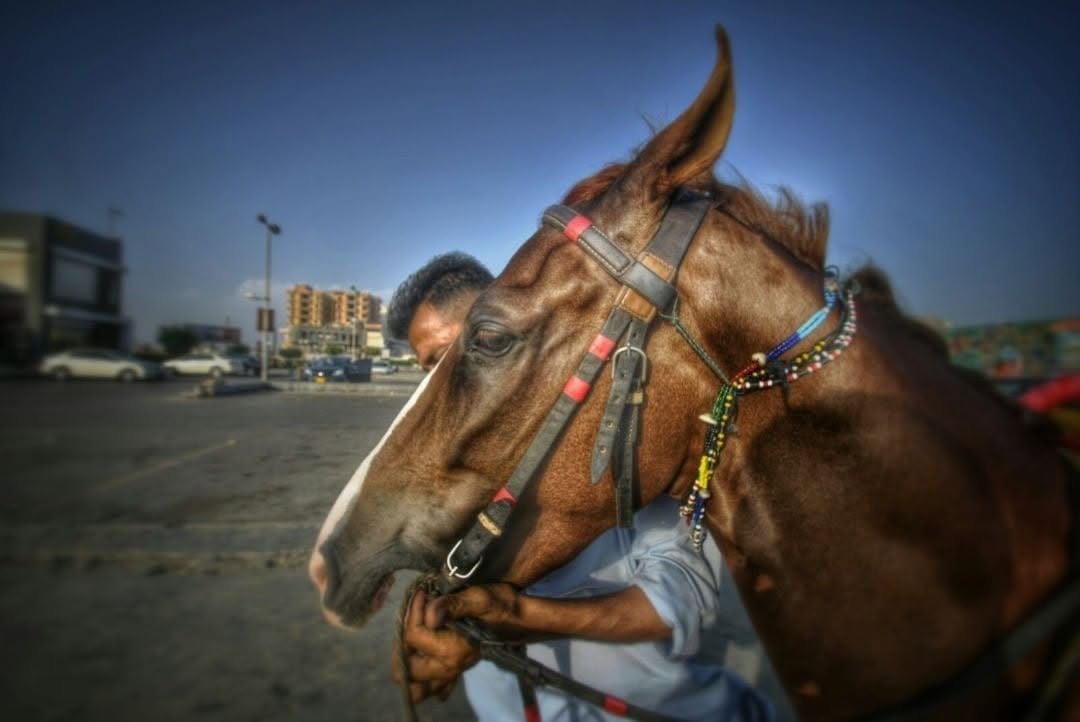
The horse’s presence changes the tempo of the urban scene. Its shape and expression hold the foreground, asking the viewer to look with a different kind of patience. Karachi’s varied daily life includes these unexpected encounters, where one subject briefly draws attention away from the surrounding roads.
043 · Stillness Beneath the Dome – Mazar-e-Quid
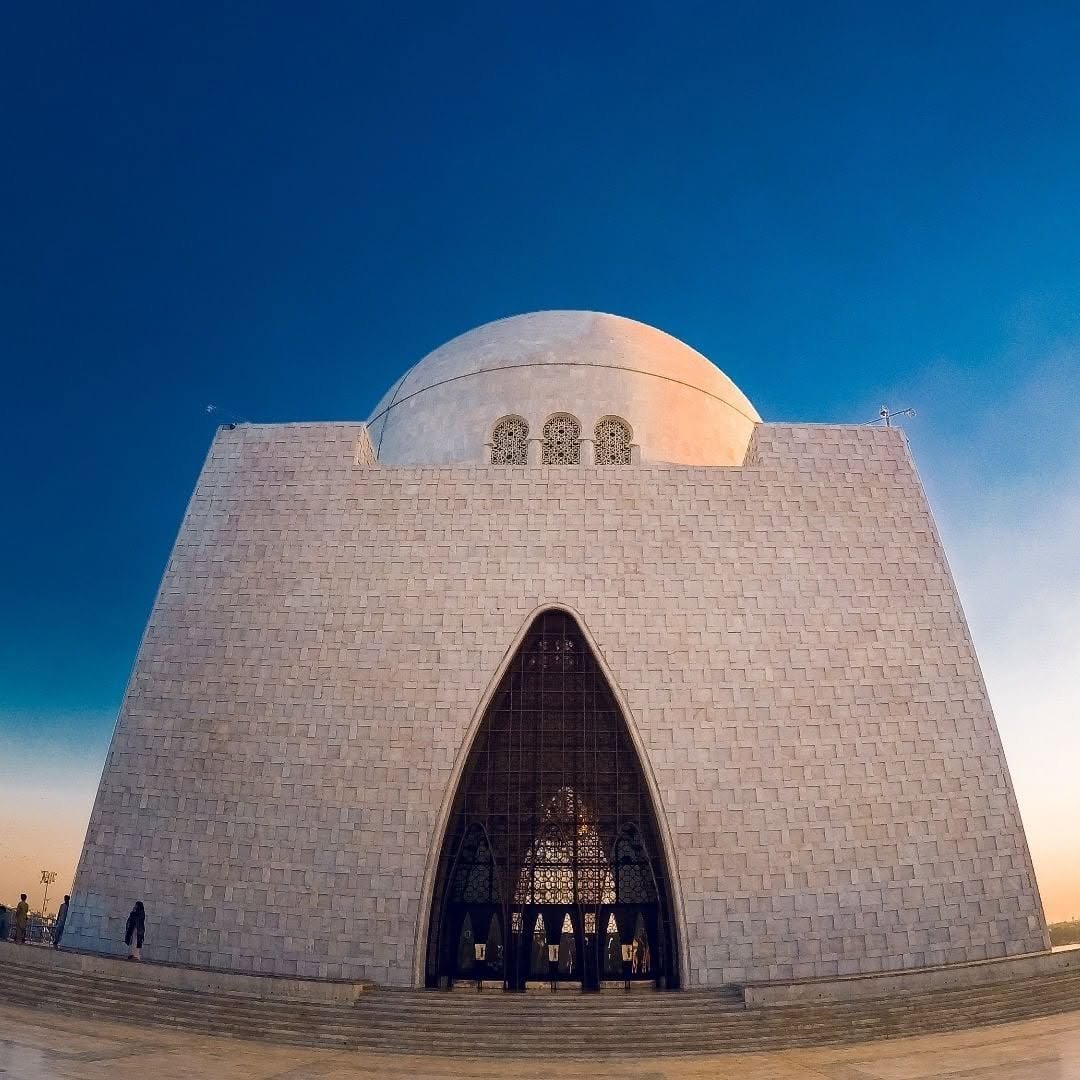
The pale dome and deep arch create a strong, quiet arrangement beneath the sky. With little visual distraction, light and proportion become the main story. This photograph offers a pause within the Karachi collection, allowing architecture to hold a moment of reflection on its own terms.
044 · Tea at the Corner – Dentist in Karachi
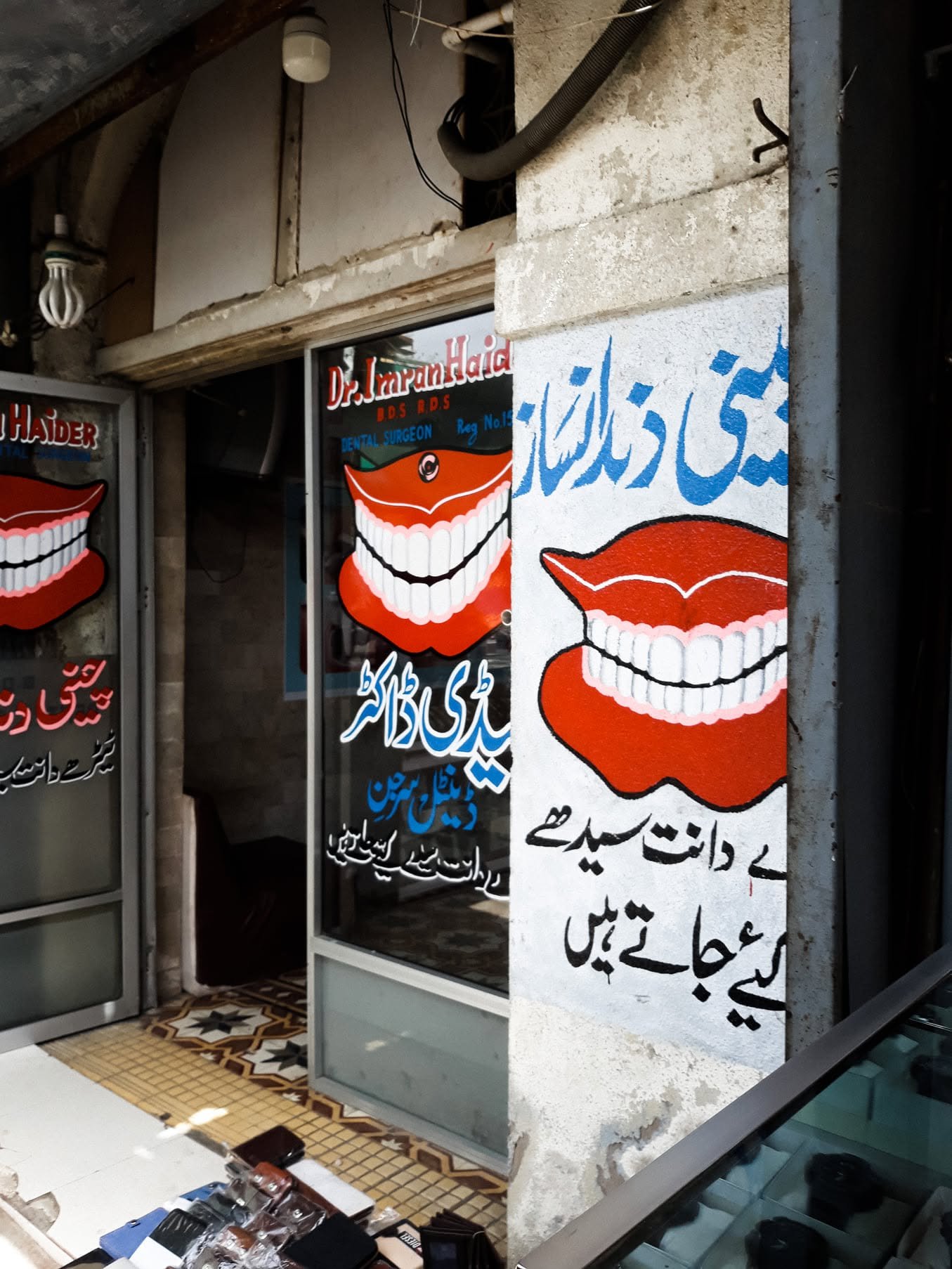
Beverage signs and a shaded doorway give this corner the feeling of a familiar stopping place. A city is remembered through such modest invitations as often as through grand views. In Karachi, the promise of a drink and a short pause can become part of the map of a day.
045 · A Wall with Something to Say – DHA Phase 1
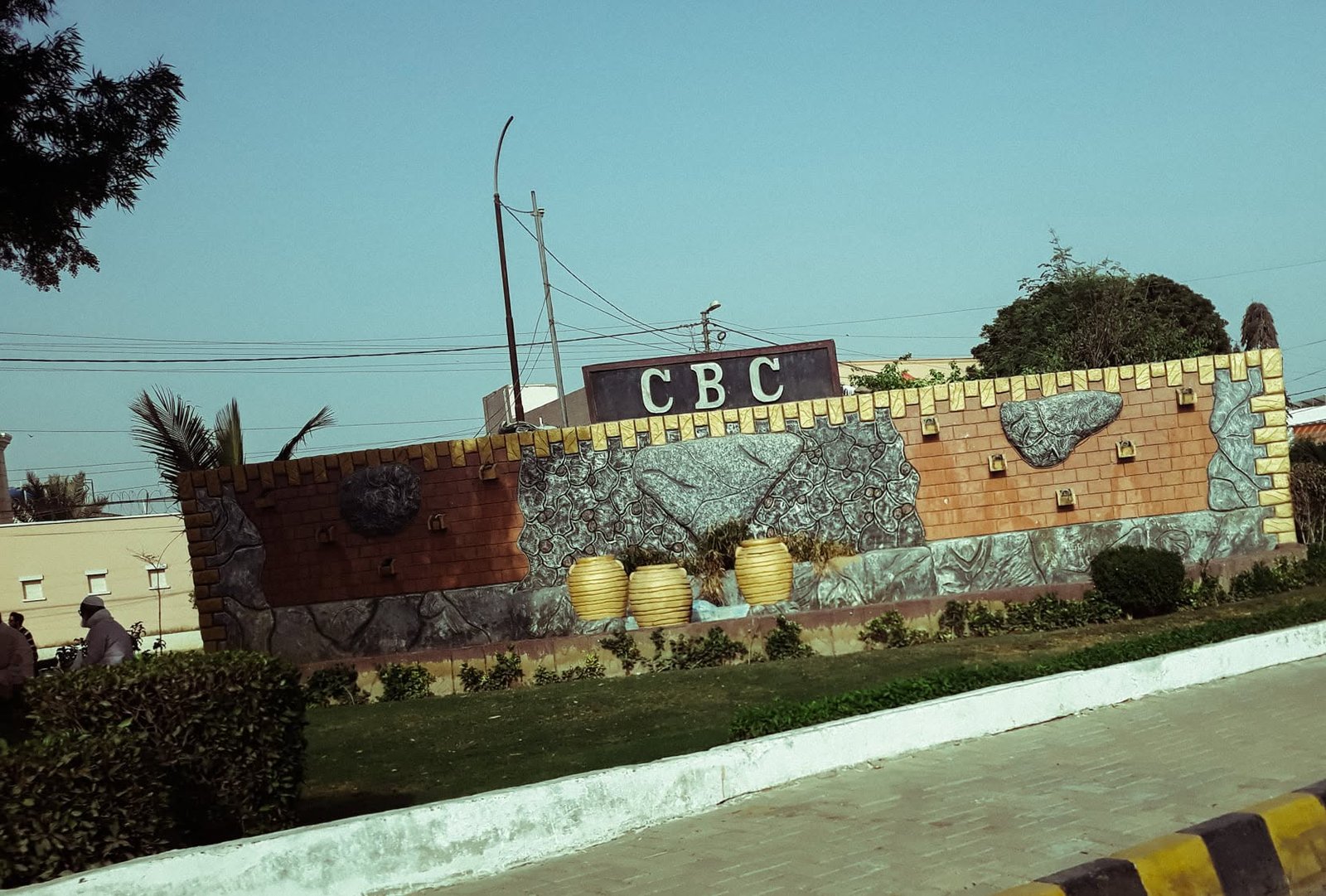
A long wall becomes more than a boundary when colour spreads across its surface. The painted details interrupt the ordinary roadside view and offer something to follow with the eye. This photograph finds visual storytelling already present in the city, waiting on the route people take each day.
046 · Balconies Over Daily Life – Burns Road Fresco
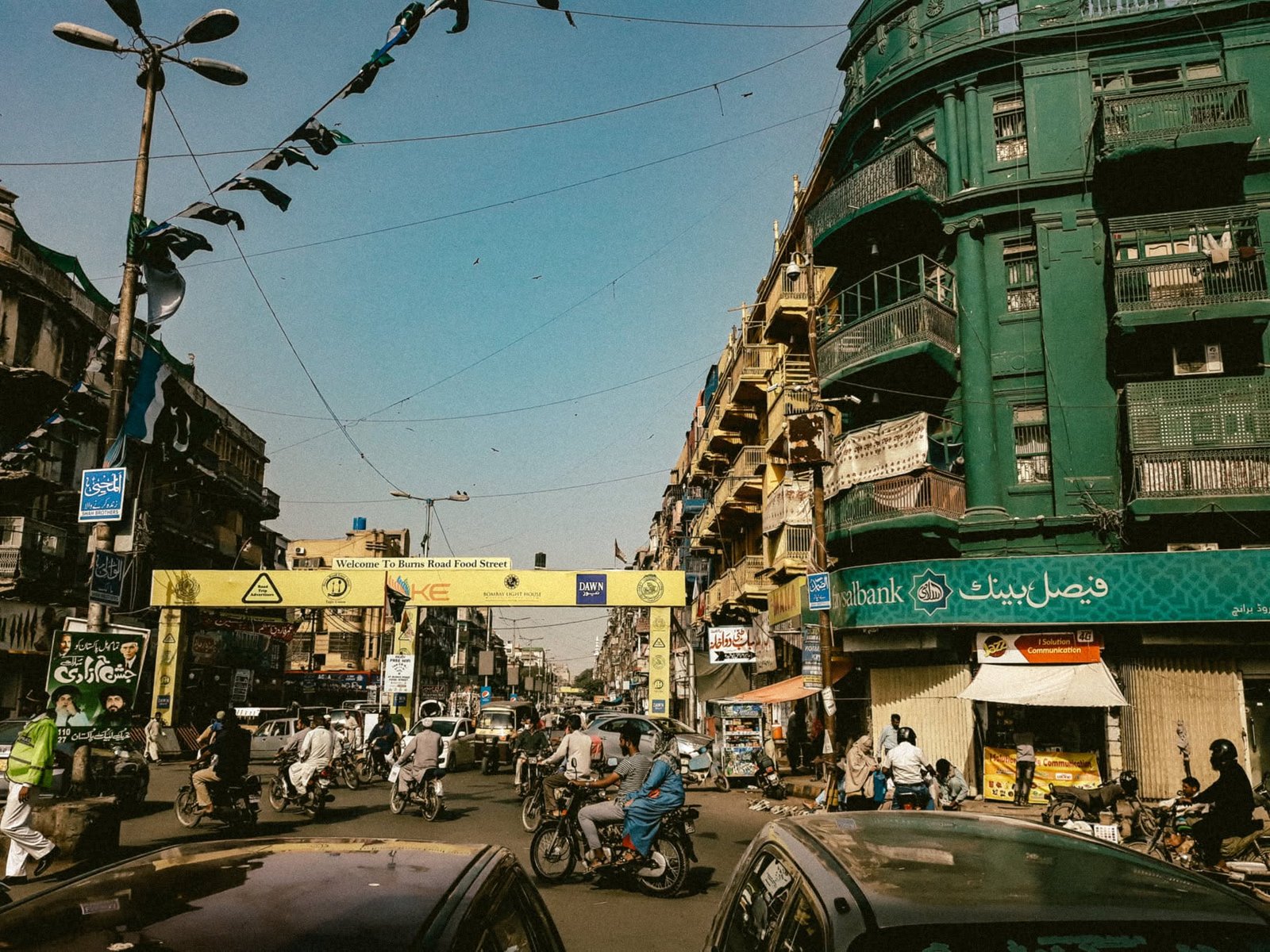
Balconies give the facade depth and a sense of life beyond its visible surfaces. Below them, the street continues with the movement of an ordinary day. Karachi’s older buildings often have this double presence: they shape a public view while holding private worlds just out of sight.
047 · Bread and Practiced Hands – Gizri
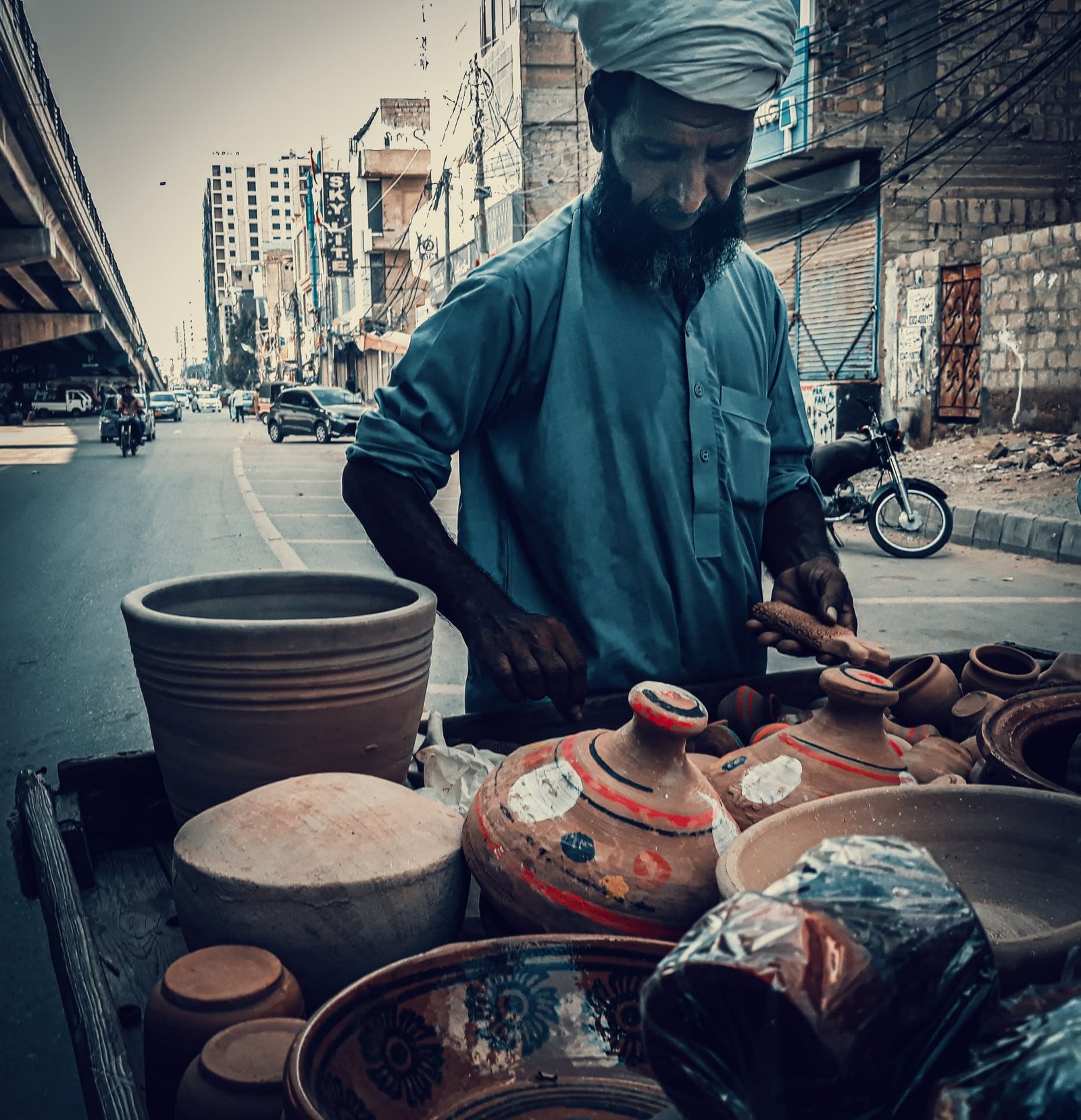
A simple workspace holds the making of something familiar. The preparation draws attention to the hand movements behind food that is often eaten without a second thought. This Karachi scene finds its warmth in the process, where skill turns ordinary ingredients into part of the day’s comfort.
048 · The Tower Above the Street – Empress Market
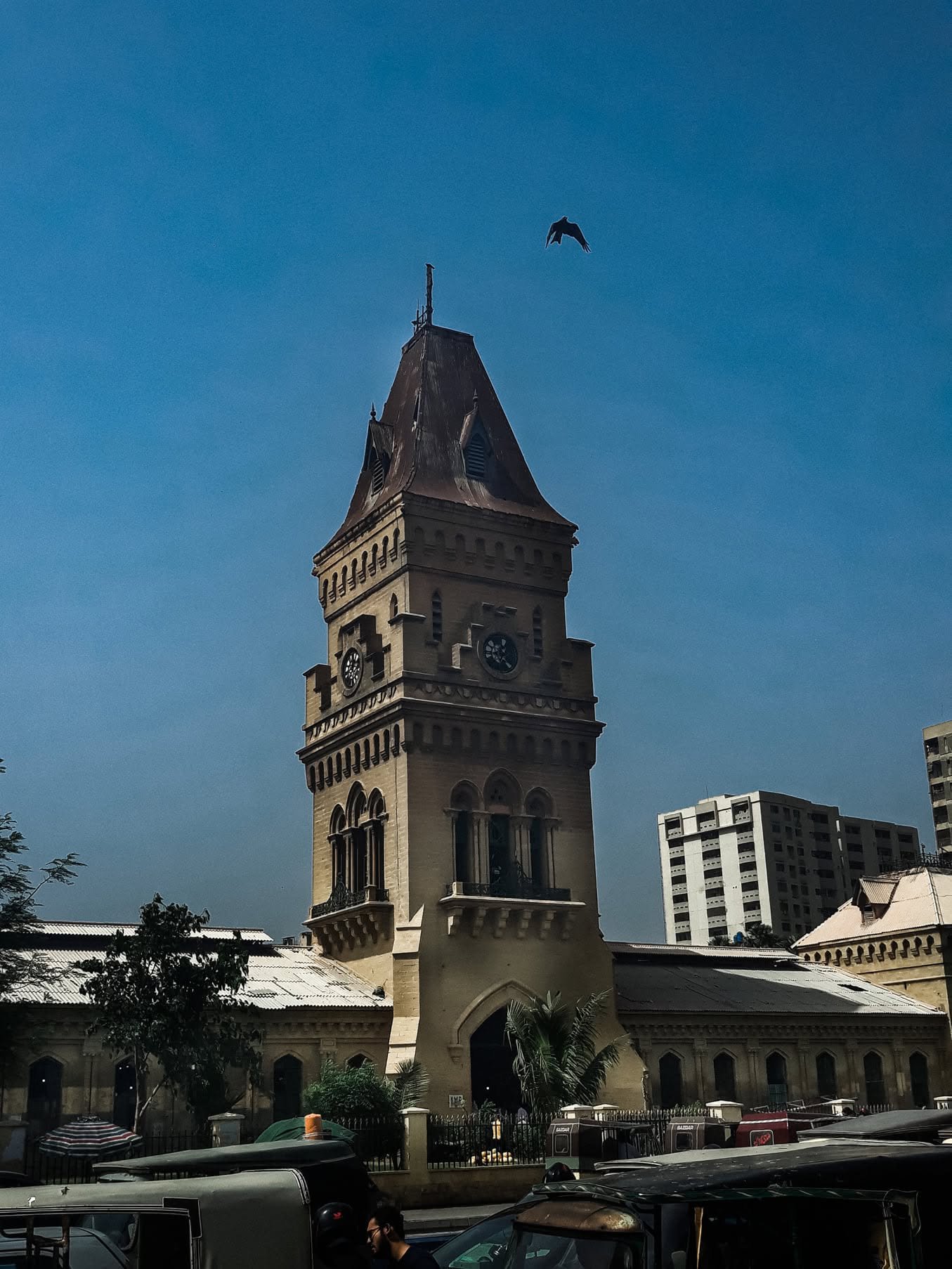
The tower breaks the line of lower buildings, giving the street a point to look toward. Its vertical form feels steady against everything that may move below. This photograph follows Karachi through its architectural punctuation, the structures that help a neighbourhood remain recognisable from one visit to the next.
049 · Under the Elevated Road – SUIT
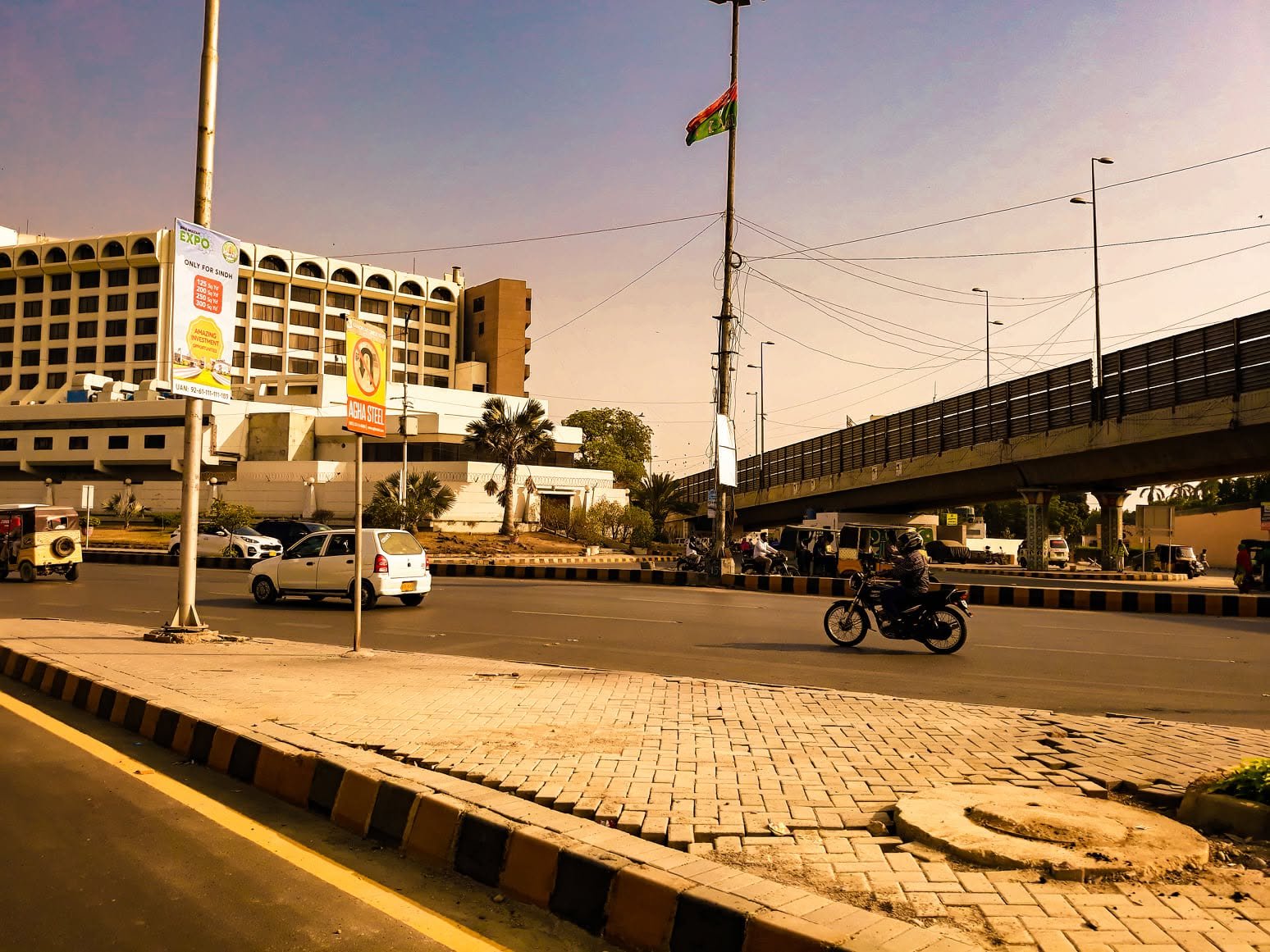
Overhead concrete creates a roof for a space that is still part of the open city. The road threads through it, carrying movement between columns and patches of light. Karachi’s infrastructure becomes a landscape here, shaped not only by its size but by the viewpoints found beneath it.
050 · Movement from Above – Traffic in Karachi
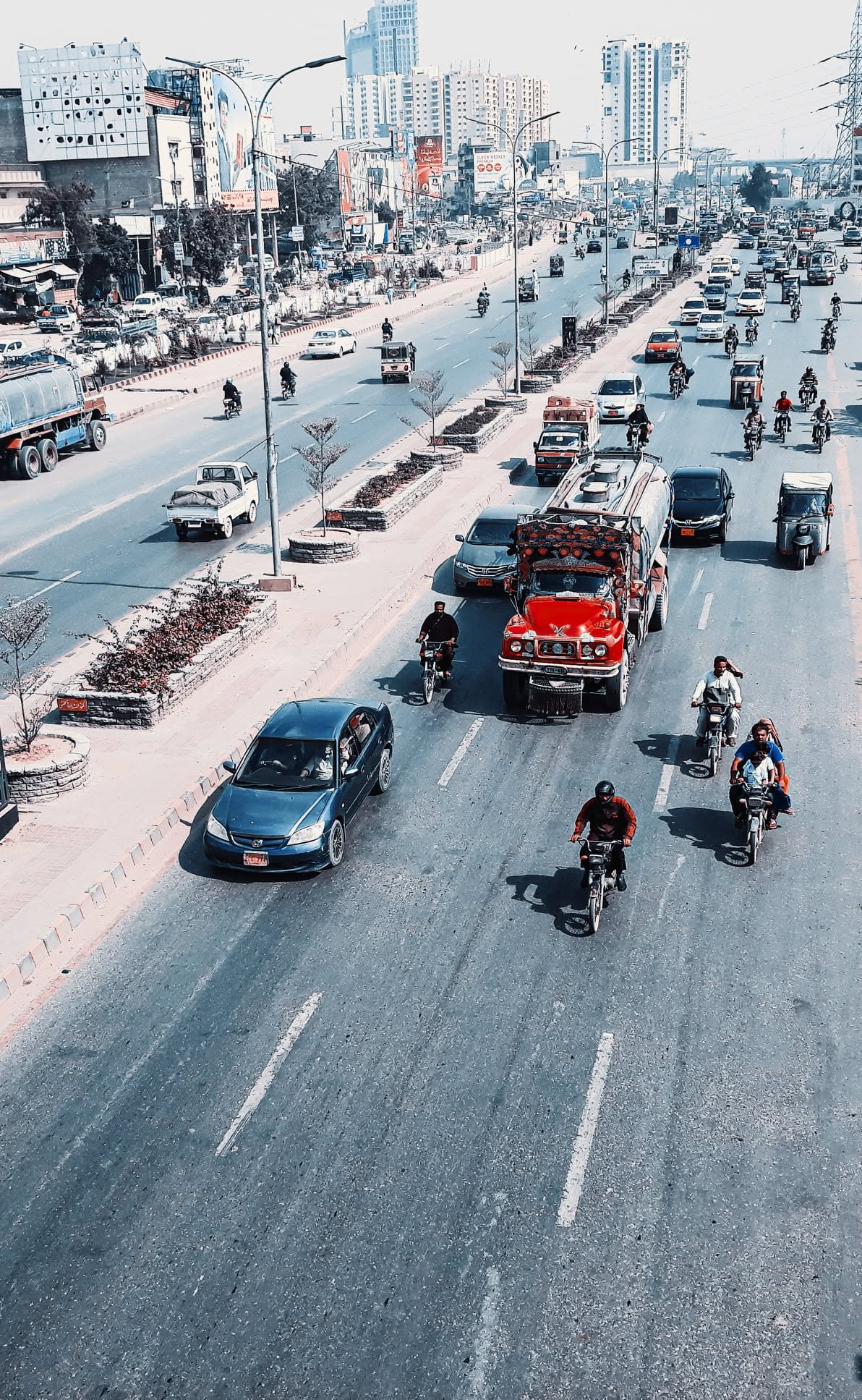
Distance gives the road a new kind of order. Vehicles that feel close and noisy at street level become small marks moving through the composition. The photograph lets Karachi’s pace be seen rather than simply felt, revealing the visual rhythm within an ordinary stretch of traffic.
Faces, Facades, and Daily Journeys
051 · Golden Corn, Simple Pleasure – Corn at Seaview
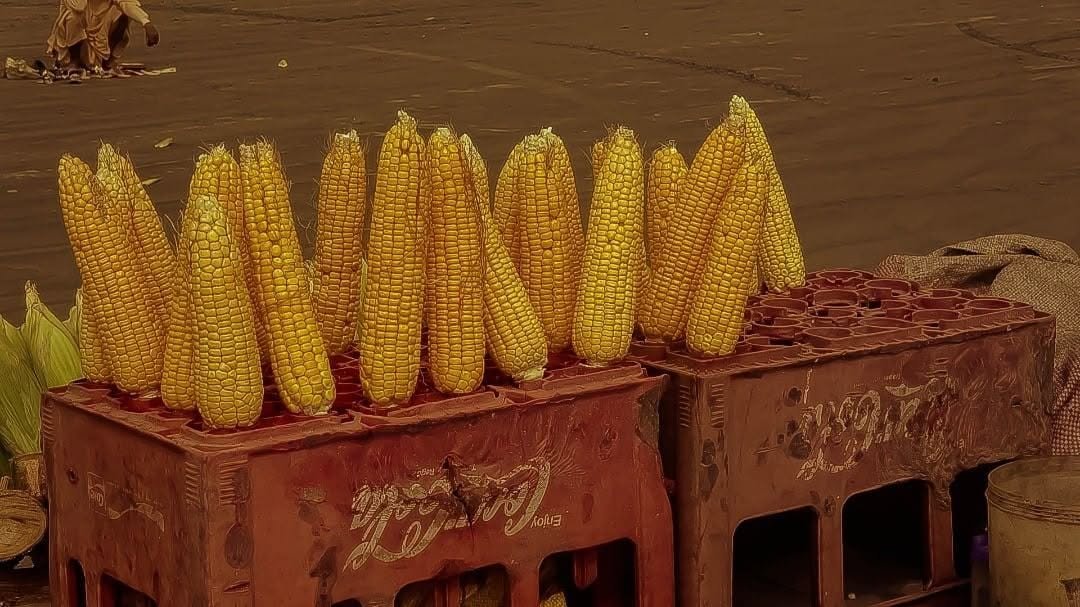
The corn stands upright in a cheerful band of gold. Its colour does much of the storytelling, suggesting the appeal of a warm snack bought along the way. This small food scene celebrates a modest pleasure within the larger journey through Karachi’s streets.
052 · At the Meat Stall – Balochistan Sajji
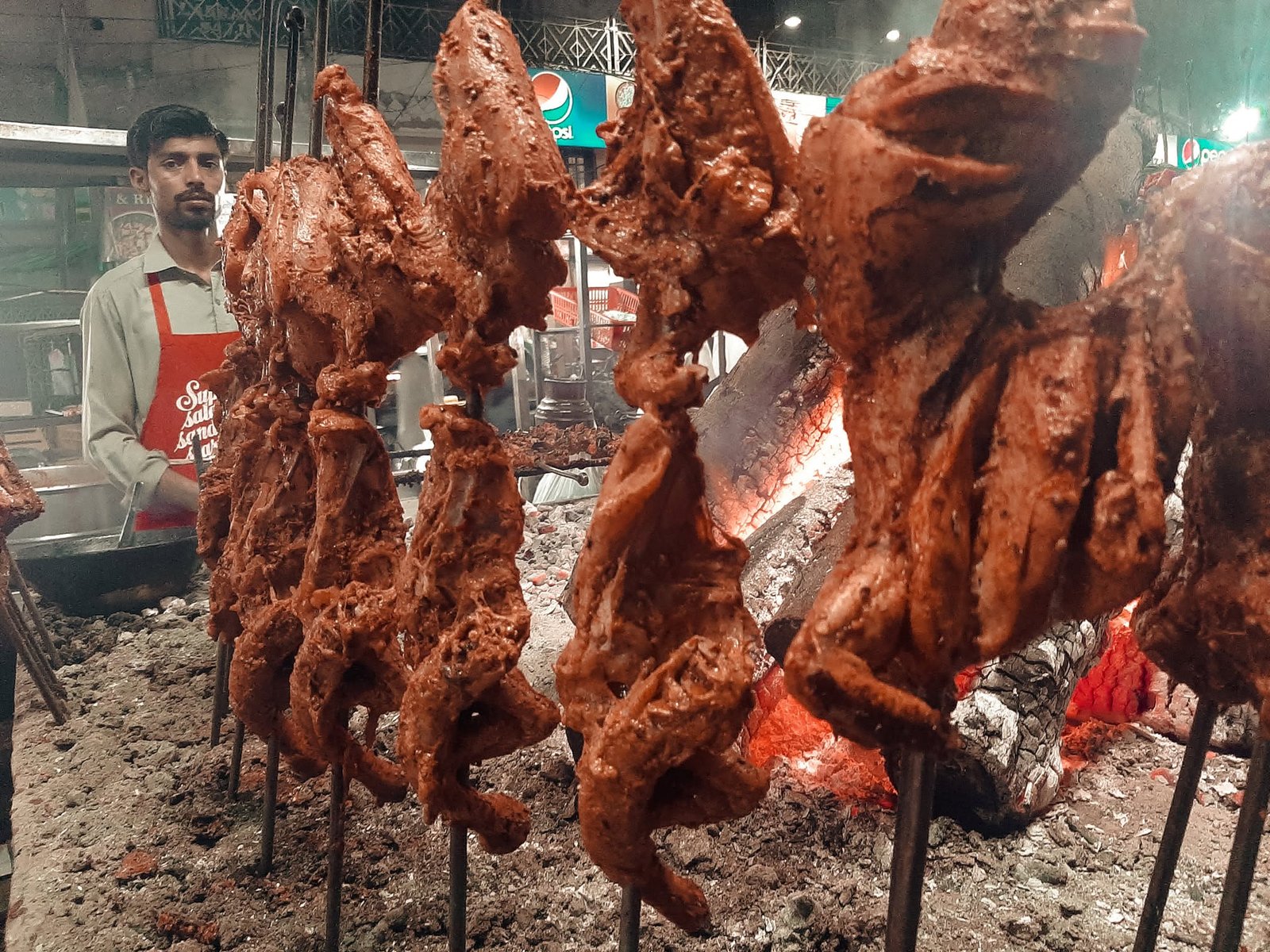
The scene is direct about the practical work of a food market. Hanging cuts fill the frame, showing a part of the food chain that often remains separate from the finished meal. This Karachi photograph gives that working environment the same attention as the city’s more polished views.
053 · A Name in the Cityscape – FTC Karachi

The city’s name becomes a physical part of the view, turning a word into a place to stop and look. Buildings behind it add context without taking away its simple presence. Within the wider collection, this frame feels like a visual signature for the streets and stories around it.
054 · The Catch in Close-Up – Fresh Fish in Karachi

The camera moves close enough for scale patterns and curved bodies to become the focus. There is a practical purpose to the display, but also a strong visual arrangement. Karachi’s coastal identity appears through these tangible details, held for a moment before the market moves on.
055 · Every Sign a Destination – Main Saddar Karachi
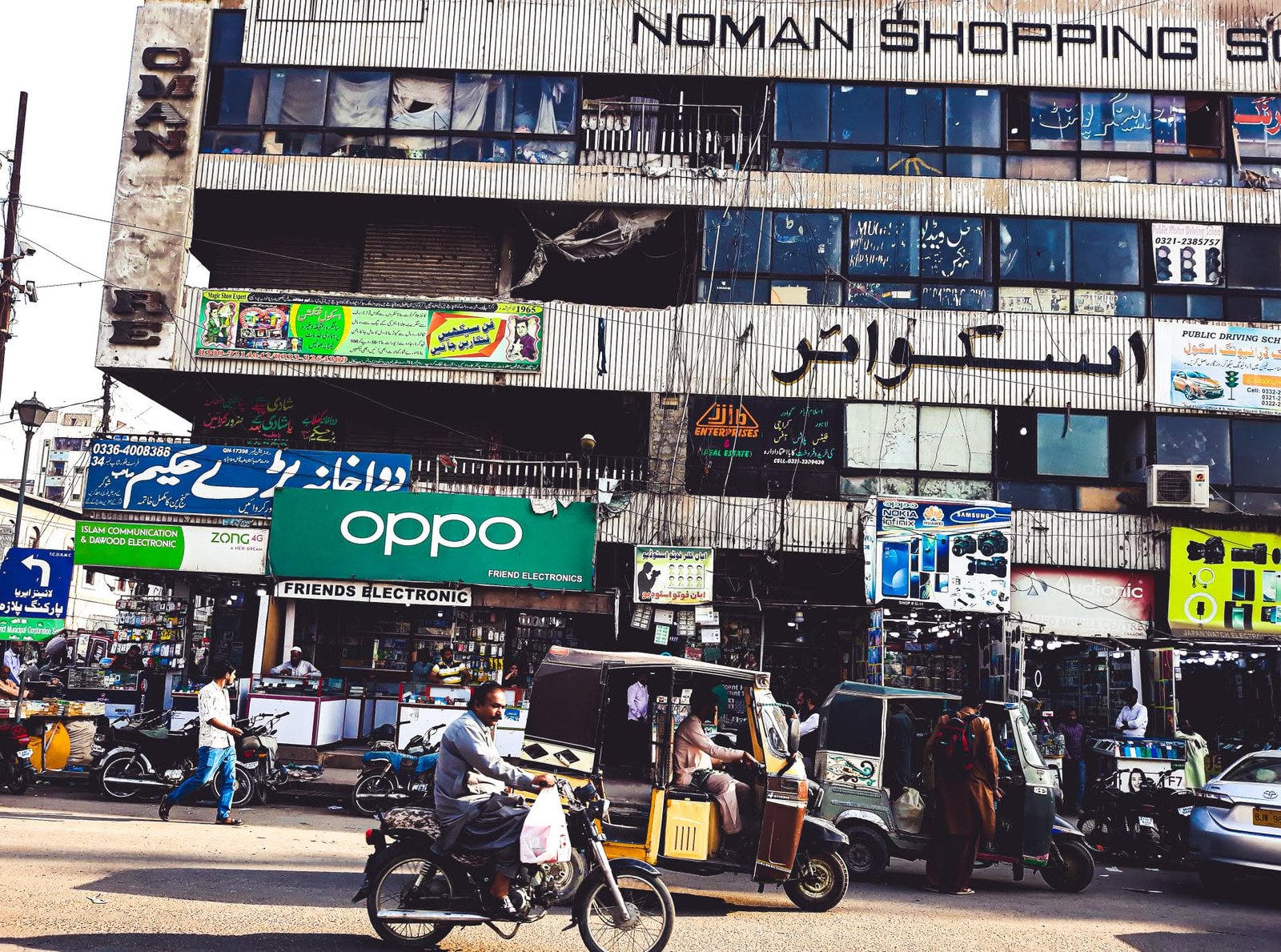
Shop names compete for a little space on the facade, building a map of possibilities above the street. Each sign points toward a different reason to visit. The photograph shows Karachi’s commercial life as a visible layer of lettering, colour, and human intention.
056 · Faces Along the Journey – Tableegh in Karachi
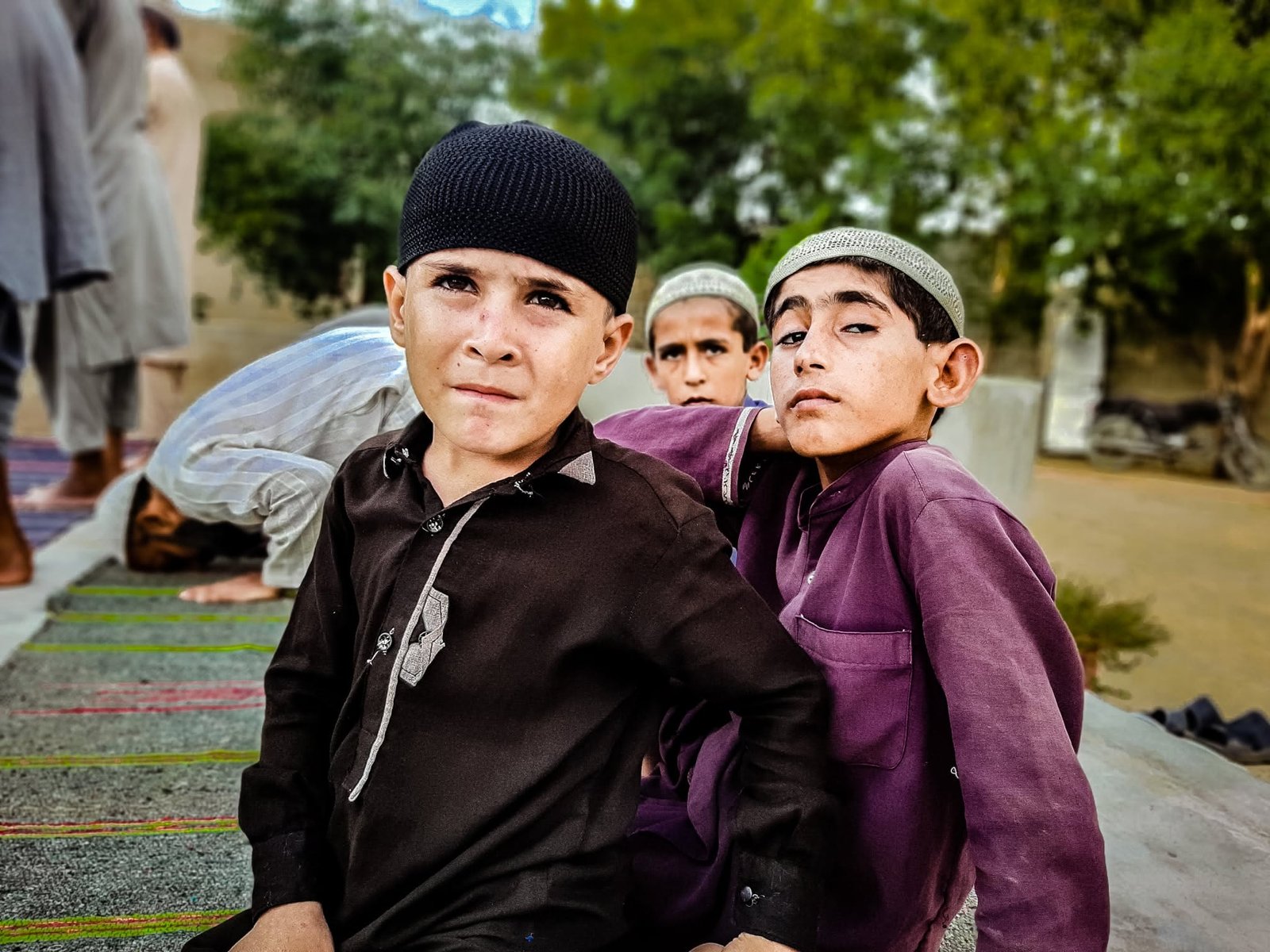
The children meet the camera with different expressions, giving the photograph its energy and individuality. The background becomes secondary to that brief exchange. Among buildings, markets, and traffic, this portrait brings the collection back to people, whose presence gives every city view its human scale.
057 · Haze and Old Streets – Shahra-e-Iraq Saddar Karachi
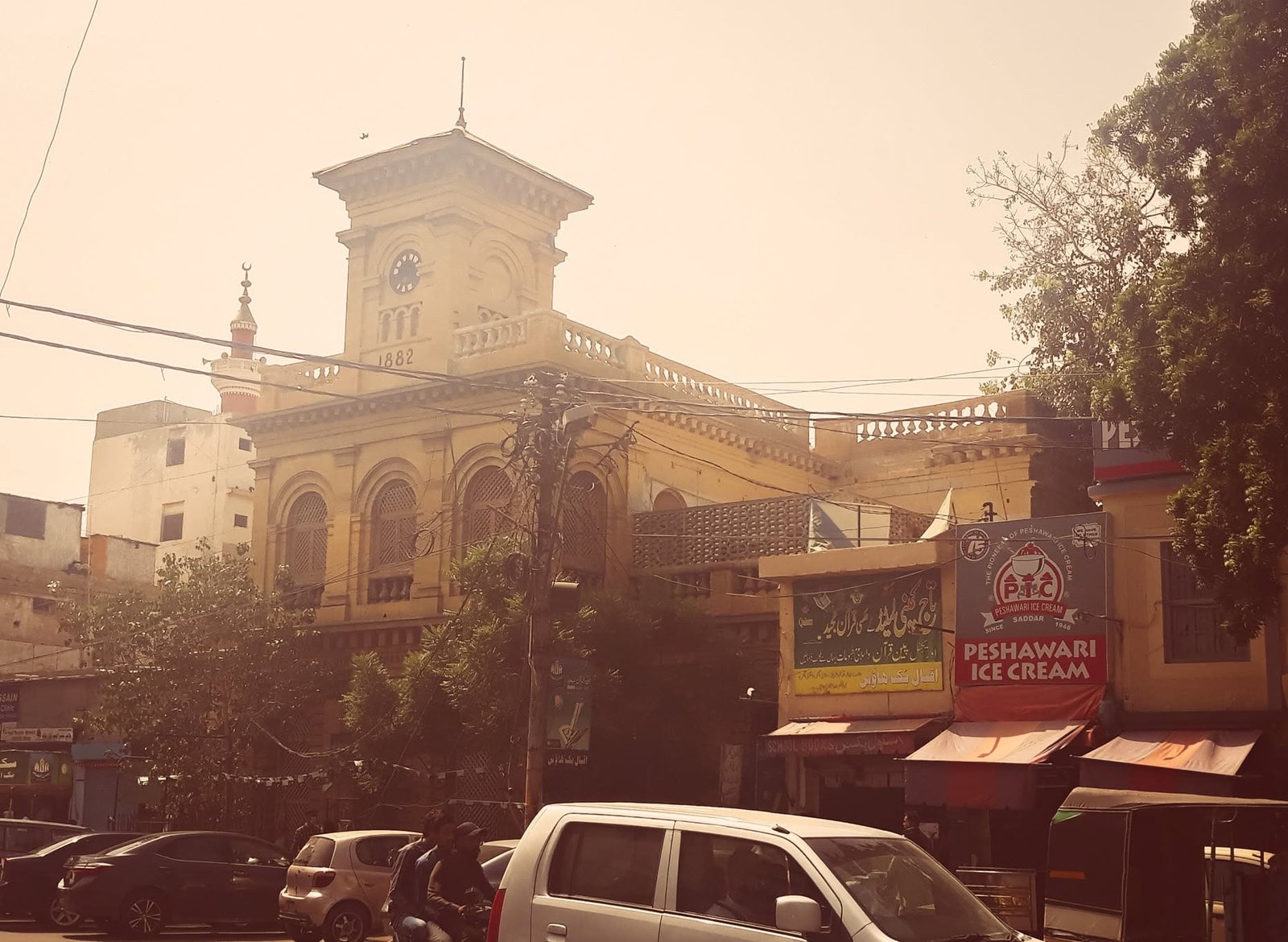
Haze softens the outline of the street and gathers its buildings into a quieter scene. Architectural details remain visible, but they seem to emerge slowly rather than all at once. This photograph lets Karachi feel reflective, allowing atmosphere to become as important as the structures themselves.
058 · Time Above the Junction – Tower Karachi
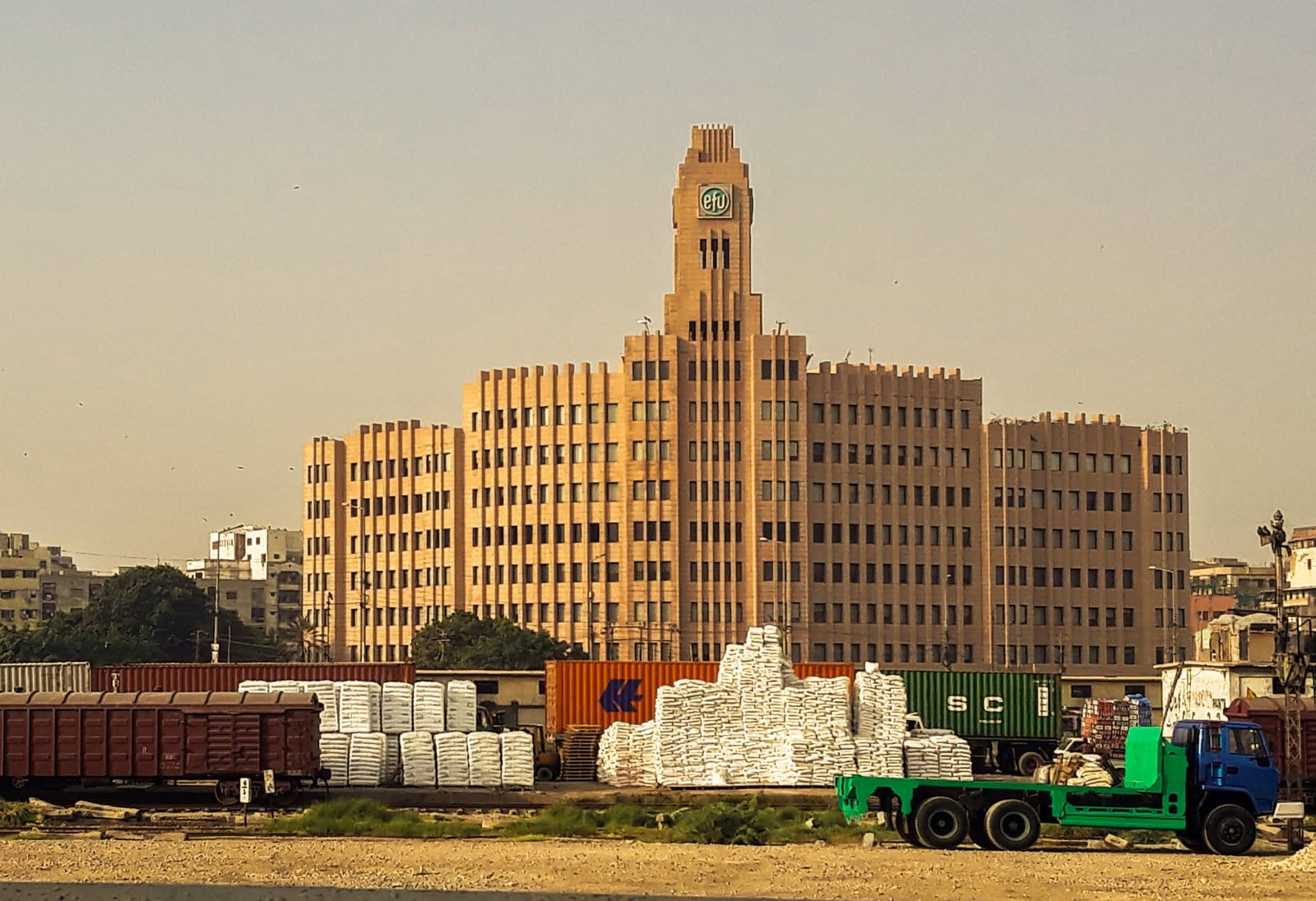
The clock tower gives the building a clear centre, lifting the eye above the passing street. Rows of windows spread outward from it with a sense of civic scale. The photograph finds a measured presence within Karachi’s movement, a place where architecture seems to hold the view together.
059 · Boats Ready for Another Day
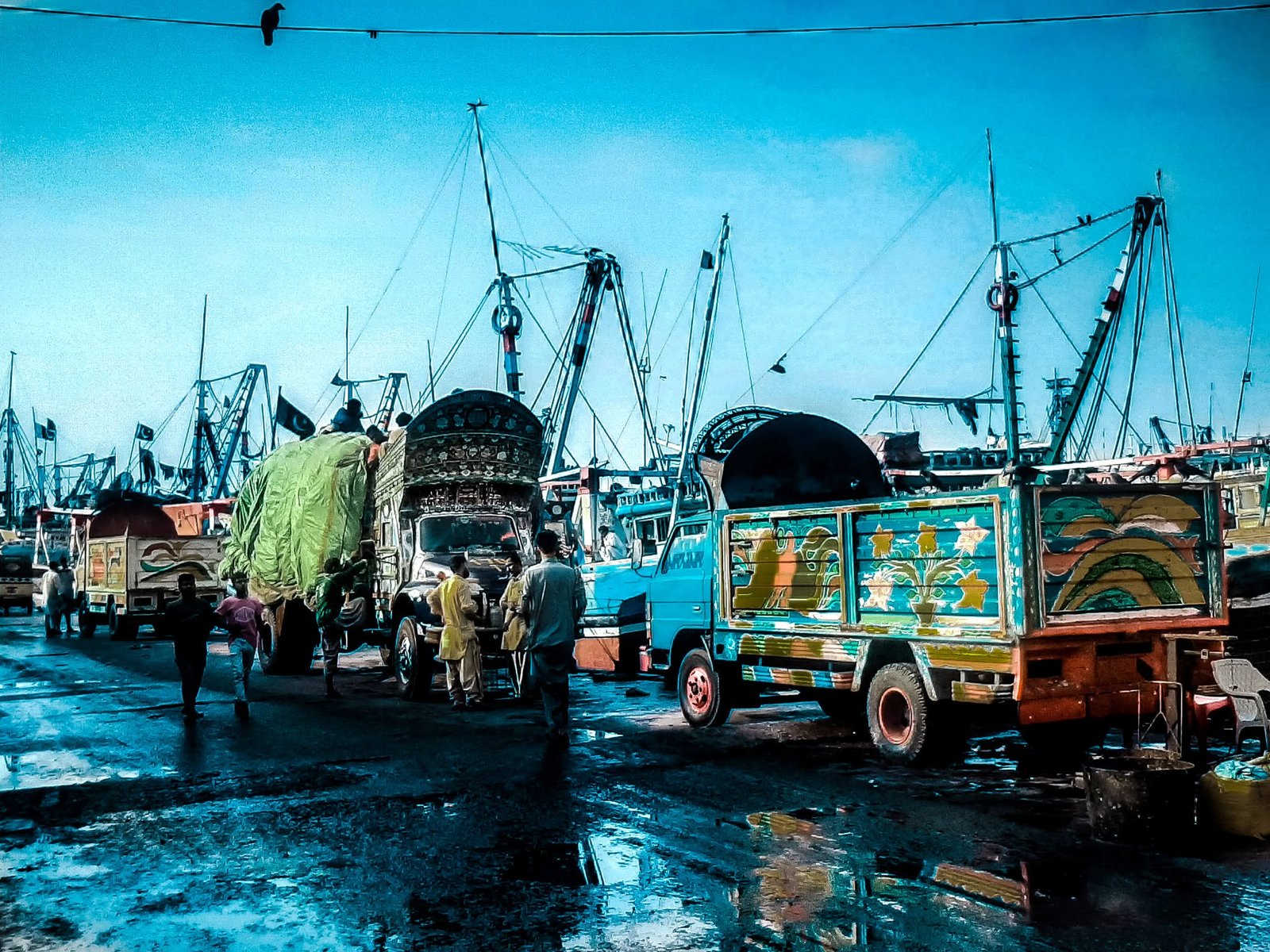
Masts, rigging, and painted hulls form a crowded pattern along the water. The boats seem still, yet everything about them suggests work and future movement. This harbour photograph shows Karachi’s sea connection through vessels gathered close, each occupying a small part of a shared working landscape.
060 · Decorated for the Journey
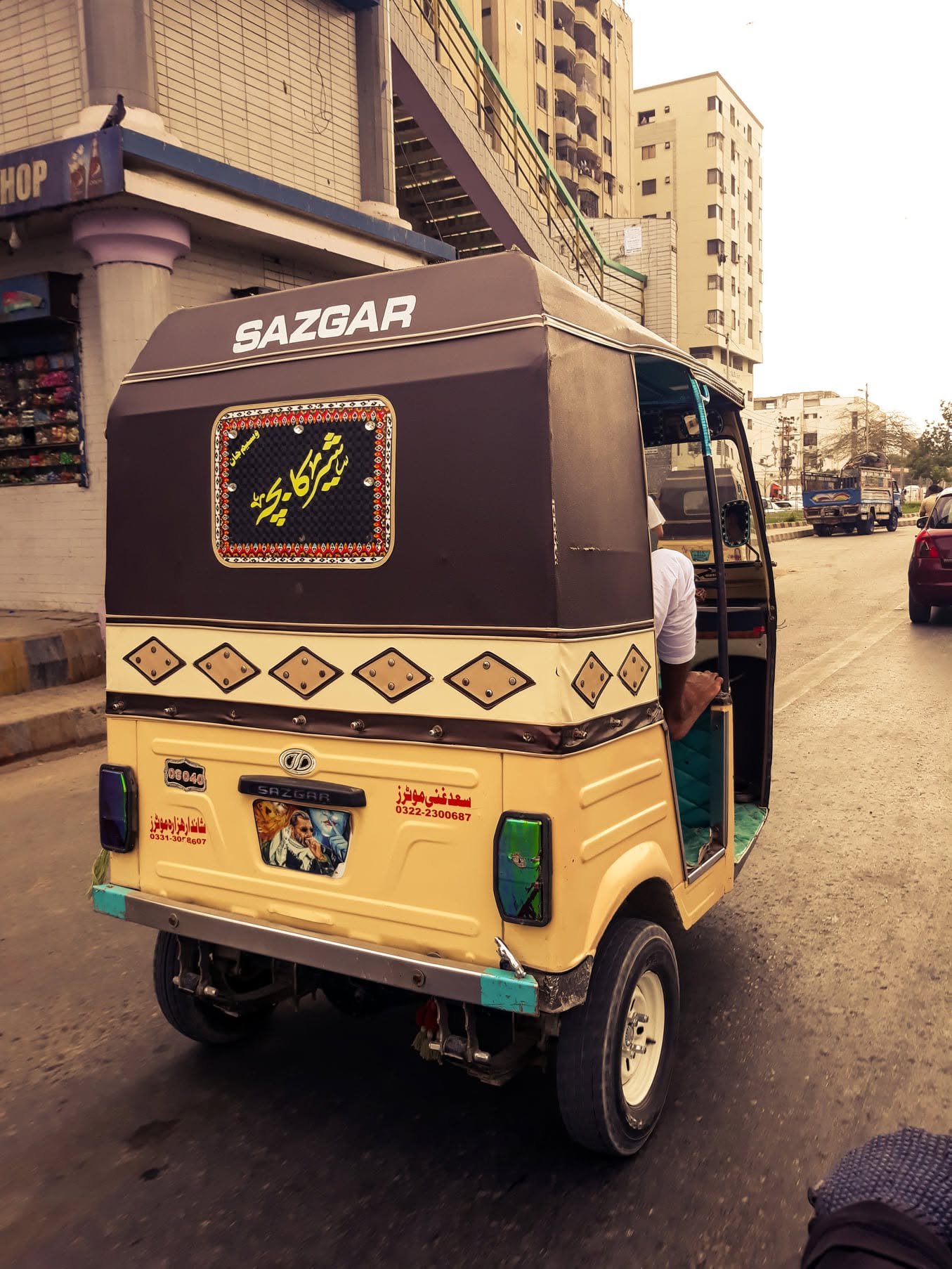
Decoration transforms the vehicle into more than a means of getting from one place to another. Painted surfaces and small details bring personality into everyday travel. The photograph catches the expressive side of Karachi’s roads, where practical movement can arrive wrapped in colour and careful ornament.
061 · Avenue into the Distance – Shahra-e-Faisal

The avenue leads the eye forward, carrying the photograph toward a distant point. Trees and buildings frame the flow of vehicles without interrupting its direction. From this viewpoint, Karachi becomes a city of connected journeys, stretching beyond the limits of any single frame.
062 · The Rounded Corner – Regal Saddar Karachi
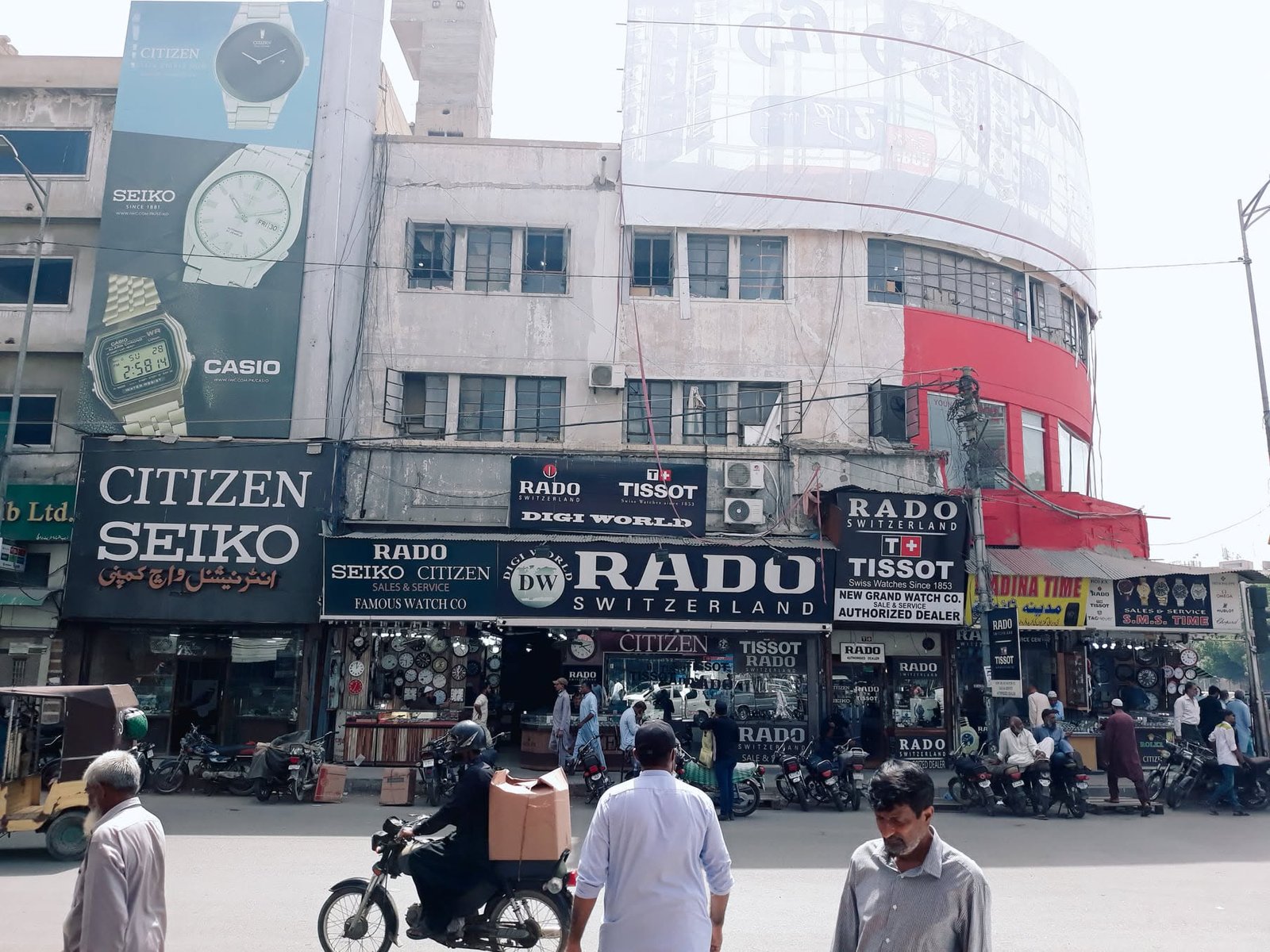
A rounded facade gives the corner its own unmistakable shape. Signs and windows follow the curve, making the building feel closely tied to the street around it. This Karachi architectural photograph finds character in an everyday meeting of design, commerce, and years of continued use.
063 · Another Doorway, Another Story – Peshawari Ice Cream
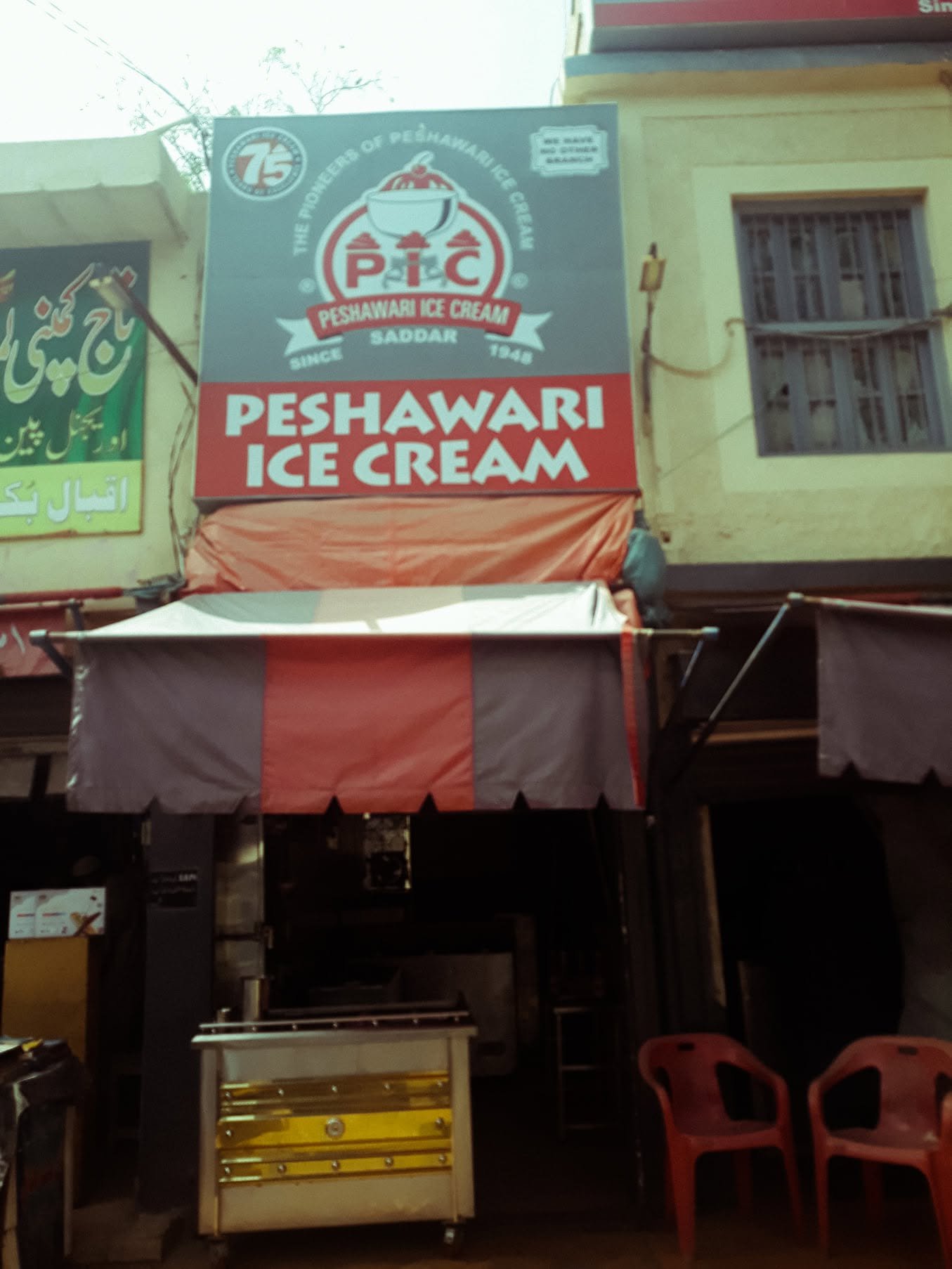
The entrance is modest, but the signs around it create a dense little portrait of local business. Looking closely turns the frontage into a collection of textures and choices. In a city as visually layered as Karachi, even a single doorway can hold the attention for a while.
064 · Down the Narrow Lane – Bohri Bazar
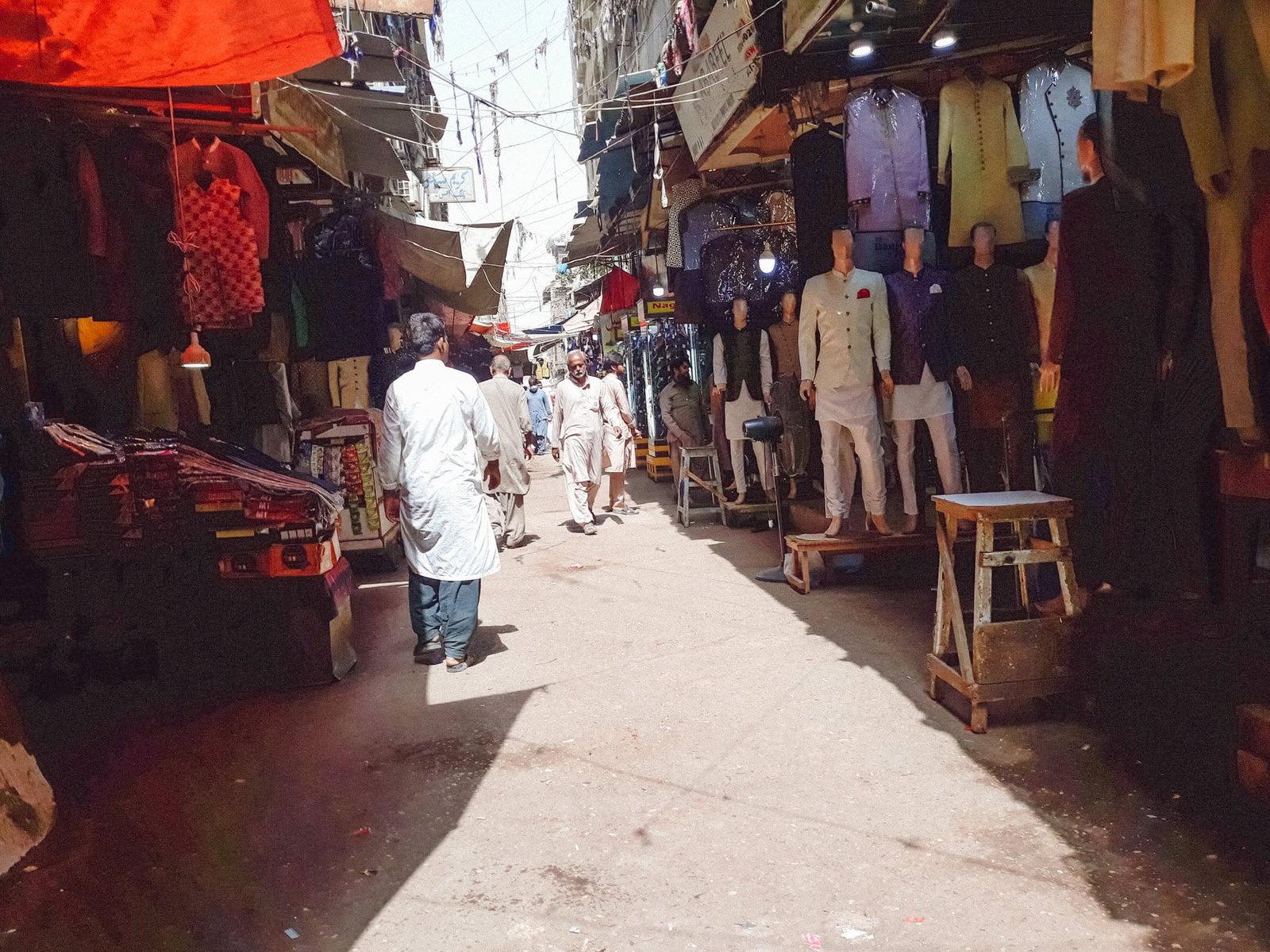
The lane offers a more intimate view than a wide city avenue. Shops and people gather close together, and the distance ahead feels full of small discoveries. This photograph follows Karachi into a space where walking slowly is part of seeing it well.
065 · The Market Glows – Vegetable Market in Karachi
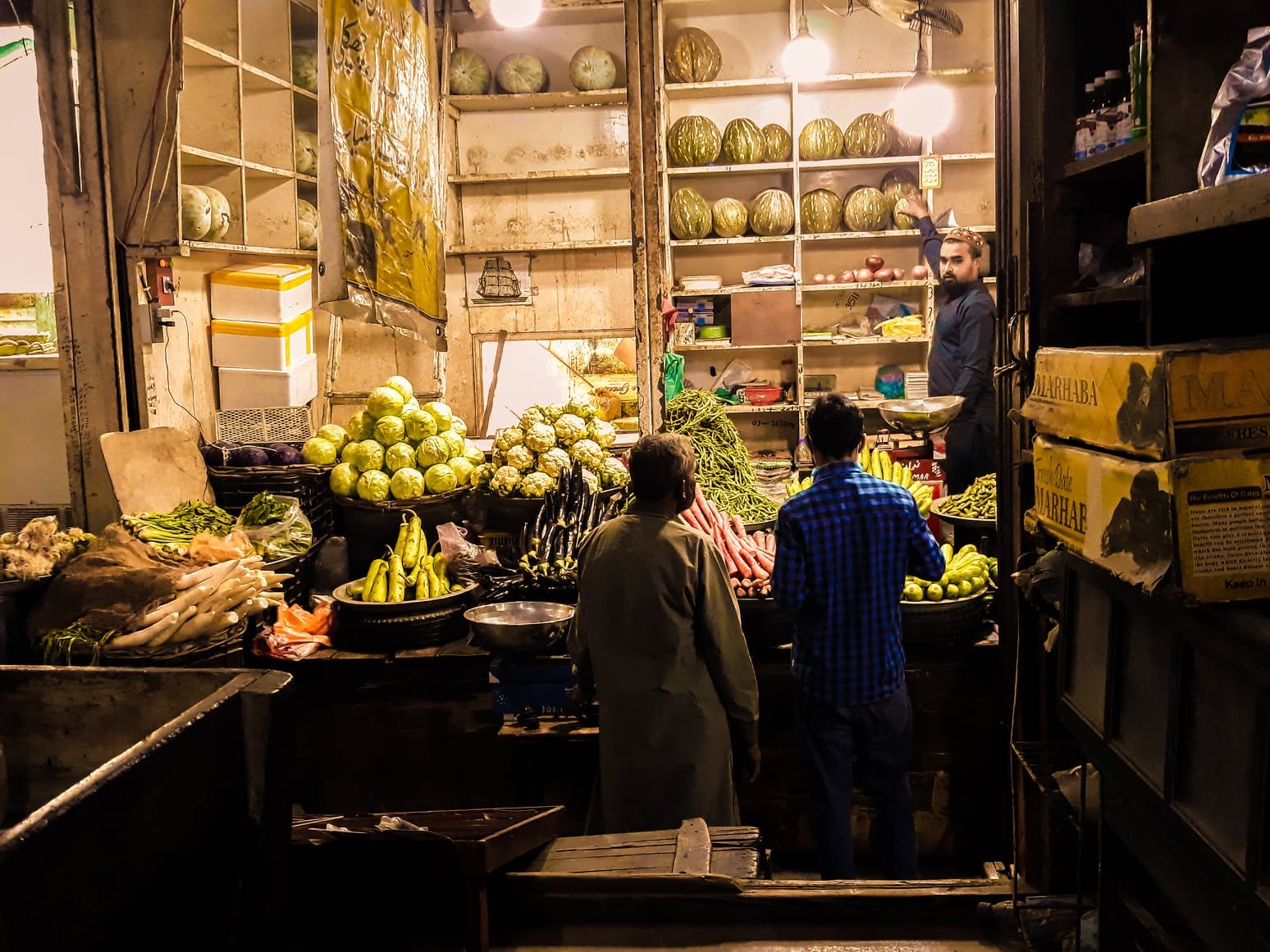
Warm light gathers over the working surfaces and draws attention toward the people within. Darkness outside the brightest areas gives the scene a sense of depth. Here, Karachi after dark is not simply a skyline of lights, but a series of small, active interiors.
066 · Layers Along the Facade – Kharadar
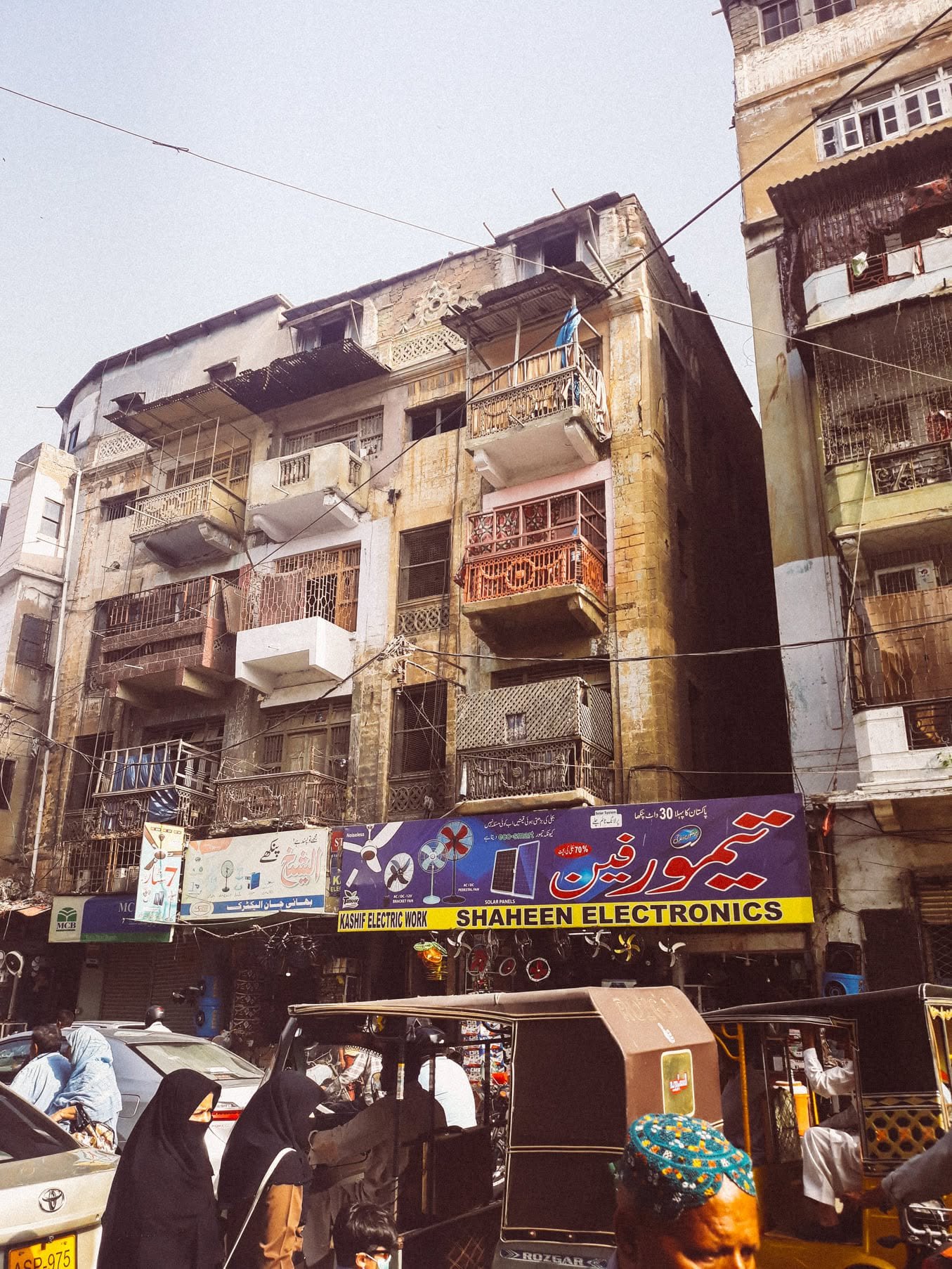
Balconies, lettering, and shopfronts create a facade that cannot be taken in at one glance. Each layer belongs to a different use of the same building. The photograph celebrates that richness, showing how Karachi’s streets gain character through adaptation rather than through perfect uniformity.
067 · A Portrait Among the Goods – Hawksbay
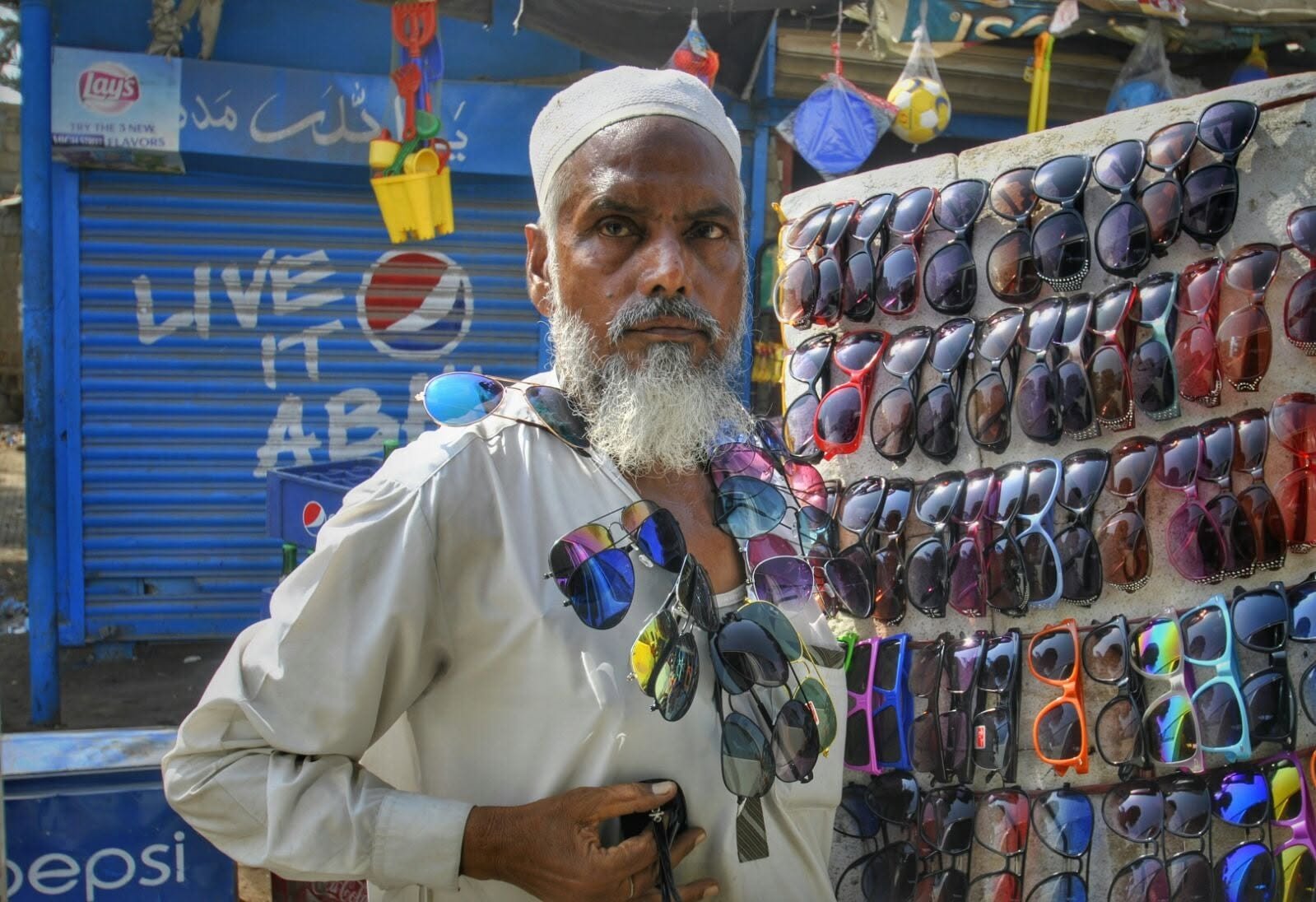
The man sits within a world of displayed goods, yet his expression gives the image its centre. Objects become the setting for a more personal encounter. This Karachi portrait leaves room for the subject’s individuality without pretending to know the life that continues outside the photograph.
068 · Arches Along the Street – Saddar Karachi
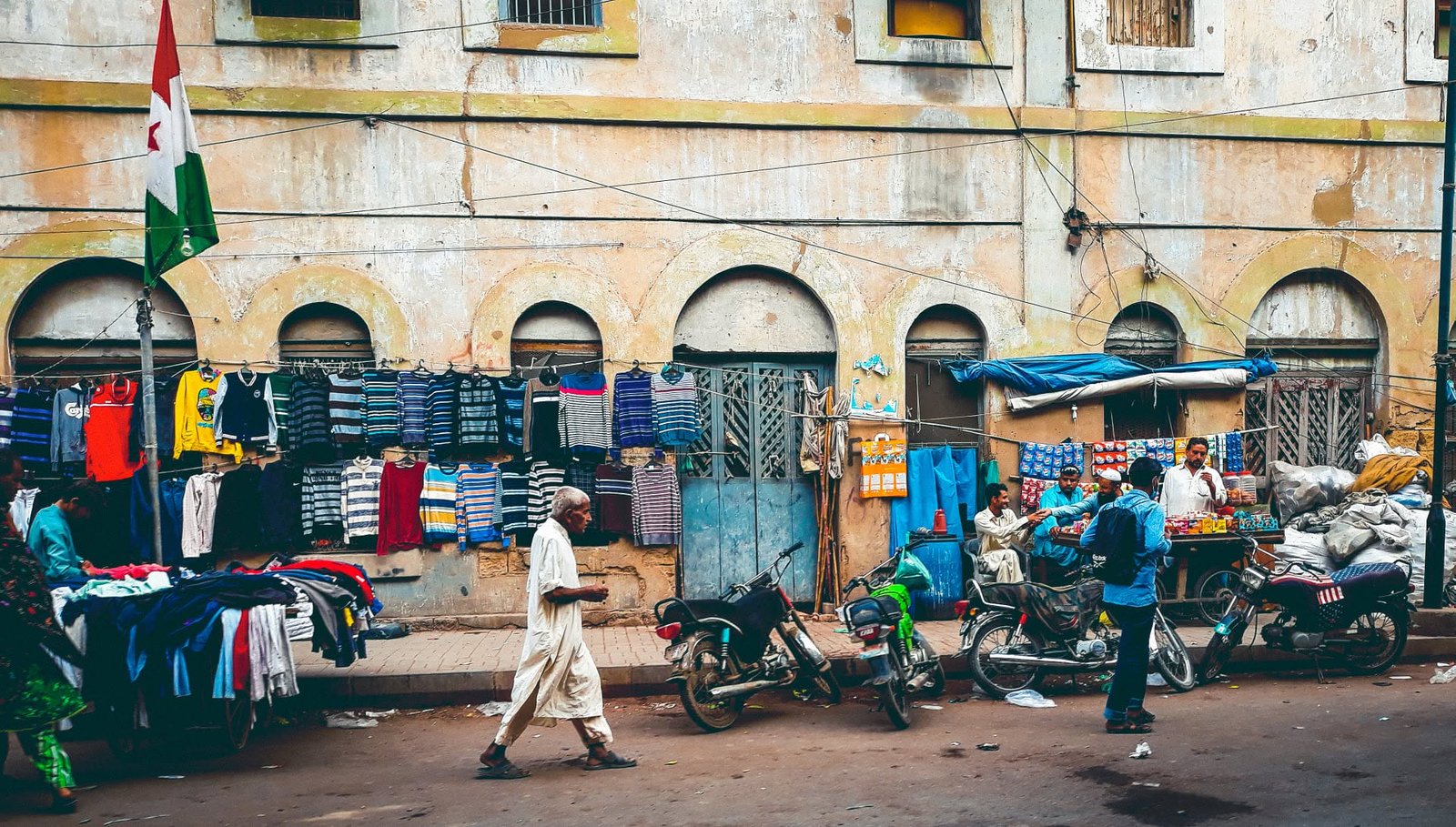
Repeated arches bring a gentle rhythm to the frontage. Street activity gathers beneath them, connecting the architectural pattern to the city’s present-day movement. The photograph finds interest in that meeting, where an older visual language remains part of an ordinary working street.
069 · A Quieter Entrance – Arts Council Karachi
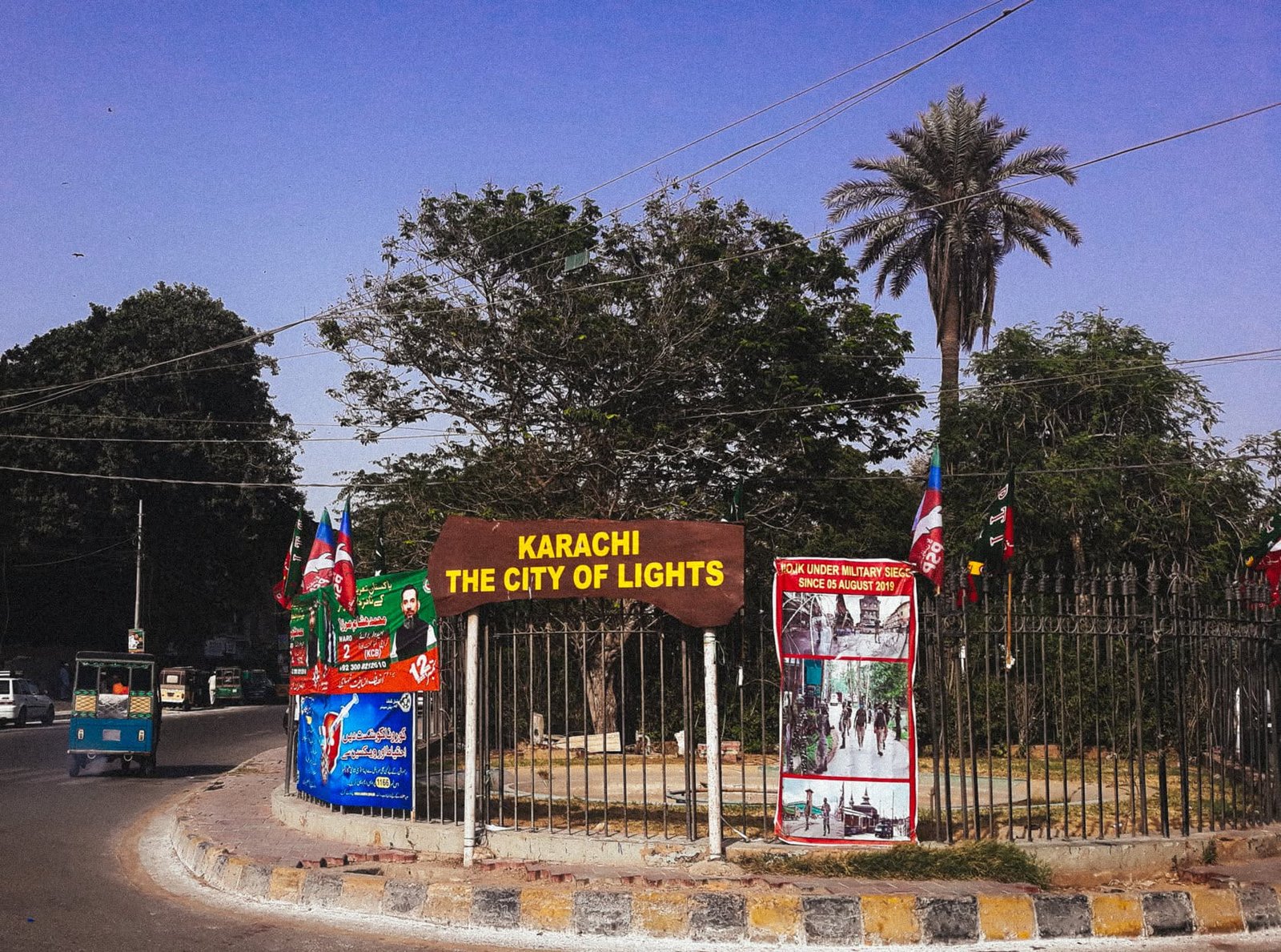
Trees frame the entrance and soften its boundary with the street. The scene offers a quieter kind of city view, defined by shade and a pause in the visual crowding. Karachi appears here through an arrival point rather than a destination, with the way in becoming the subject.
070 · Textures of a Stall – Dry Fruit Market in Karachi
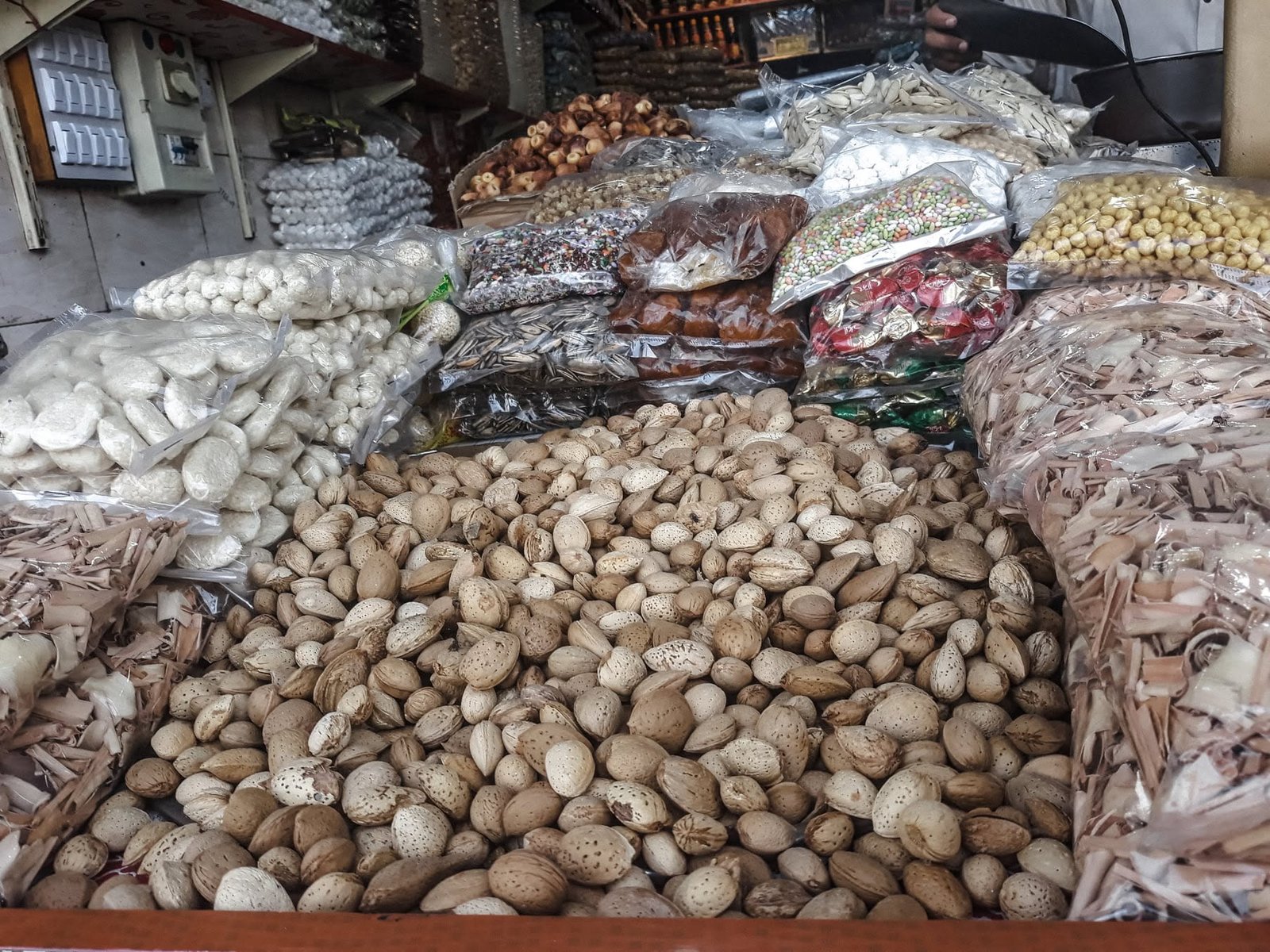
The display is built from repetition: small shapes gathered into larger groups, each with a slightly different surface. Seen together, they become a study in texture. This market photograph rewards the patient look, finding visual richness in things that may seem ordinary when encountered in passing.
071 · Windows Like a Pattern – Habib Bank Plaza Karachi
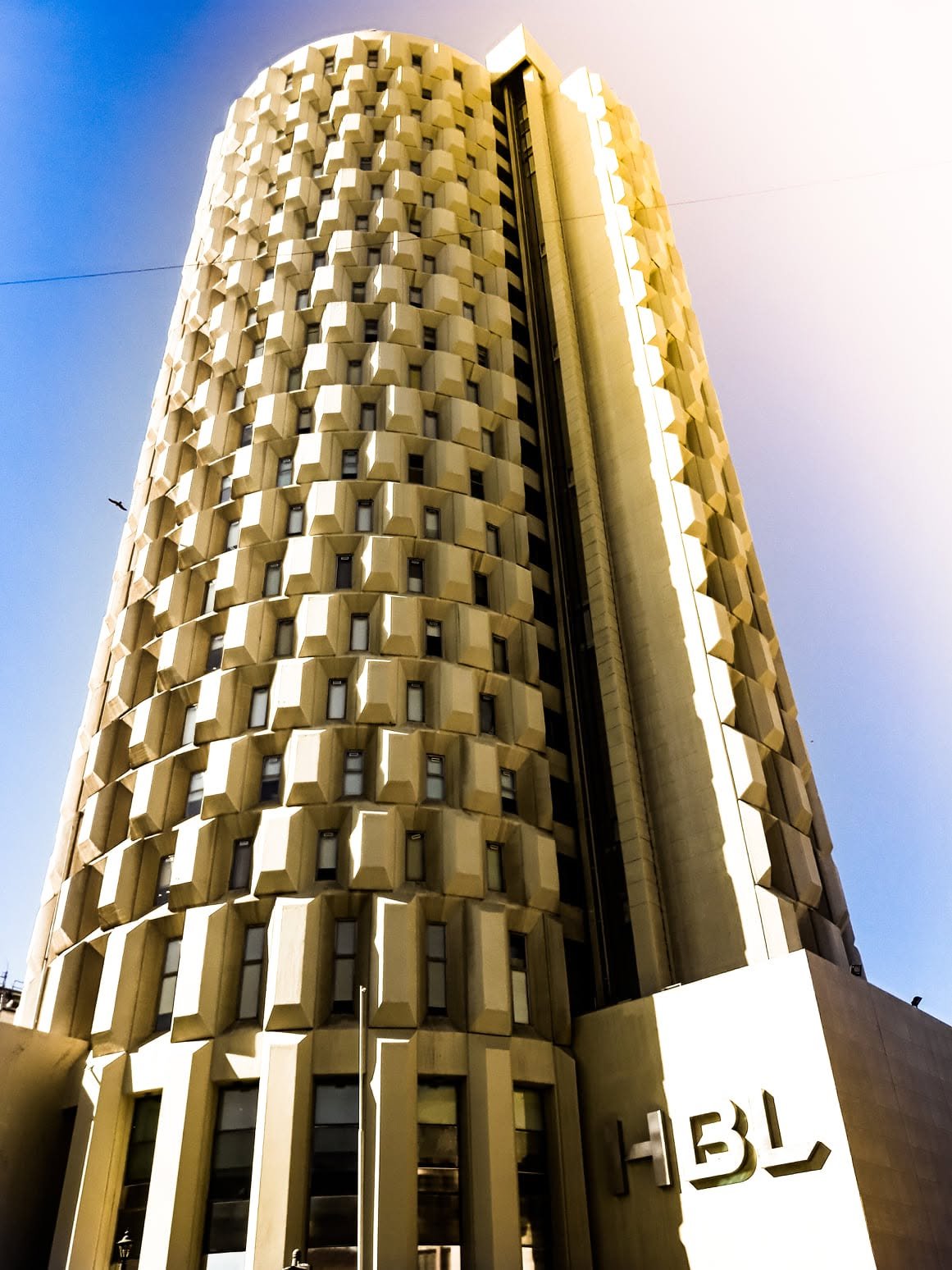
The facade’s repeated shapes create a rhythm that changes with the viewing angle. Light catches some surfaces while others fall back into shadow. In this photograph, a familiar city building becomes a pattern to explore, showing how architecture can reward the same close attention as a market stall.
072 · The Balcony at the Corner – Standard Chartered Bank Karachi
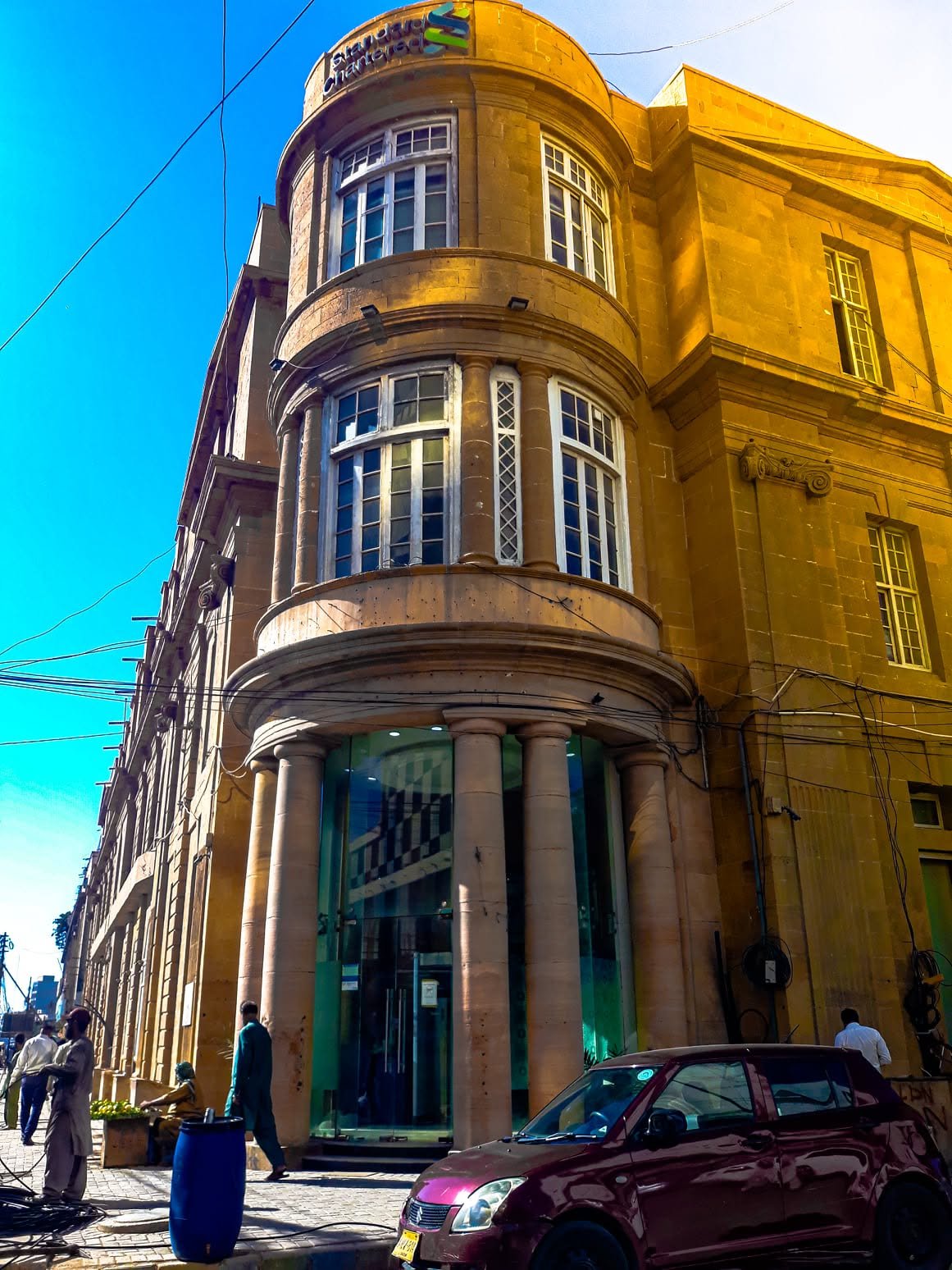
The projecting balcony gives the building an expressive face above the street. Curves and small details draw the eye toward a part of the city that is easy to miss while hurrying past. The photograph makes space for looking up, where Karachi often keeps some of its finest surprises.
073 · Light on an Older Facade –
Empress Market
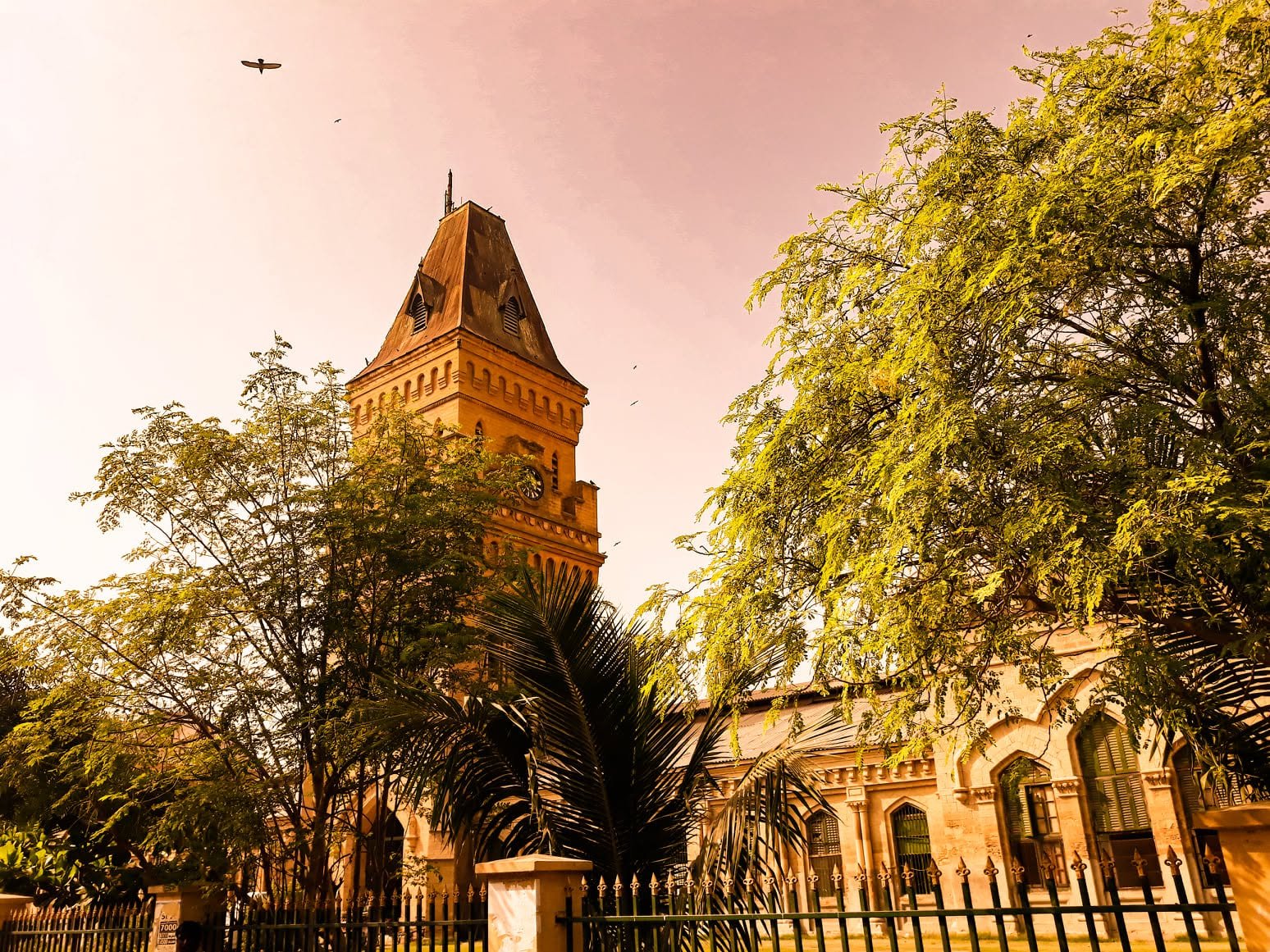
Sunlight brings a warm tone to the facade and deepens the shadows around its details. Leaves nearby add movement to an otherwise steady composition. This Karachi architectural scene is less about naming a place than noticing how the right light can make a familiar surface feel newly seen.
074 · Waiting for the Next Ride – Street Food in Karachi
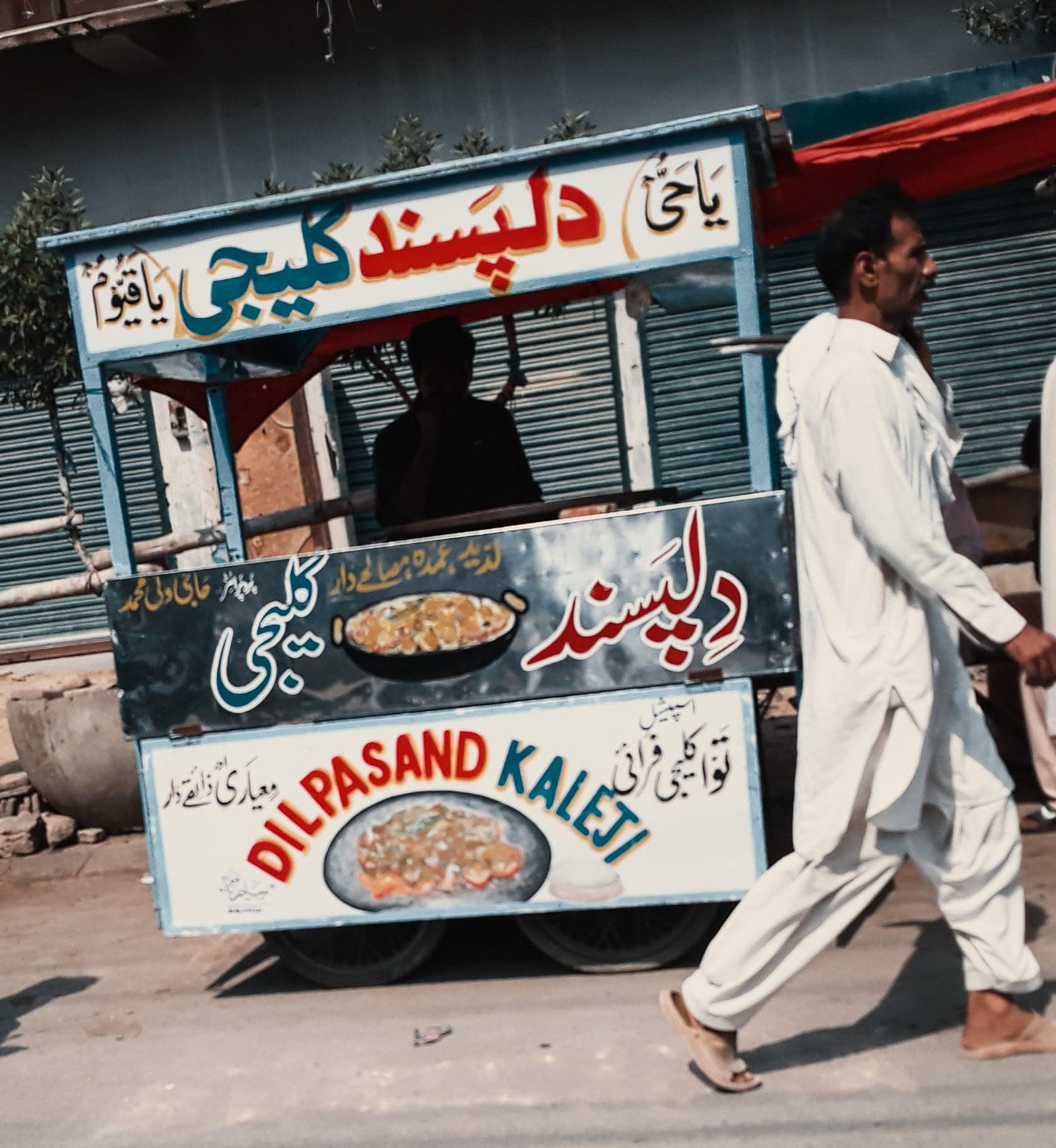
The vehicle fills the frame with the practical detail of everyday travel. Its decoration adds a personal note to a shared urban routine. In this Karachi street photograph, the next journey is suggested rather than shown, leaving the viewer at that small moment between waiting and movement.
075 · Look Above the Shops – Tower Karachi
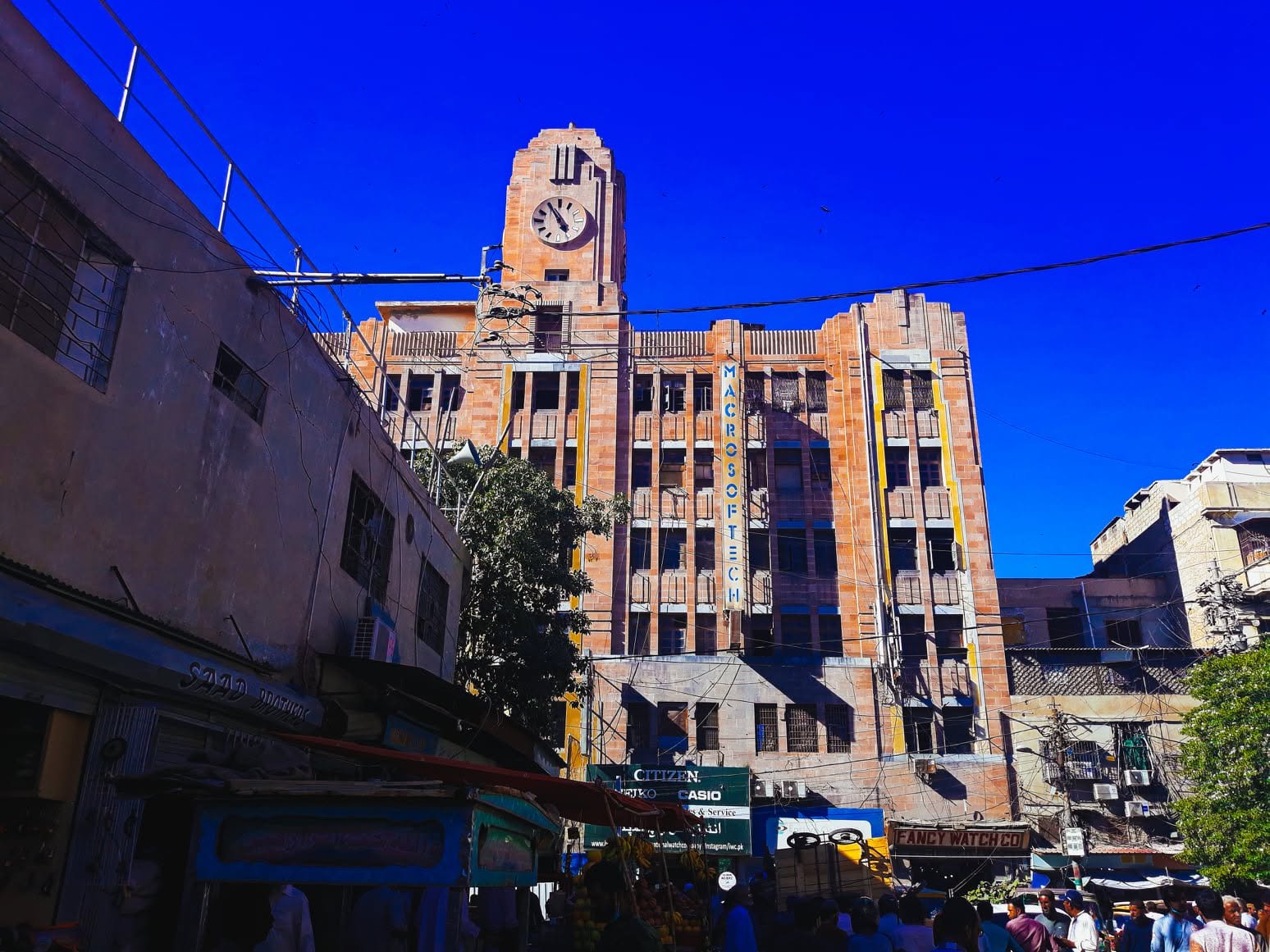
Above the immediate pull of the shops, the building reveals another set of details. Windows, corners, and a rising central form add depth to the street’s commercial layer. The photograph asks for a second glance, turning an ordinary walk through Karachi into a chance to notice more.
Markets, Making, and Moments of Rest
076 · A Cross Against the Sky – Gora Qabrastan Karachi
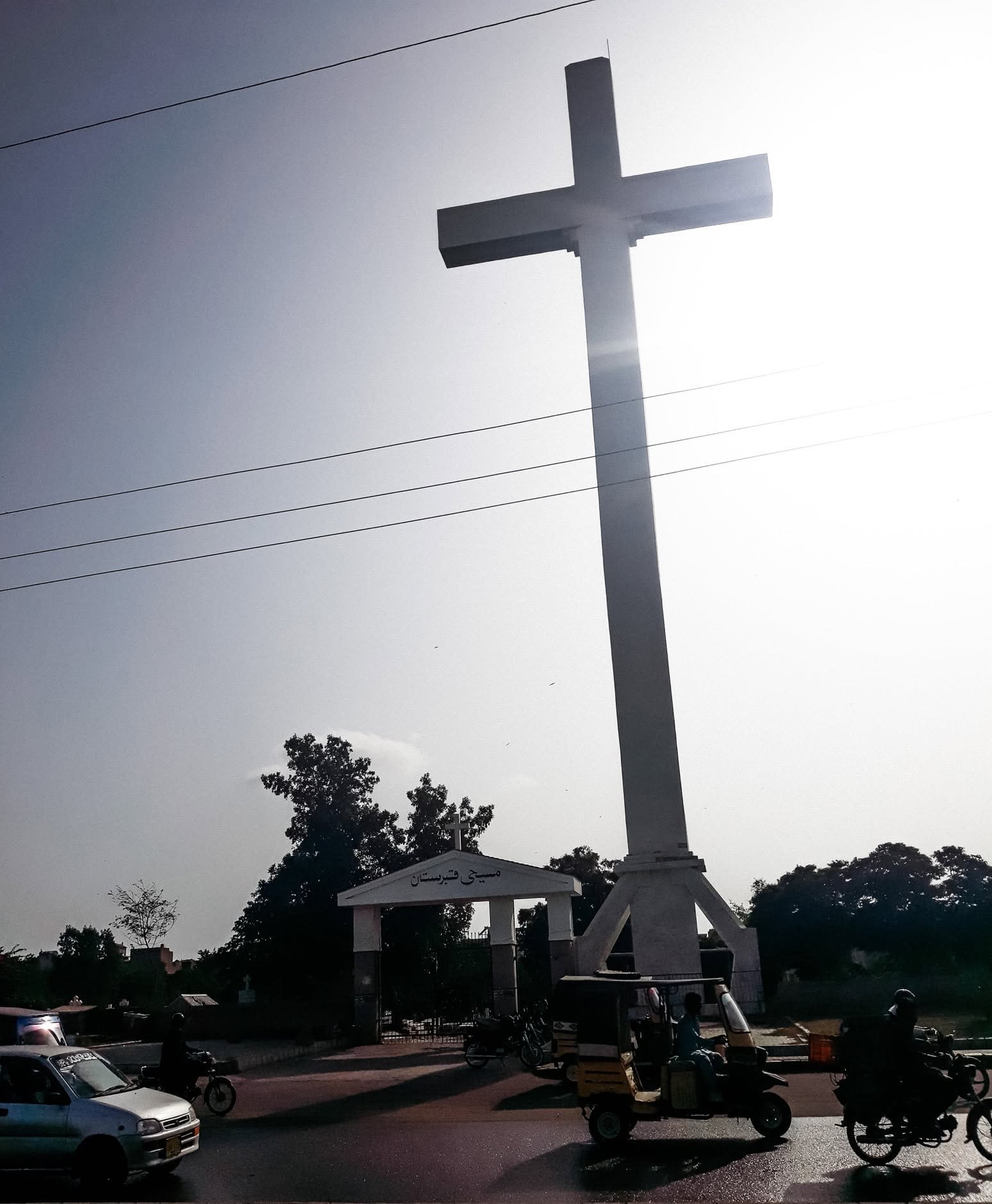
The cross stands in a clear arrangement of light and silhouette. Looking upward removes much of the street’s activity and gives the structure a strong visual presence. This frame adds another architectural note to the Karachi collection, allowing the form and the sky to speak quietly together.
077 · Bold Forms at the Junction – Teen Talwar Clifton
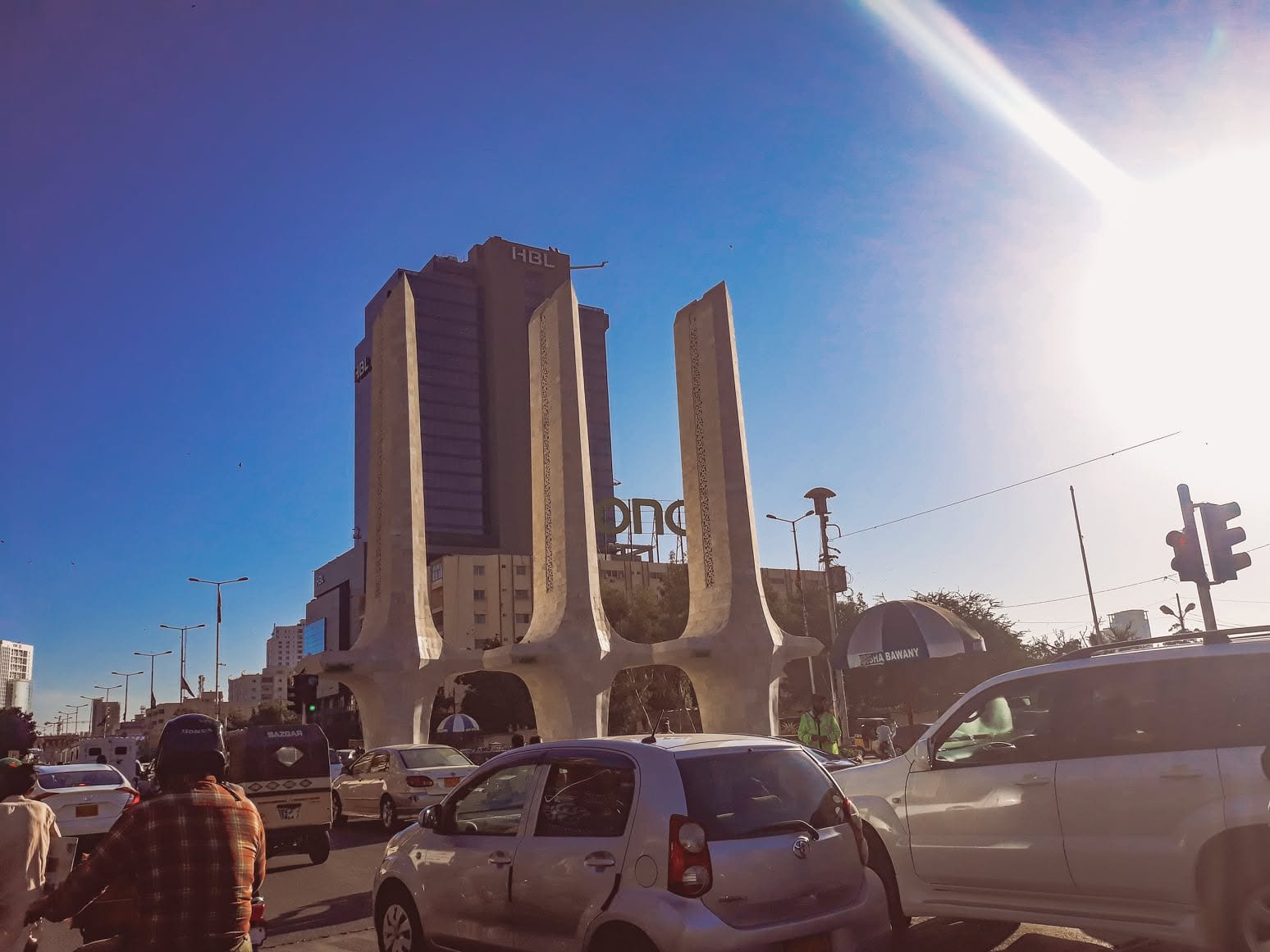
Strong vertical forms catch the sun while traffic occupies the lower edge of the view. The architecture feels bold without needing an elaborate setting. This photograph follows Karachi through the shapes that stand out during a journey, the structures remembered long after the route itself becomes familiar.
078 · Fresh from the Pan
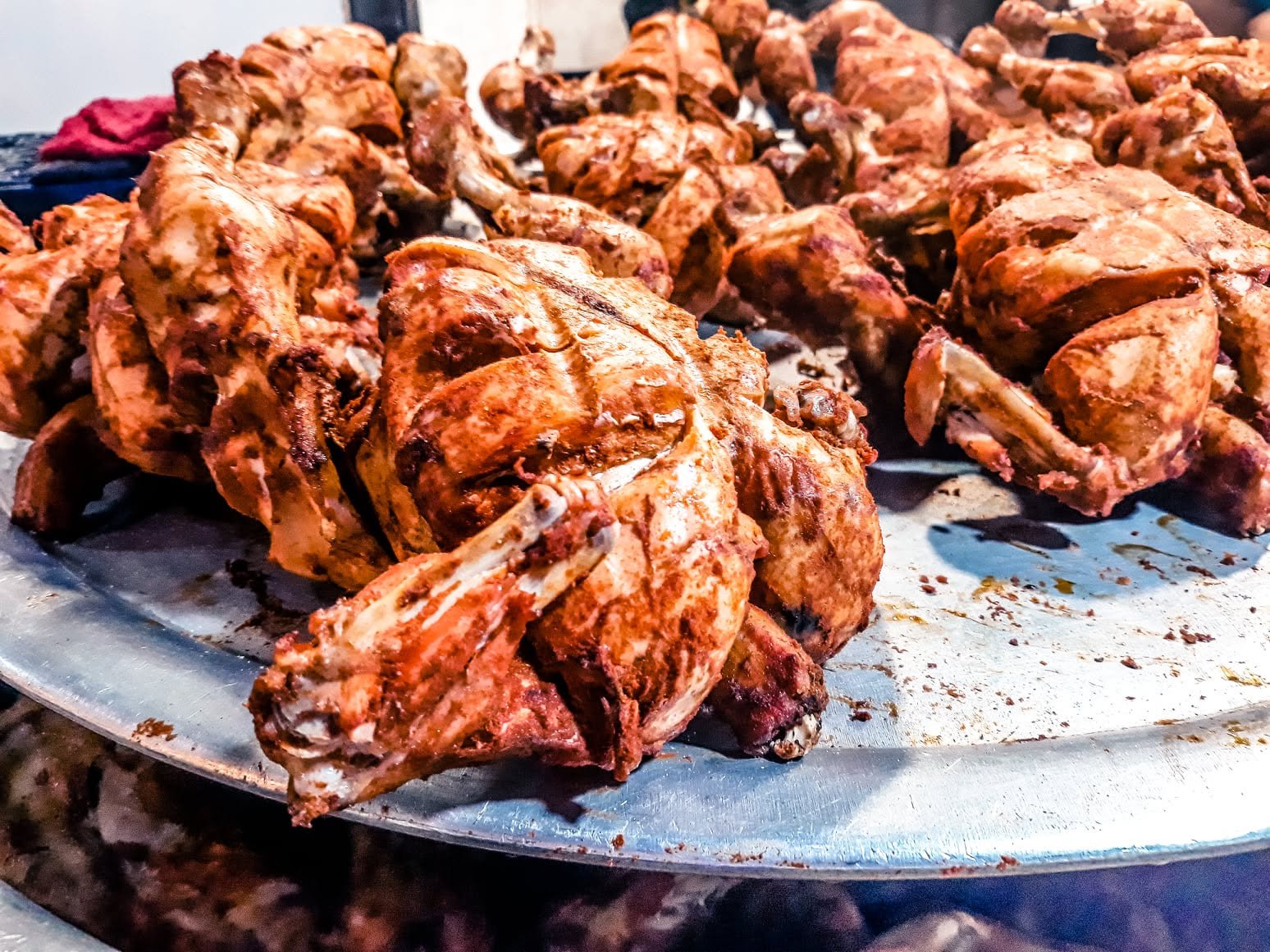
Rough edges and golden surfaces make the food almost tactile in the frame. A simple tray is enough to bring attention to texture and the pleasure of something freshly prepared. This photograph gives Karachi street food its close-up, letting an everyday snack become a small visual celebration.
079 · Signs on an Old Street
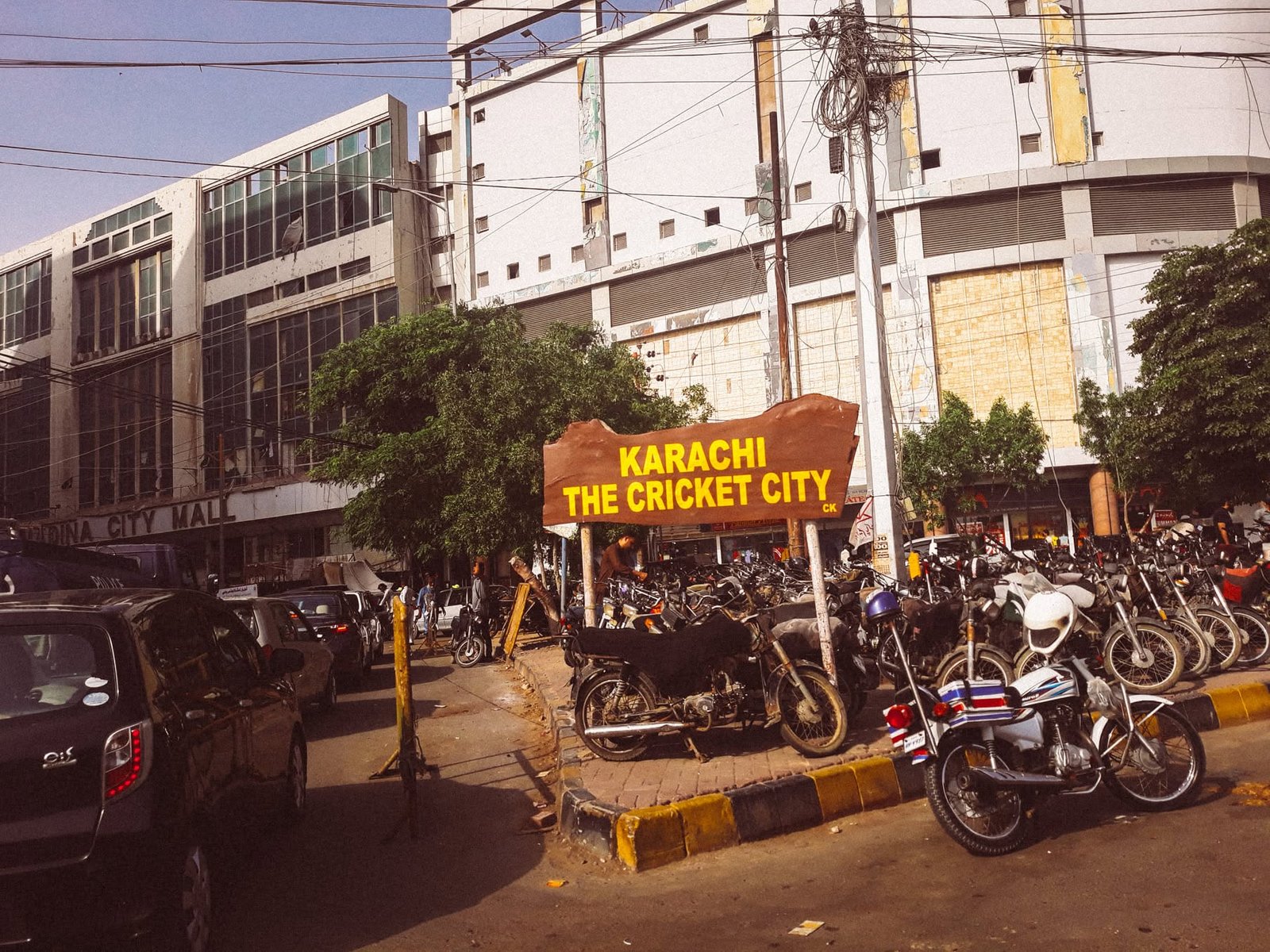
The buildings carry years in their surfaces, while the signs below speak in the present tense of daily business. Neither layer cancels the other. This Karachi street scene finds its appeal in their coexistence, with history remaining part of a place where people still come to eat and shop.
080 · The Market Tower
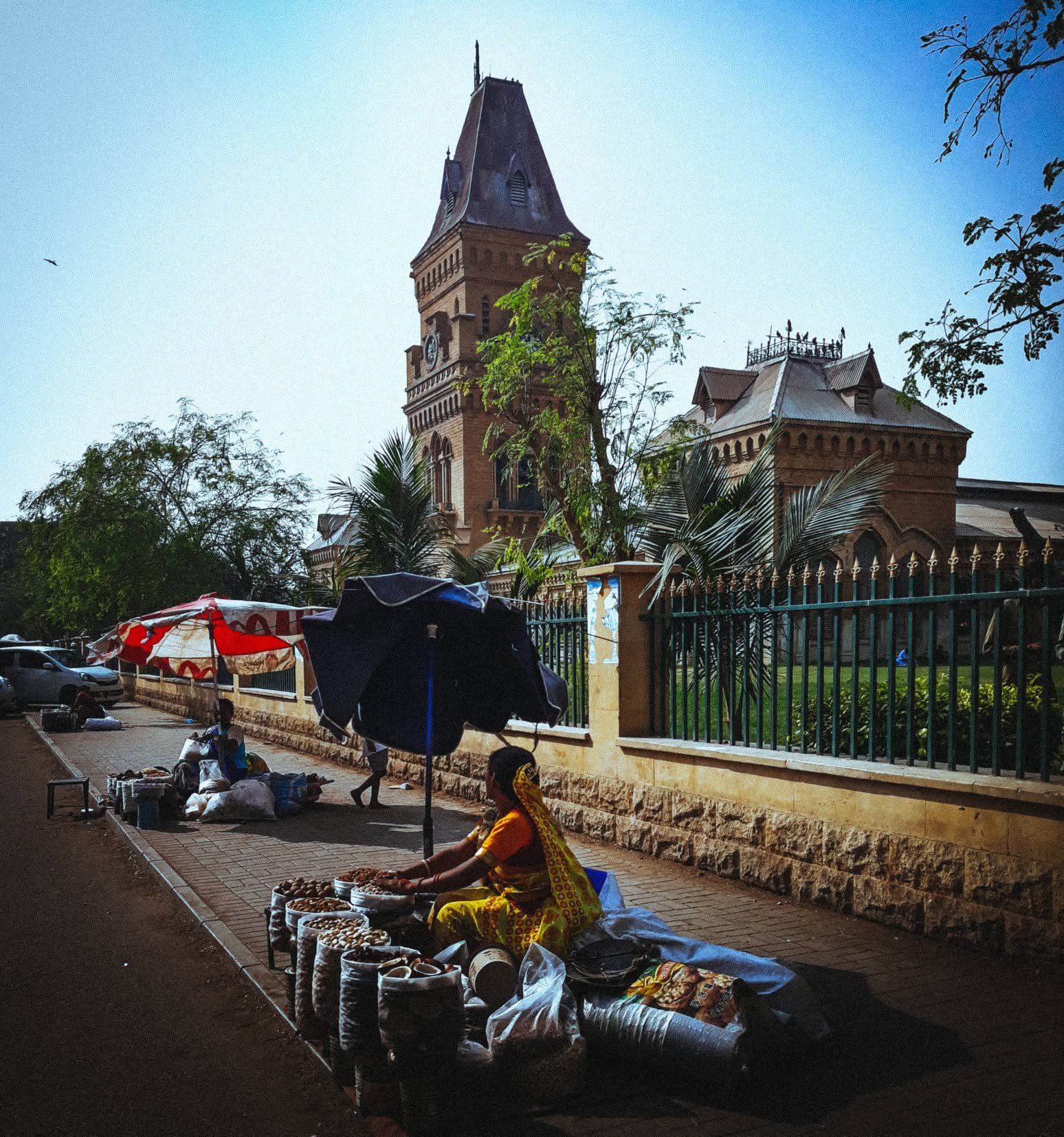
The tower rises above the market’s closer details, its brickwork and steep roof giving the view a distinctive silhouette. At ground level, the city continues in a less formal rhythm. The photograph holds both together, showing a landmark as part of a living streetscape rather than as an isolated object.
081 · The Shopping Street
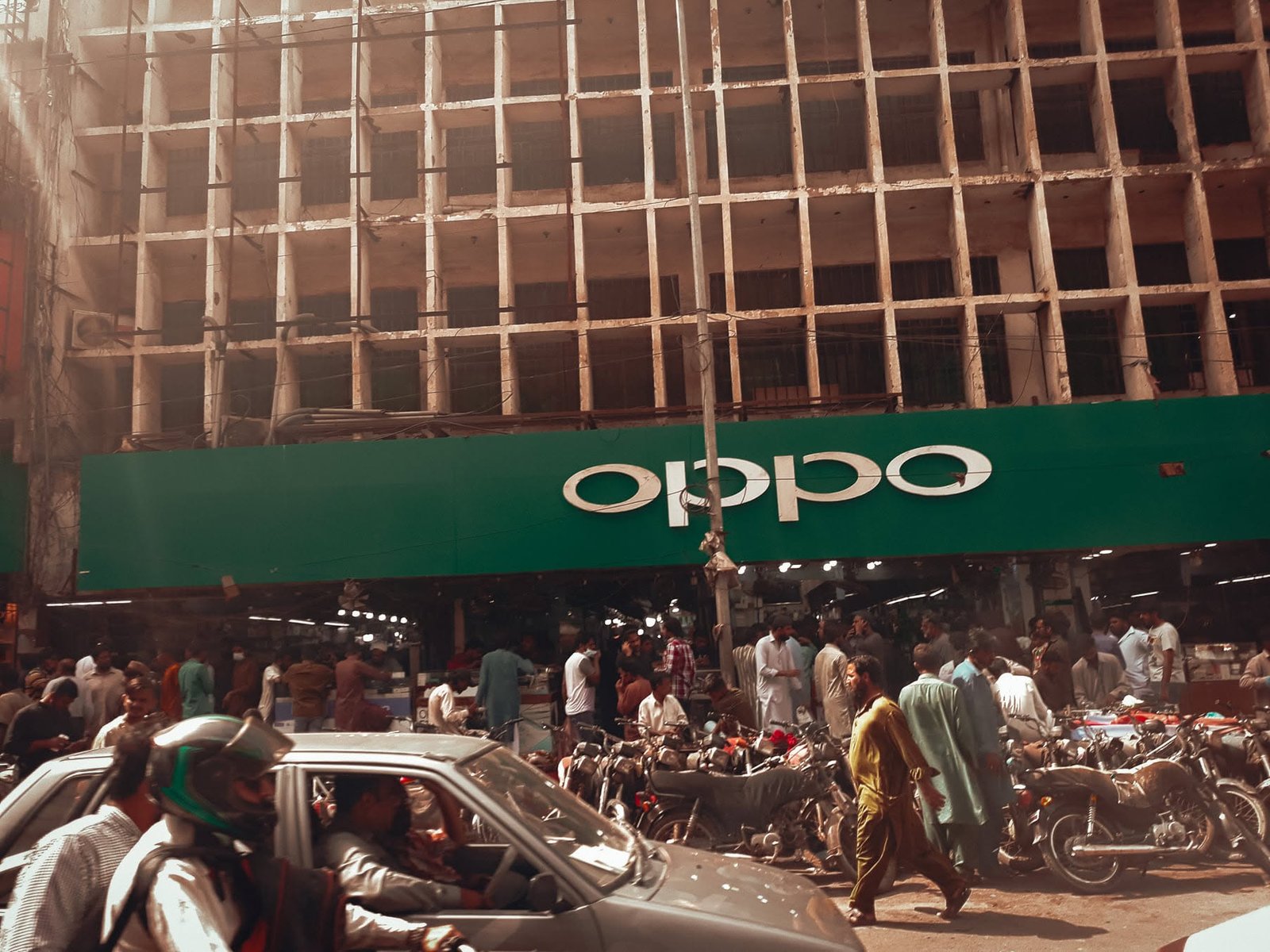
Large signs mark the building’s public face, making it easy to imagine the flow of customers beneath. The photograph sees commerce as part of the city’s visual texture. Karachi’s shopping streets are filled with such layered views, where a facade serves as architecture, advertisement, and meeting point at once.
082 · Green Beneath the Shade
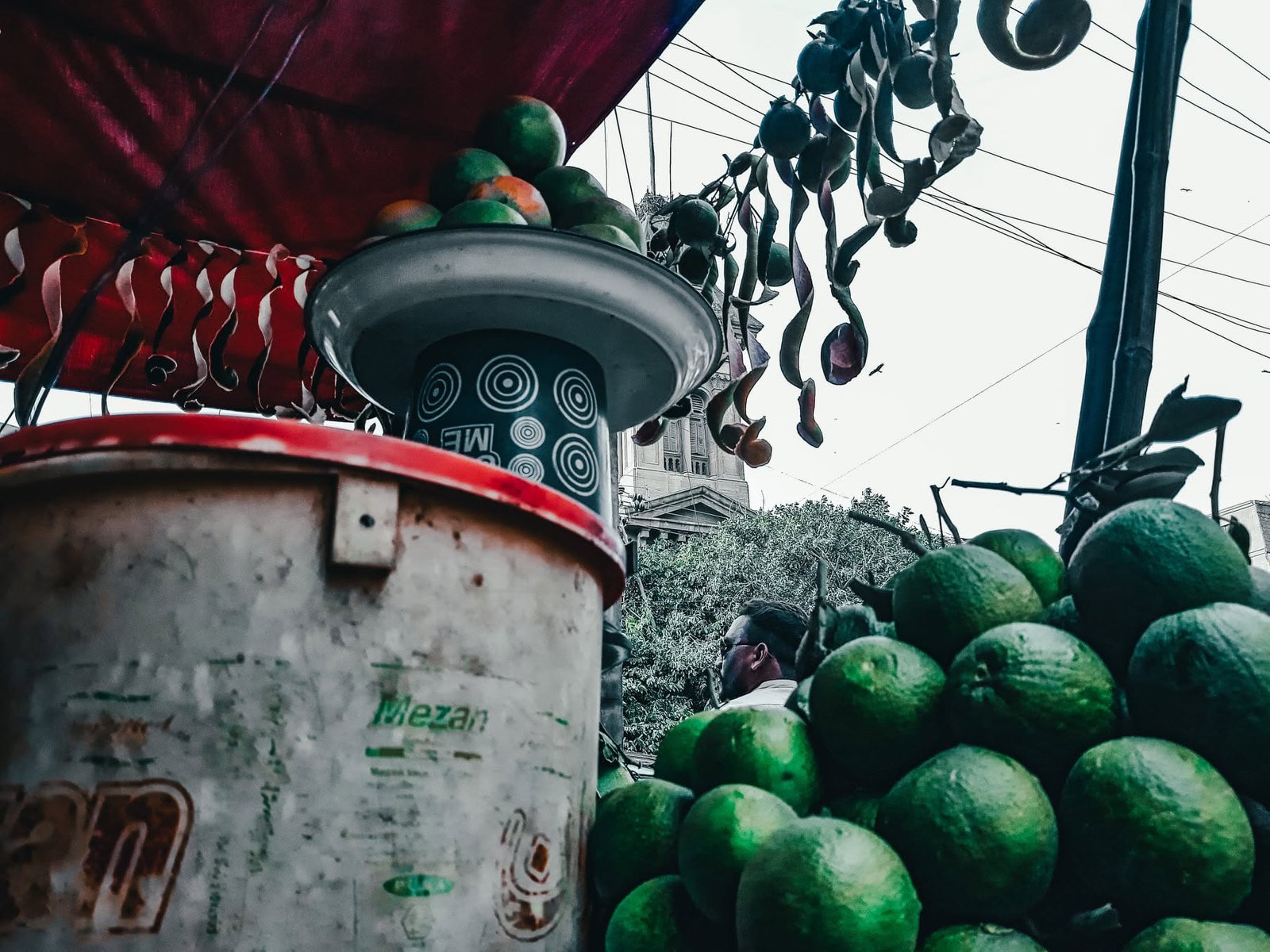
Green fruit gathers beneath a shaded edge while a decorated vessel adds another note of colour overhead. The scene feels close and practical, organised around the work of selling. Looking carefully reveals how a modest market display can also become a pleasing arrangement of shapes and textures.
083 · An Evening Display
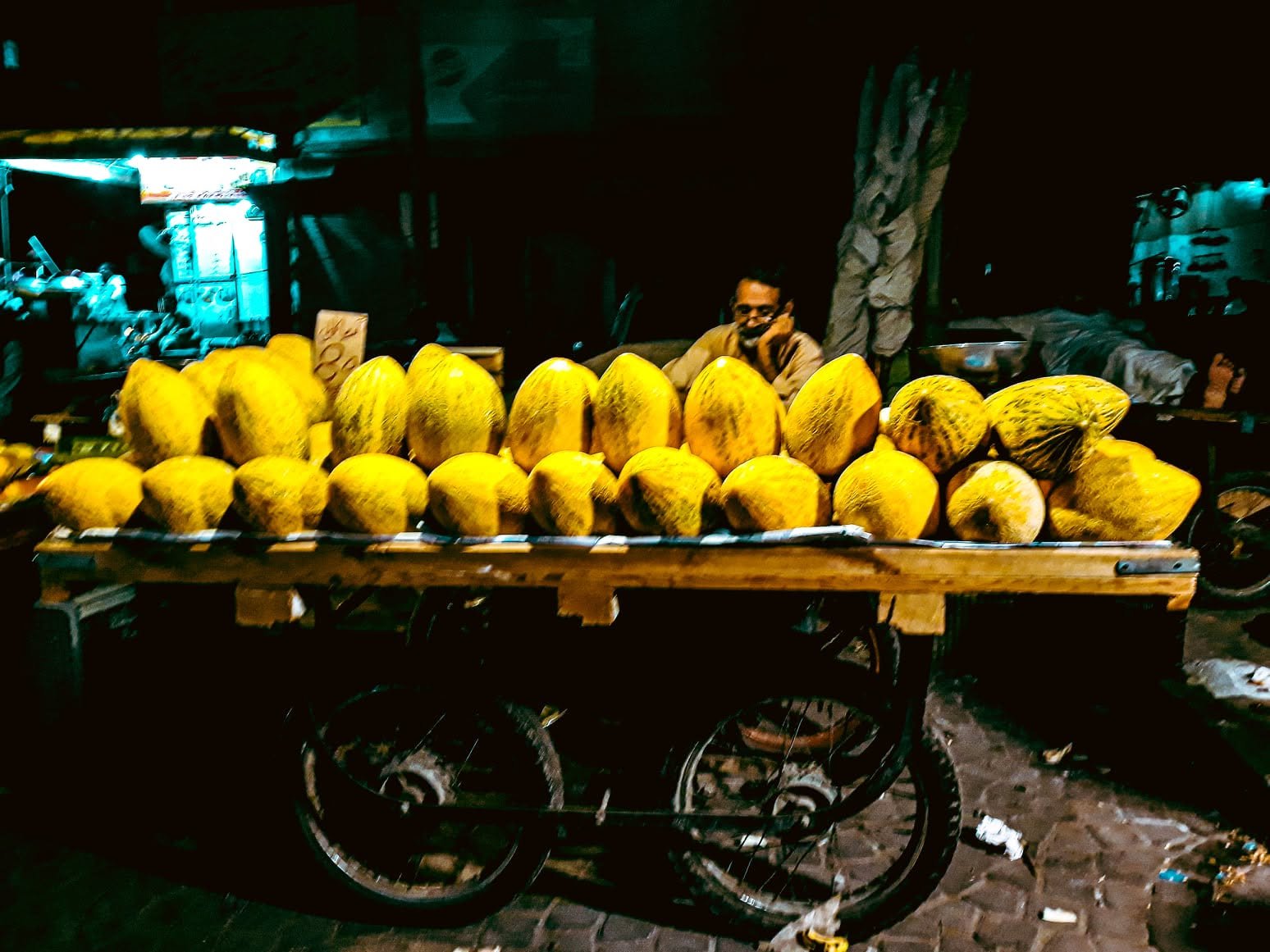
The fruit seems to gather the available light and hold it against the dark. Rows and rounded shapes give the cart a clear visual rhythm. This Karachi night-market photograph finds warmth in a small roadside display, where a vendor’s working space becomes one of the street’s brightest places.
084 · A Facade in Colour
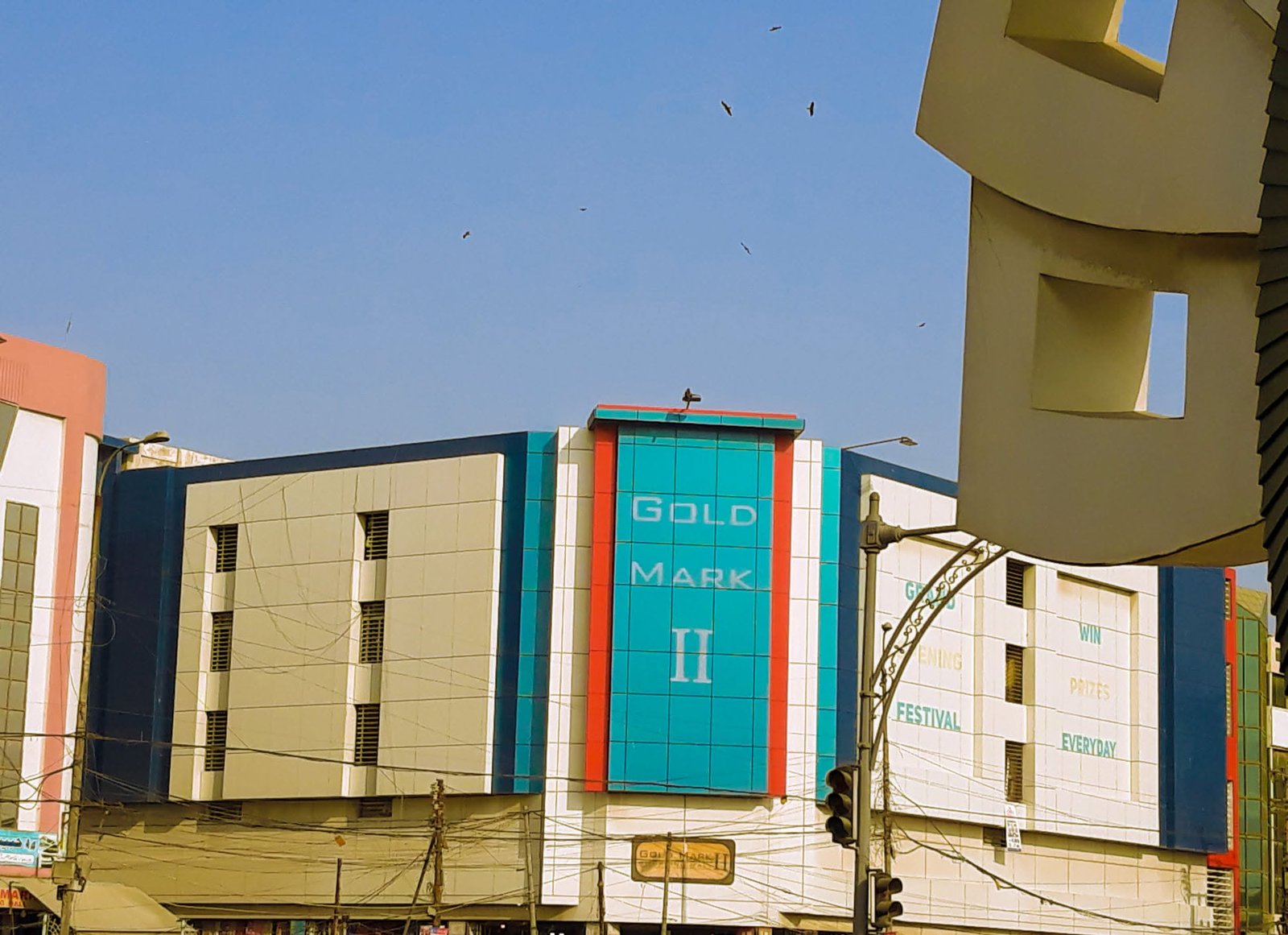
Vertical panels add a playful rhythm to the building’s surface. The colours interrupt the usual palette of concrete, glass, and dust without needing a complicated design. This photograph brings a lighter architectural moment into the Karachi collection, showing how a few simple choices can change the feeling of a facade.
085 · The Fruit Cart and the Crowd
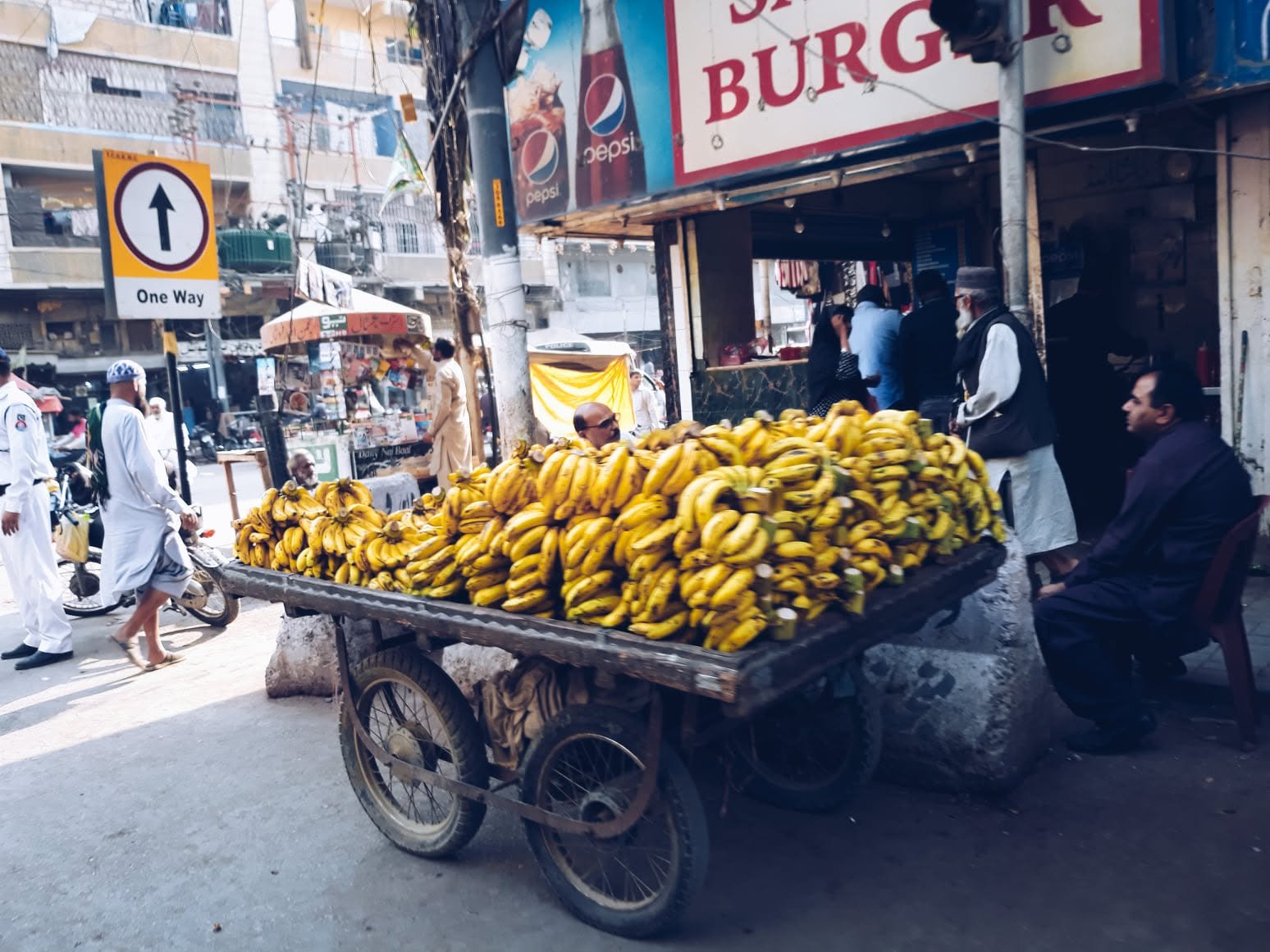
A cart sits within a dense arrangement of shop signs and passing activity. Its produce gives the eye a bright place to settle before returning to the wider street. The photograph shows Karachi’s commerce at two scales, from a single mobile stall to the larger market growing around it.
086 · Windows of Private Lives
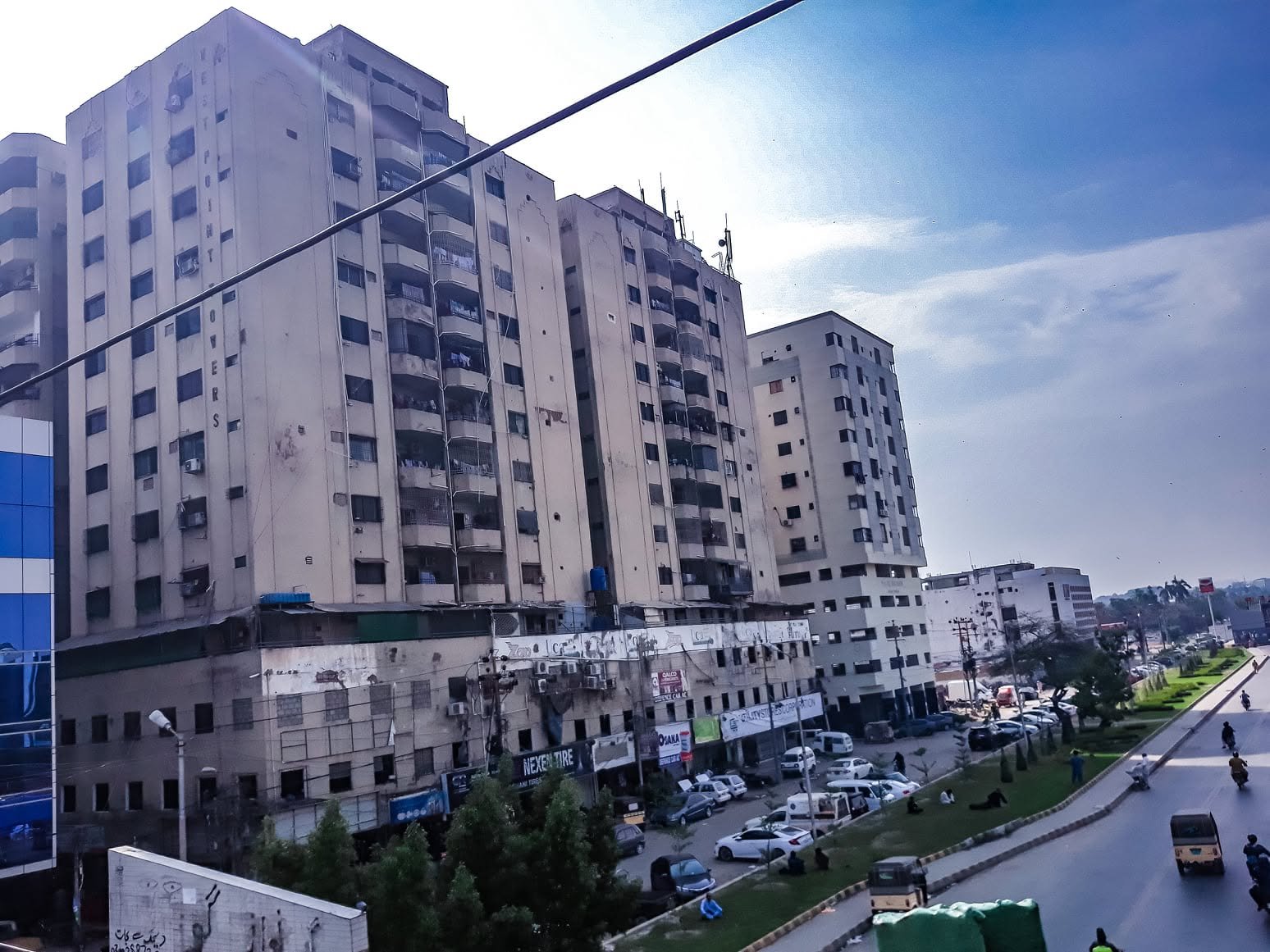
Rows of windows repeat across the building, each suggesting a space the camera cannot enter. The street offers a public view of many private worlds gathered together. This photograph finds a quieter kind of human presence in Karachi, one expressed through architecture rather than through a visible crowd.
087 · A Quiet Street Moment

A single figure holds the light while much of the street remains in shadow. The contrast gives an ordinary moment an almost theatrical stillness. In this Karachi photograph, the city’s wider activity recedes, leaving attention with one person and the small space around them.
088 · Café Lights and Conversation
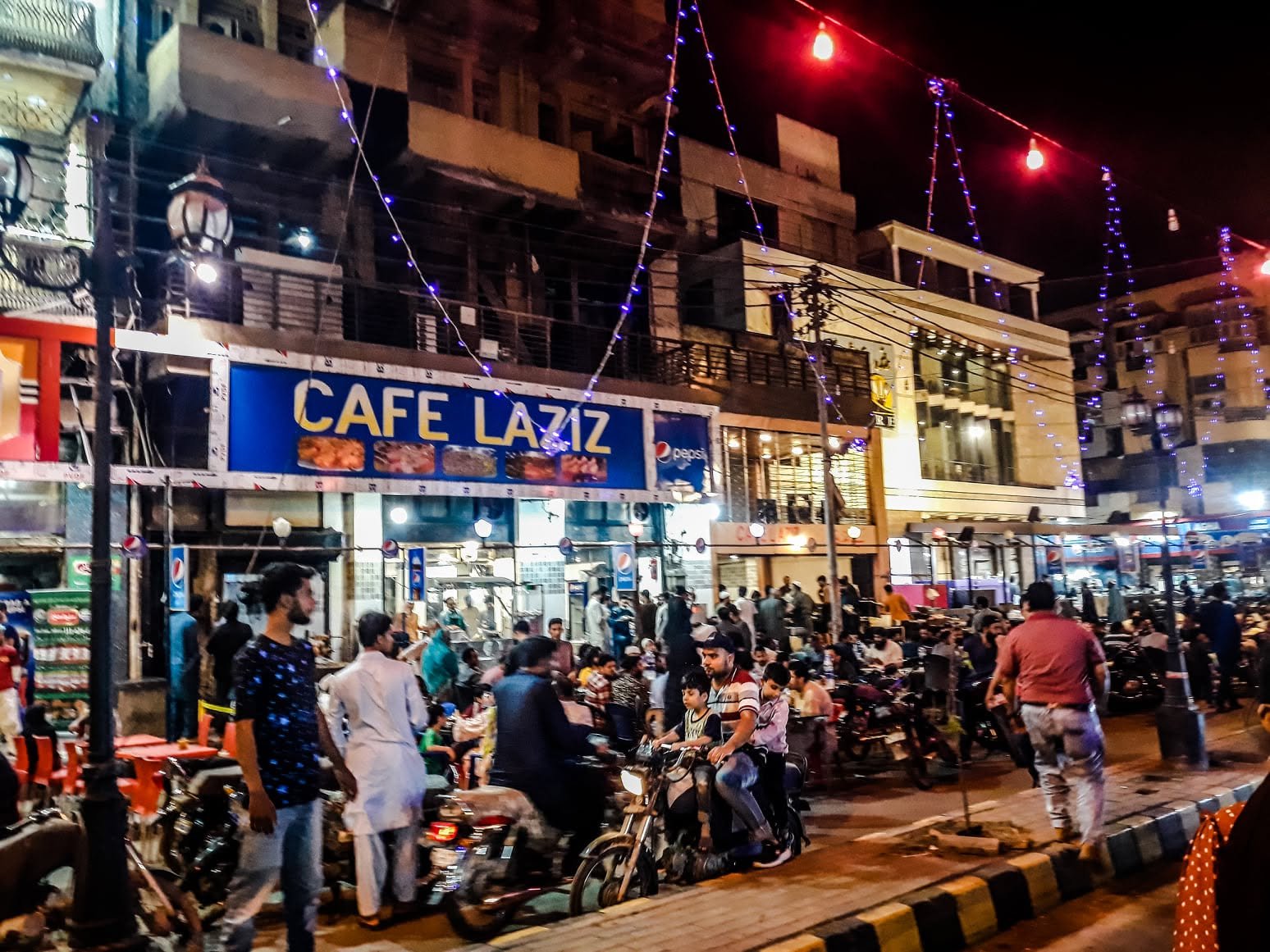
Light spills from the café frontage and joins the glow of surrounding signs. The street feels like a place where an evening can stretch through talk, food, and passing company. This photograph brings the social life of Karachi into view through the simple invitation of a brightly lit stopping place.
089 · Art at the Crossing
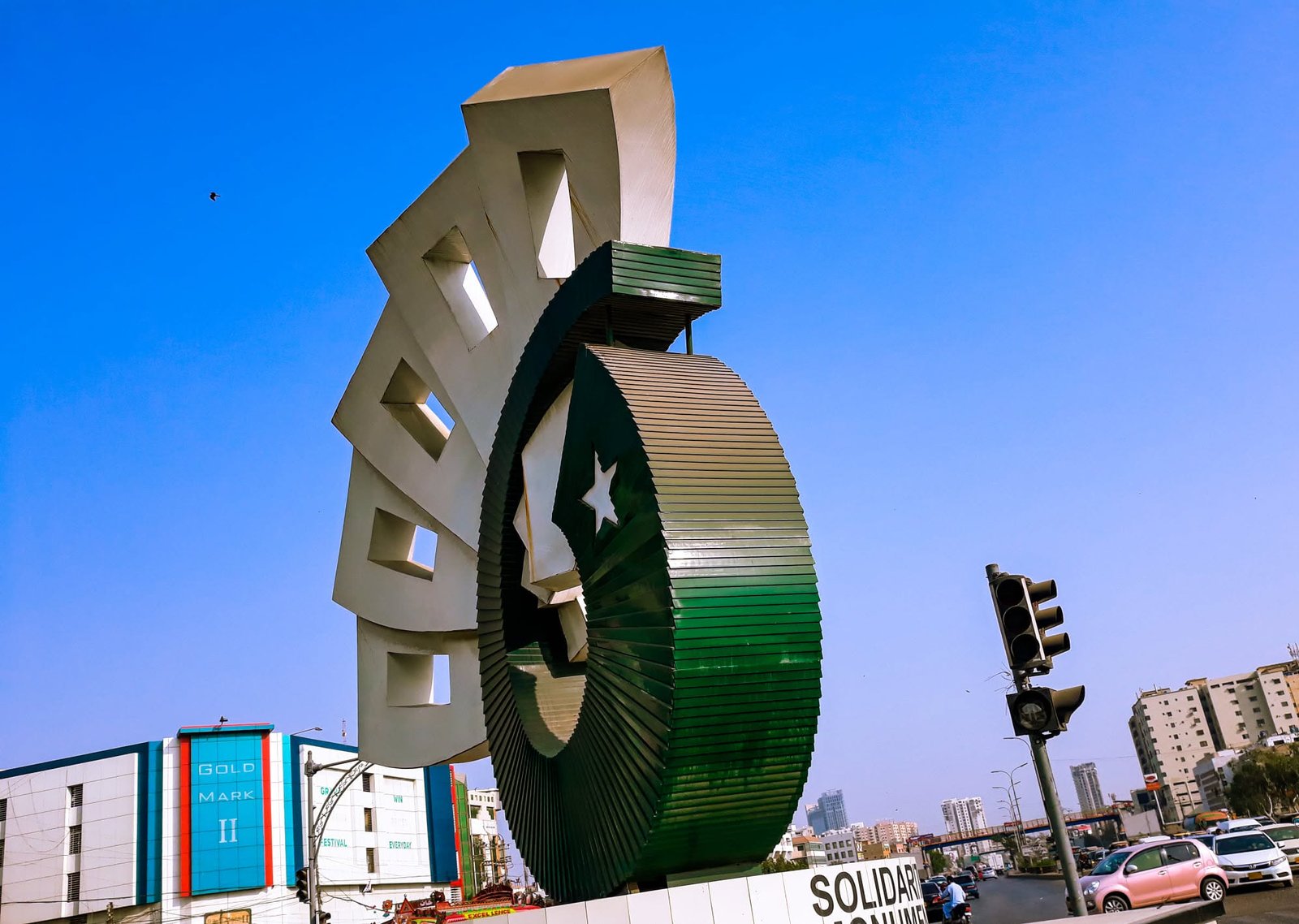
The sculpture gives the junction a strong focal point, its colours and forms set against a broad blue sky. Traffic infrastructure remains visible nearby, keeping the scene connected to daily movement. This photograph finds public art as part of Karachi’s ordinary routes, encountered in the middle of getting somewhere else.
090 · Painted Hulls at Rest
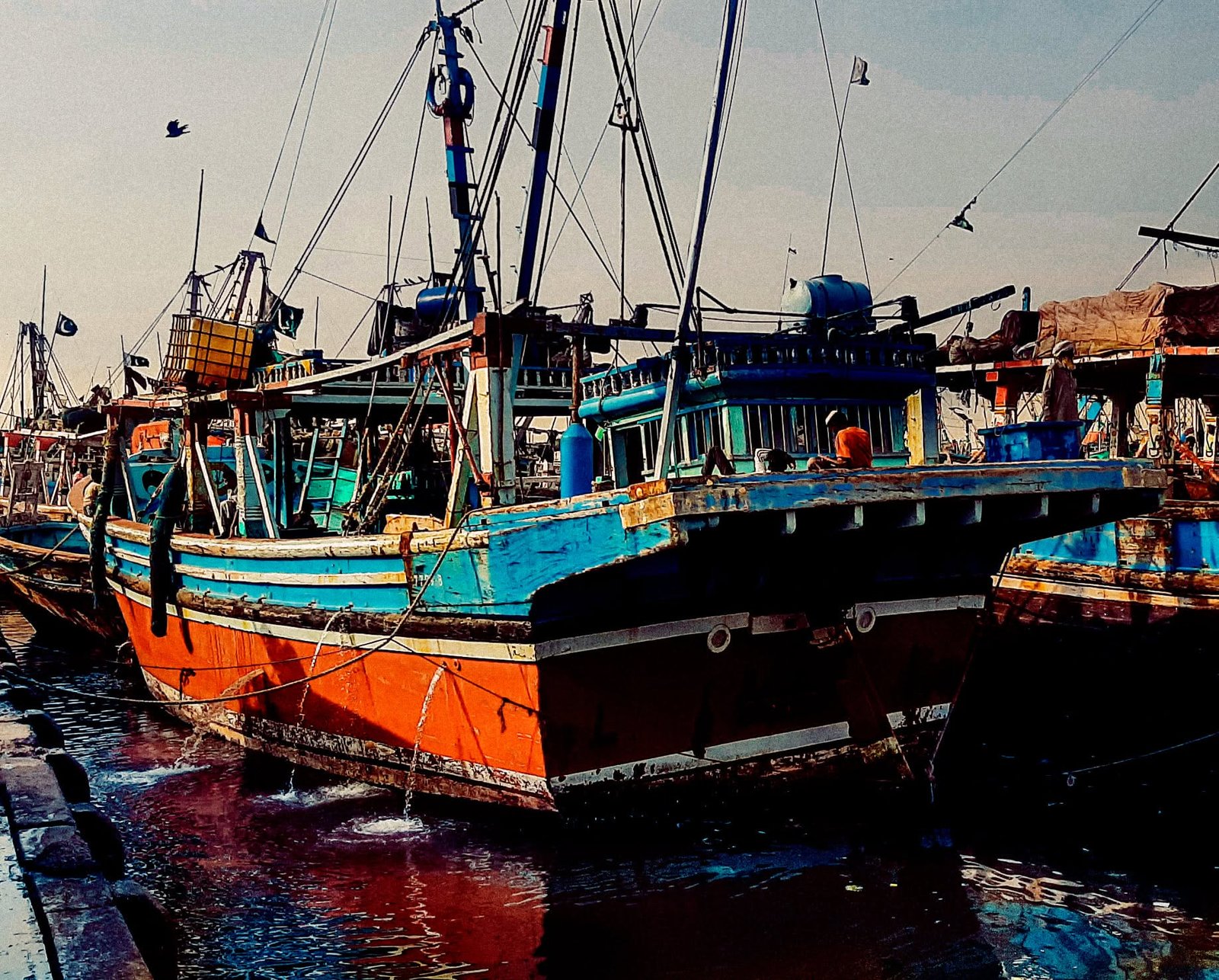
Painted hulls sit low against the water, with ropes and rails building a pattern above them. The boats are still, but their working purpose is visible in every surface. This Karachi harbour scene holds the pause between journeys, when the tools of movement become a quiet waterfront composition.
091 · The Sunlit Tower
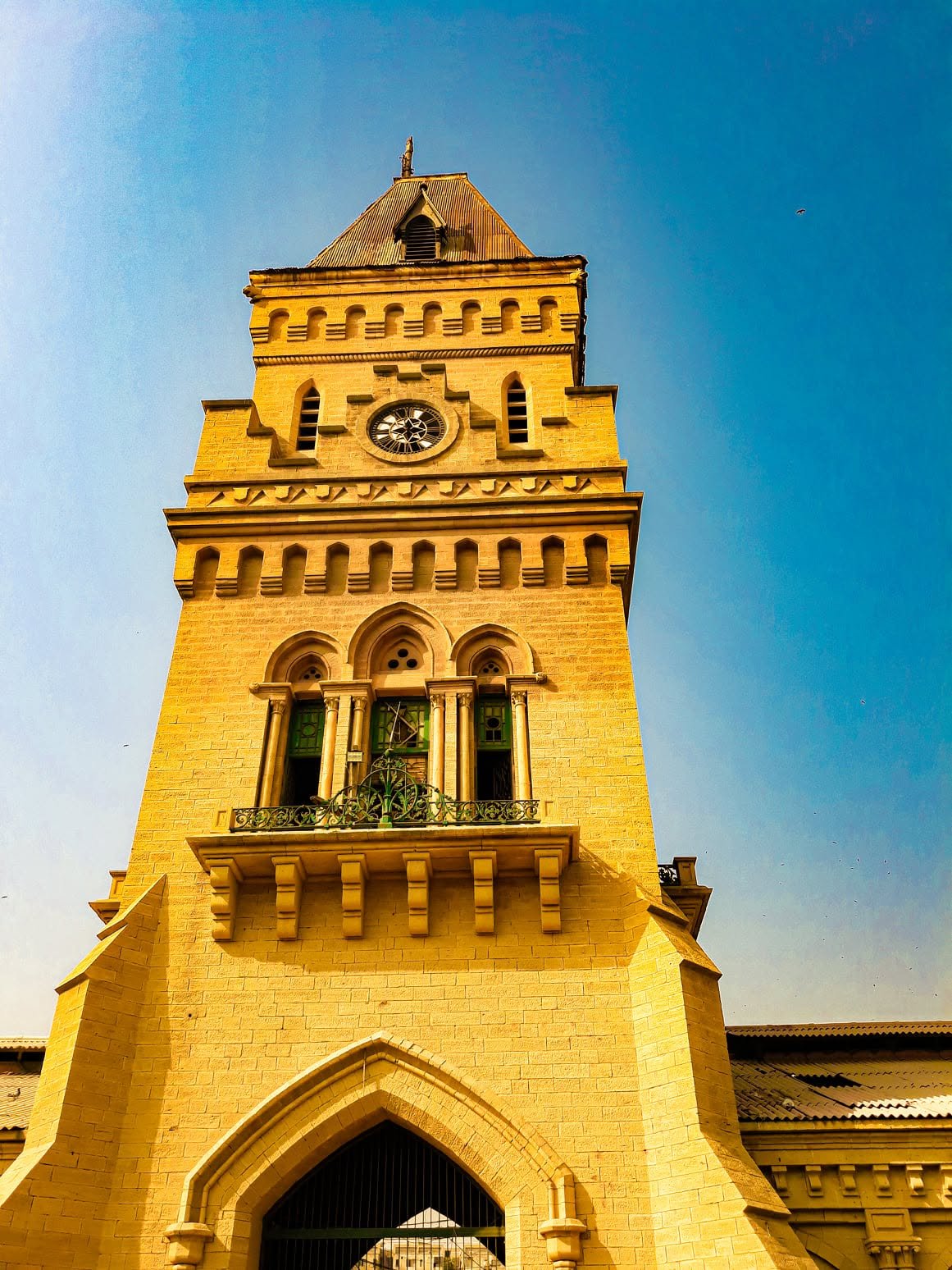
Warm light gives the tower a golden presence against the sky. Its repeating details reward a slow look upward, away from the immediate activity of the street. The photograph lets Karachi’s architectural character emerge through proportion, ornament, and the changing colour of a familiar building surface.
092 · Inside the Workshop
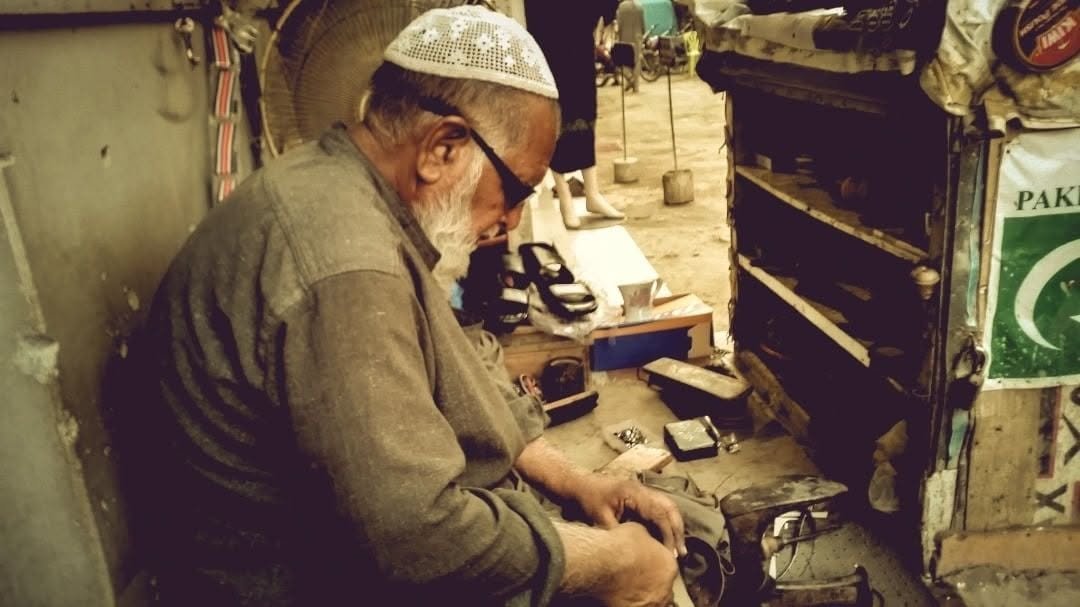
The workshop is full of surfaces that appear shaped by continued use. A worker’s concentration brings those surroundings into a clear, human focus. This photograph stays close to the act of making, offering a Karachi story told through attention and labour rather than through a recognisable skyline.
093 · The Walk Toward Water

The walkway gives the photograph a natural direction, inviting the eye to travel along its boards. Water and a small structure wait at the far end. It is a coastal image built around anticipation, the feeling of leaving the busy land behind one measured step at a time.
094 · A Building Beside the Route
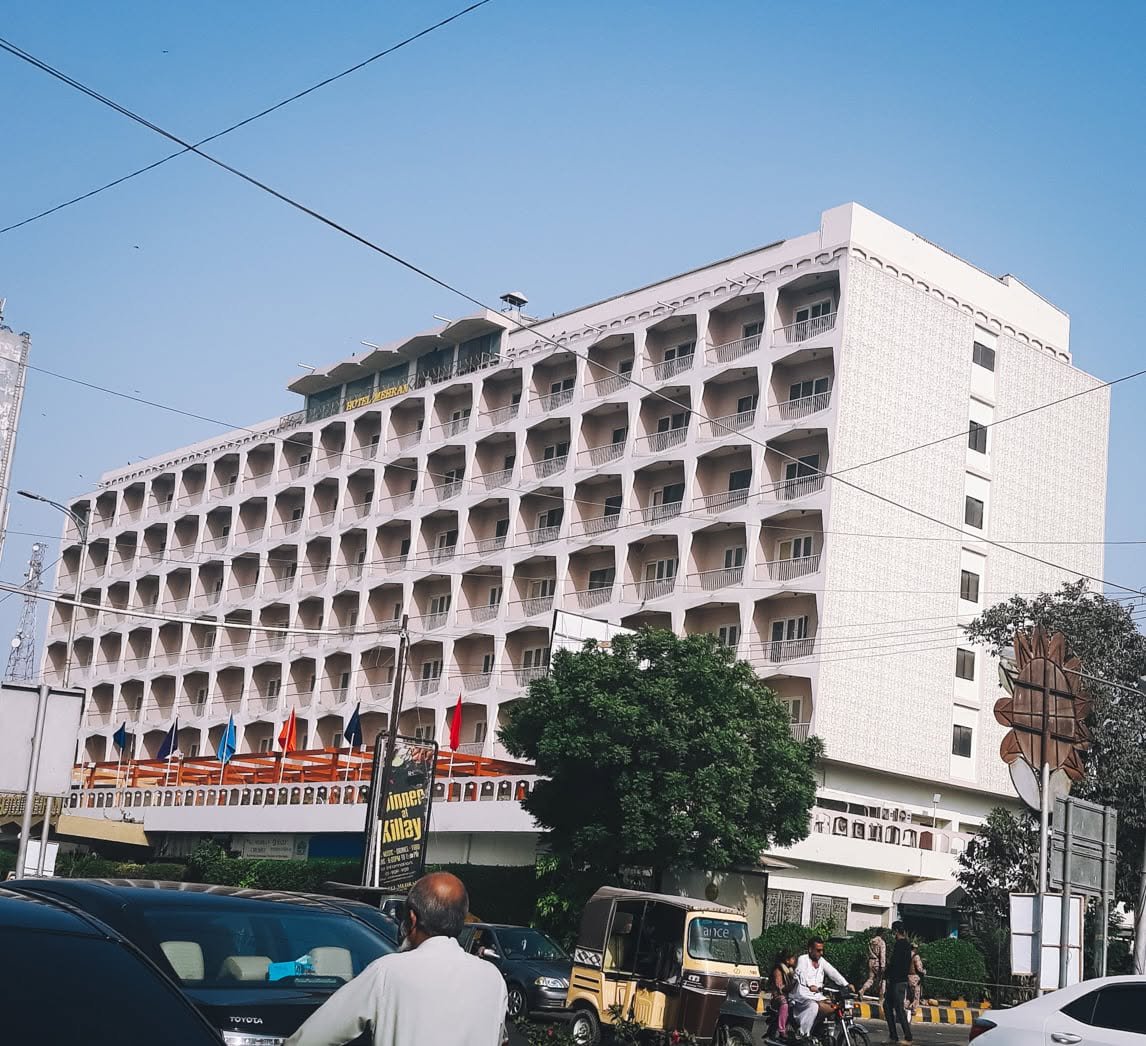
The building’s repeated windows provide a steady backdrop to the movement below. Its scale is substantial, yet the photograph keeps it part of an everyday route. Karachi’s urban character often appears this way, through buildings that become familiar companions to the journeys people make again and again.
095 · Another Light in the Night
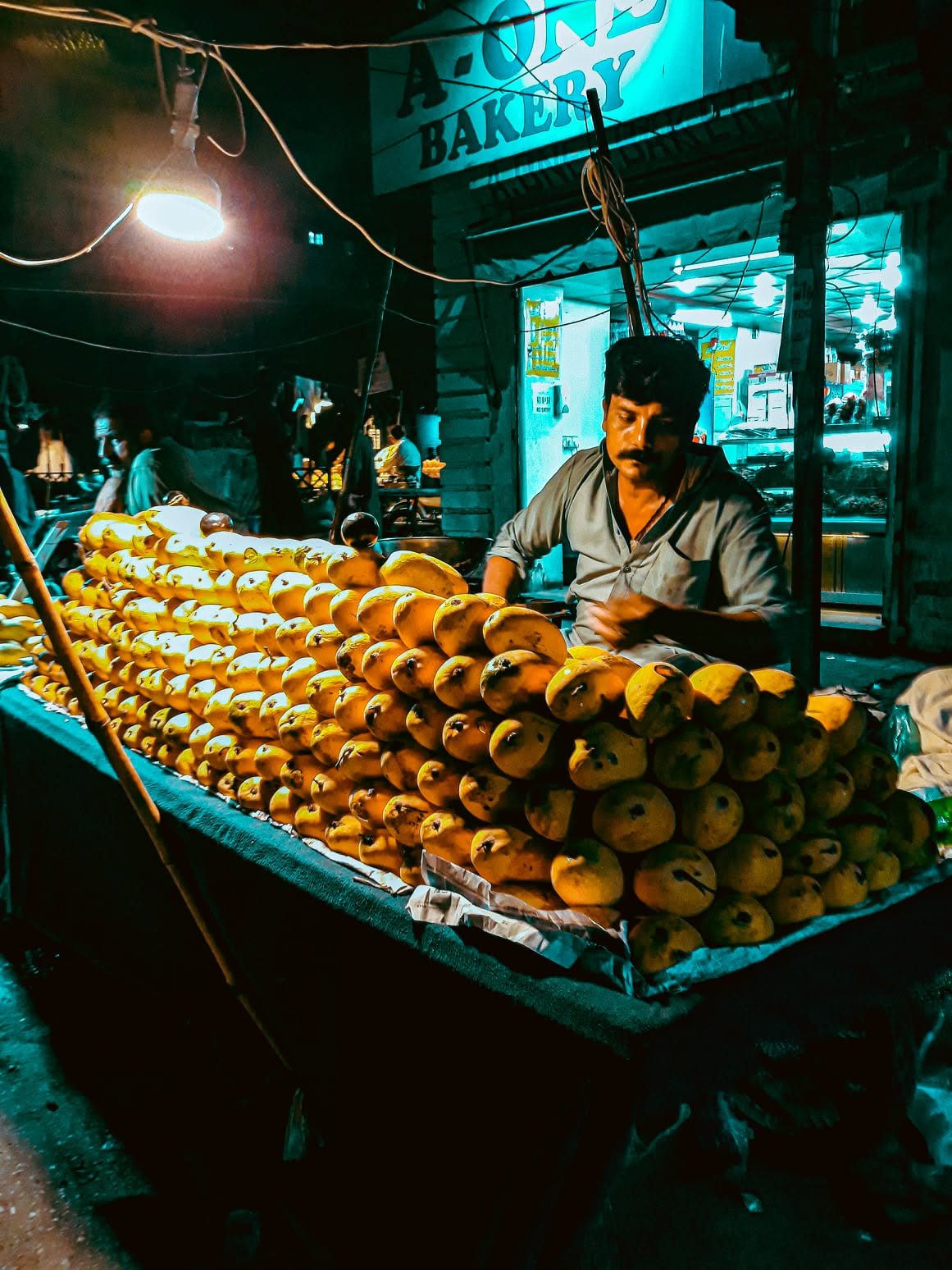
A few lights are enough to turn the cart into a small, welcoming scene. Fruit forms a bright boundary against the darkness, giving the vendor’s display a presence beyond its size. This Karachi photograph celebrates the quiet visual generosity of an ordinary stall after sunset.
096 · A Seat at the Street’s Edge
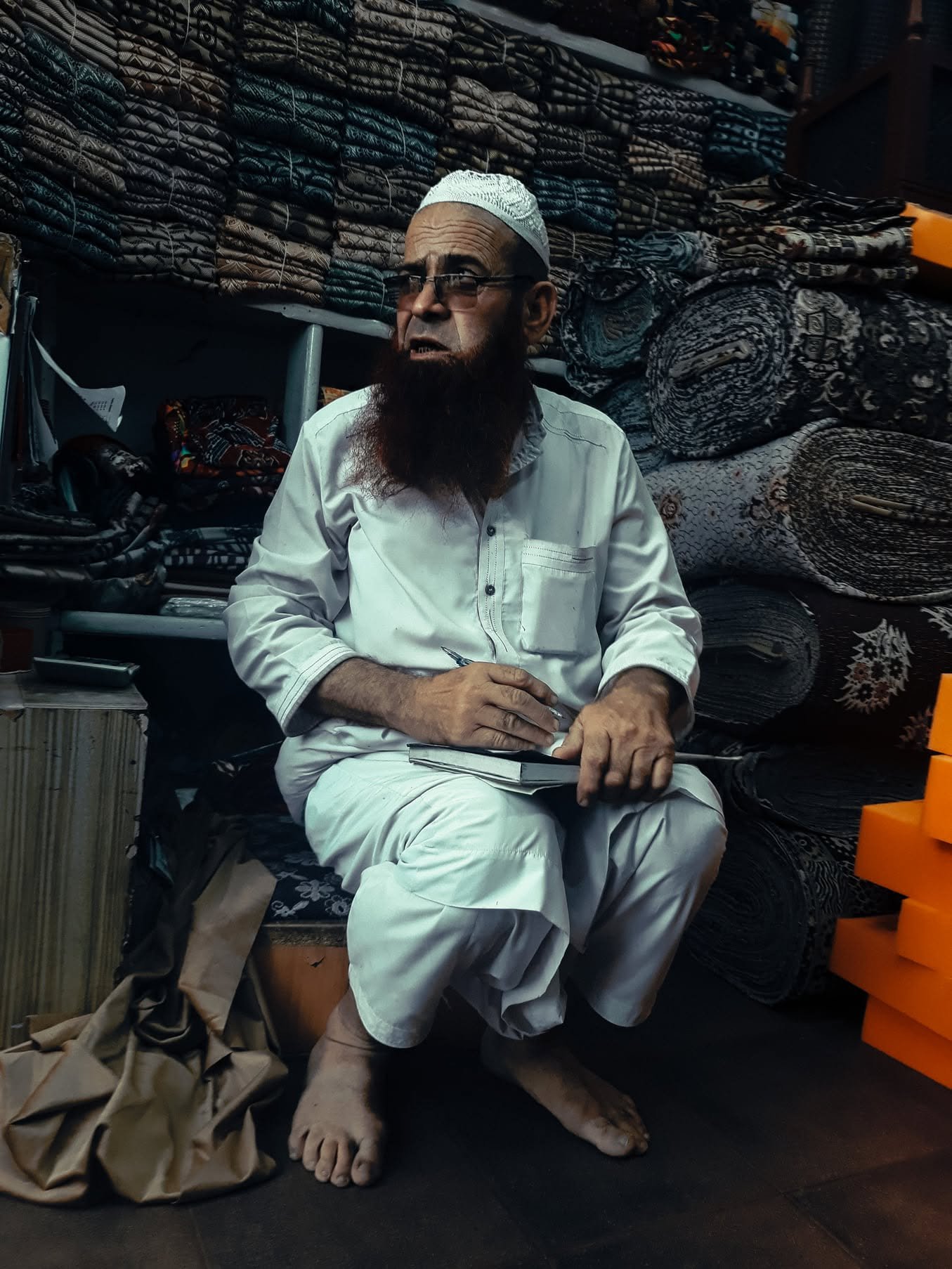
The seated figure gives the scene a grounded, unhurried centre. Around him are the practical details of a street that continues beyond the frame. This portrait asks for no invented biography; the person’s presence, expression, and place in the composition are already enough to hold attention.
097 · The View from a Café
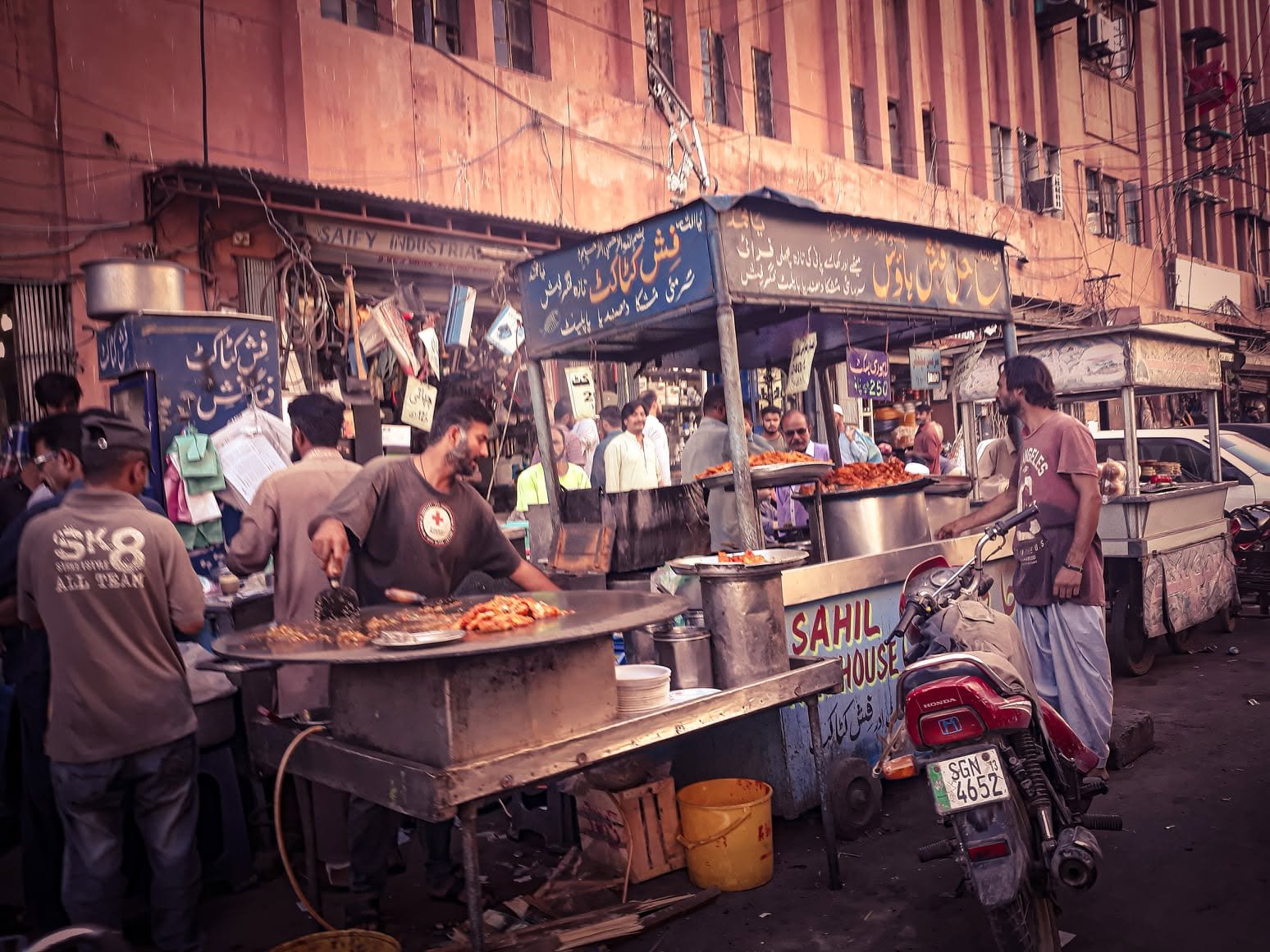
Tables and lights create a setting for the conversations that belong to an evening out. The photograph watches a shared space rather than a single subject. Within the Karachi collection, it offers the feeling of stopping long enough for the city to become company rather than simply scenery.
098 · A Rhythm of White Windows
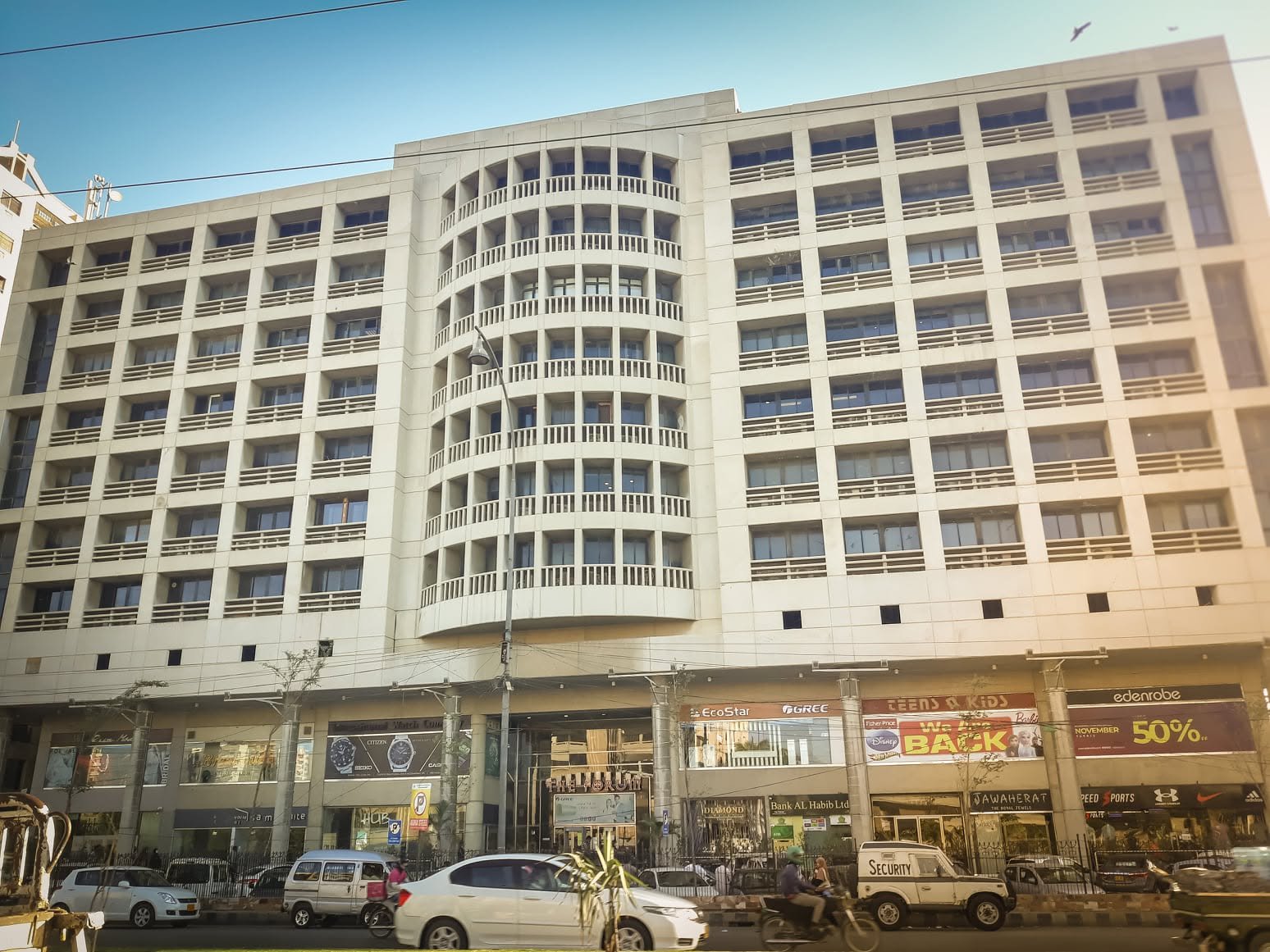
The facade forms a grid of light surfaces and dark openings. Street movement at its base keeps the geometry from feeling detached from daily life. This Karachi architectural photograph finds beauty in repetition, letting a large building reveal itself through the simple rhythm of its windows.
099 · The Sea’s Silver Harvest
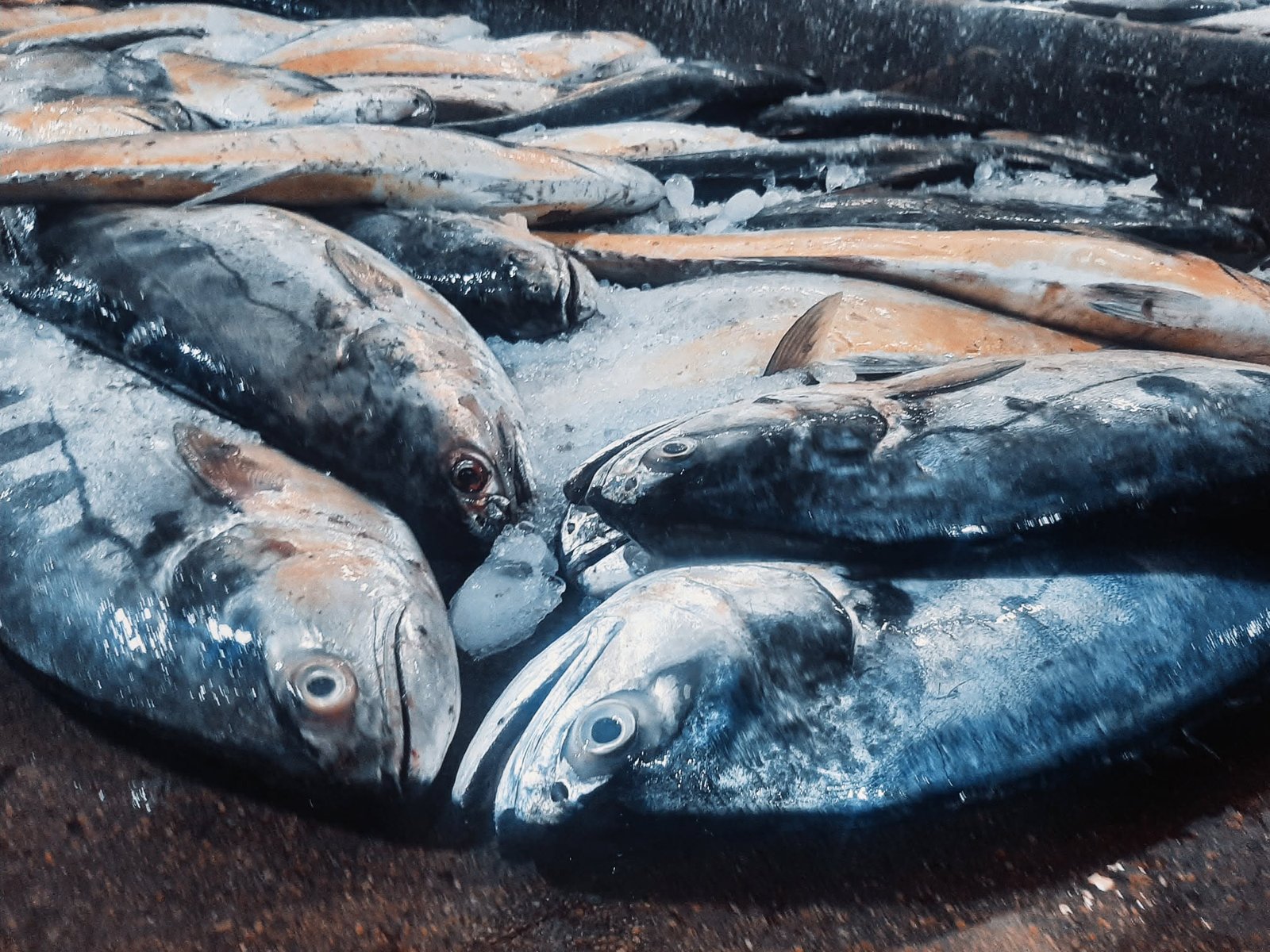
The fish lie close together, their silver bodies reflecting small variations in light. Seen at this distance, the display becomes both a market record and a study of surface. The photograph keeps the sea present within Karachi’s streets through the tangible details of the day’s trade.
100 · Room Around the Skyline
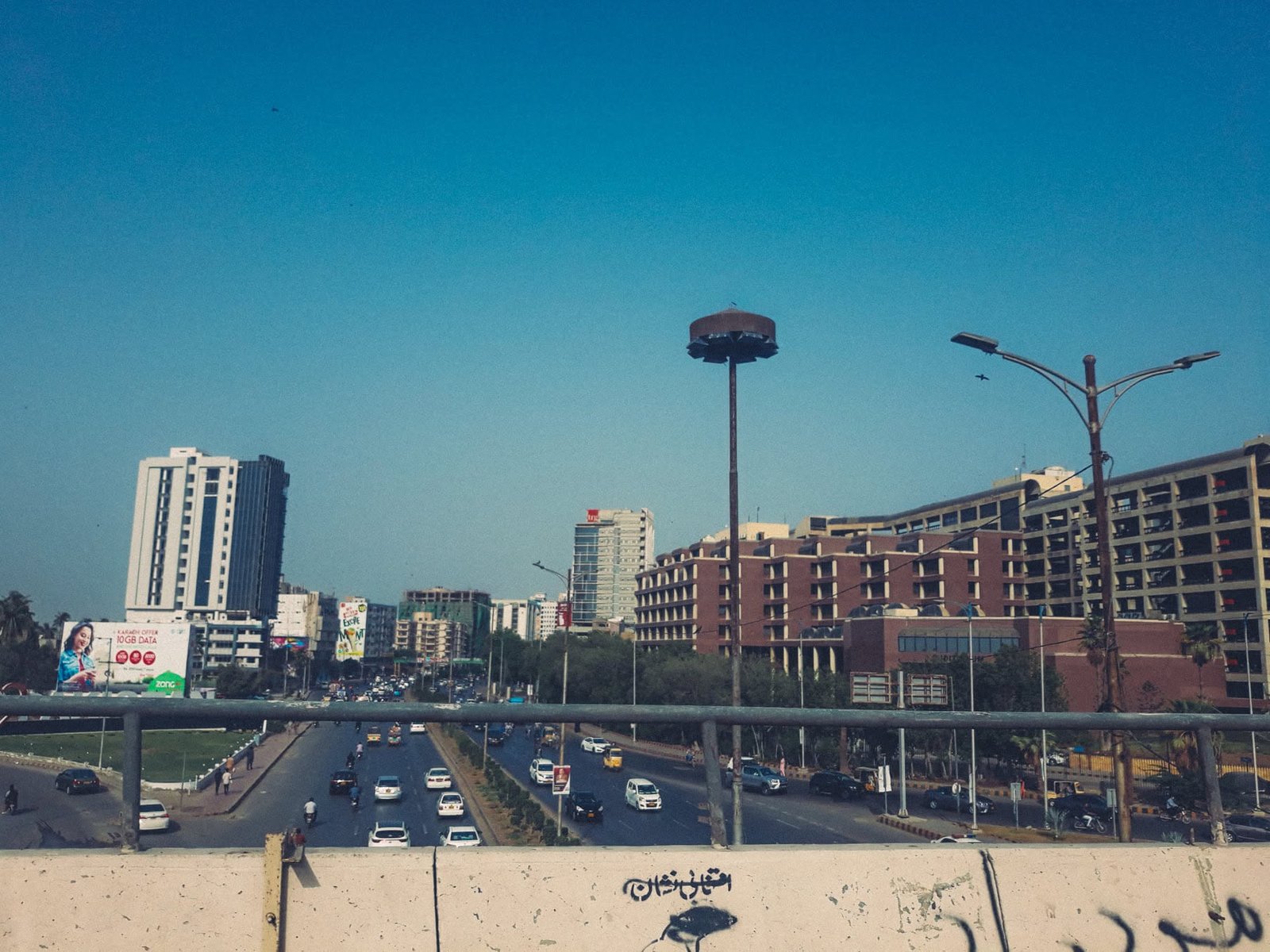
The open foreground gives the buildings room to breathe. Lines of road and planted space draw the eye across the scene, creating a gentler pace than a crowded street view. Karachi appears here through a moment of urban openness, where distance becomes part of the photograph’s calm.
Toward the Water and the Evening Light
101 · The Curve of an Old Corner
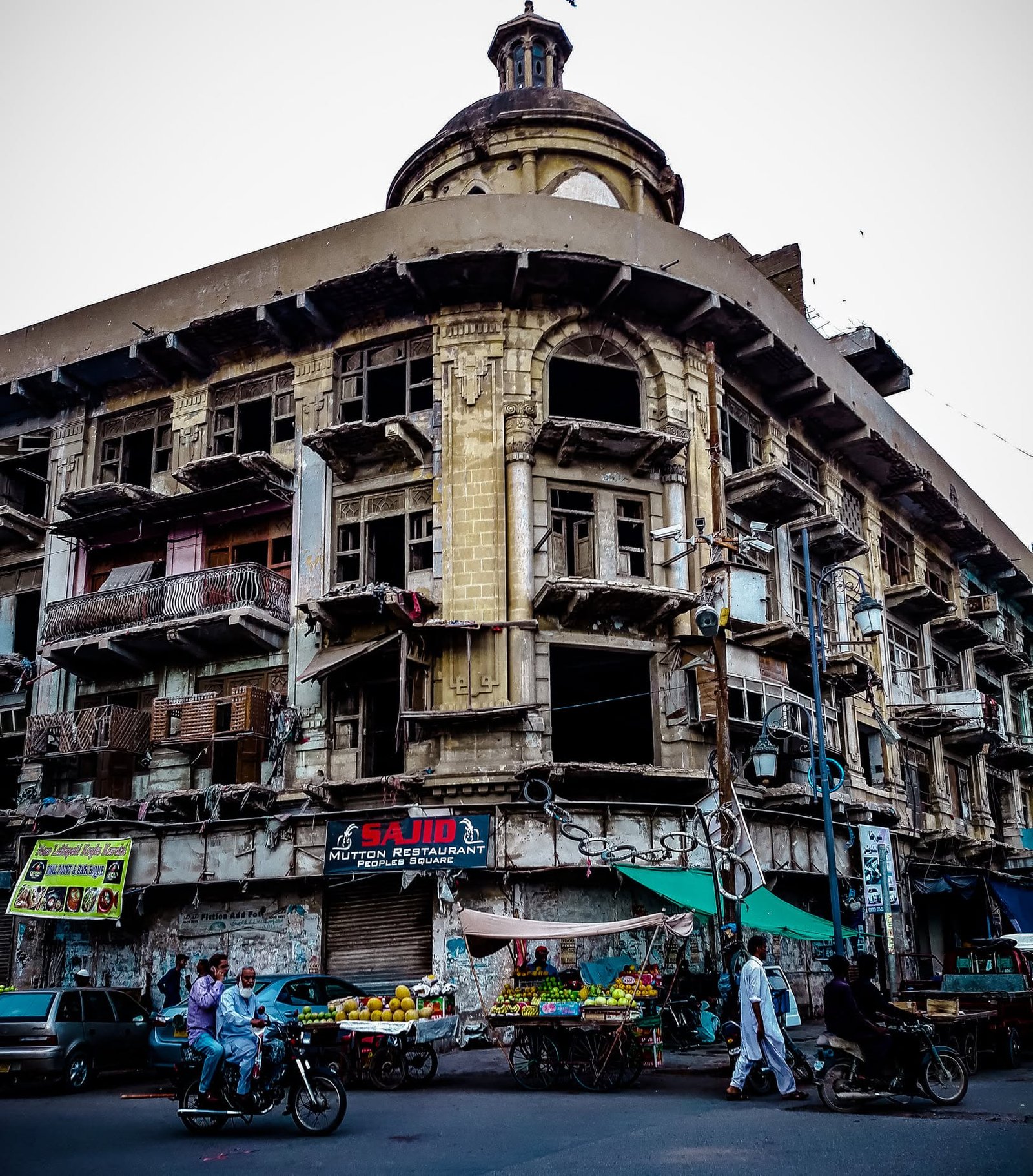
The corner bends the facade into a shape that follows the street rather than resisting it. Balconies and signs add smaller layers of interest along the curve. This photograph finds Karachi’s architectural personality in a building that seems inseparable from the junction it has helped to define.
102 · The City Keeps Rising
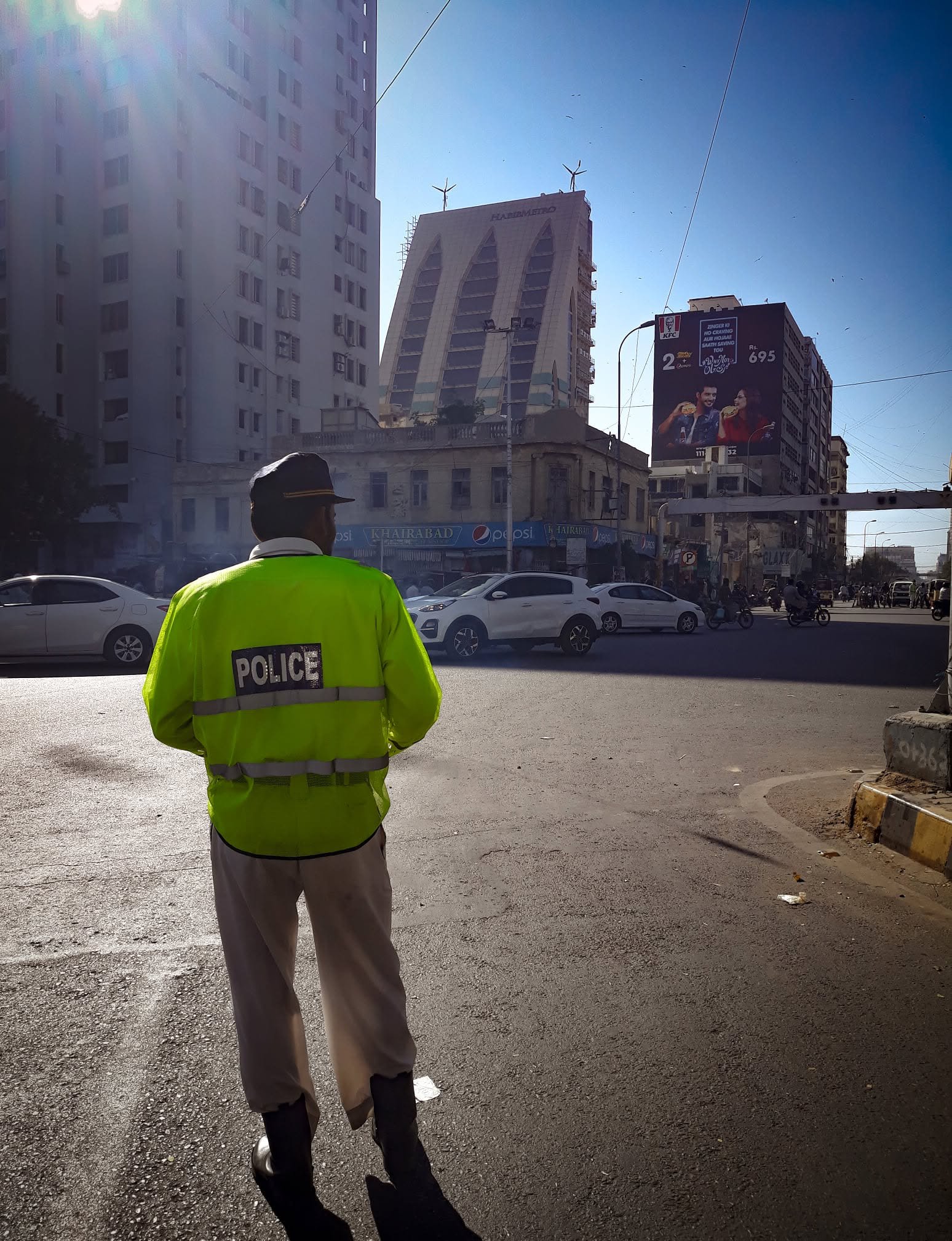
A foreground figure gives scale to the towers beyond, linking the large city view to a single human presence. The buildings suggest height and change; the road keeps the photograph in the everyday. Karachi is seen here as both a growing skyline and a place encountered on foot.
103 · A Boat Between Journeys
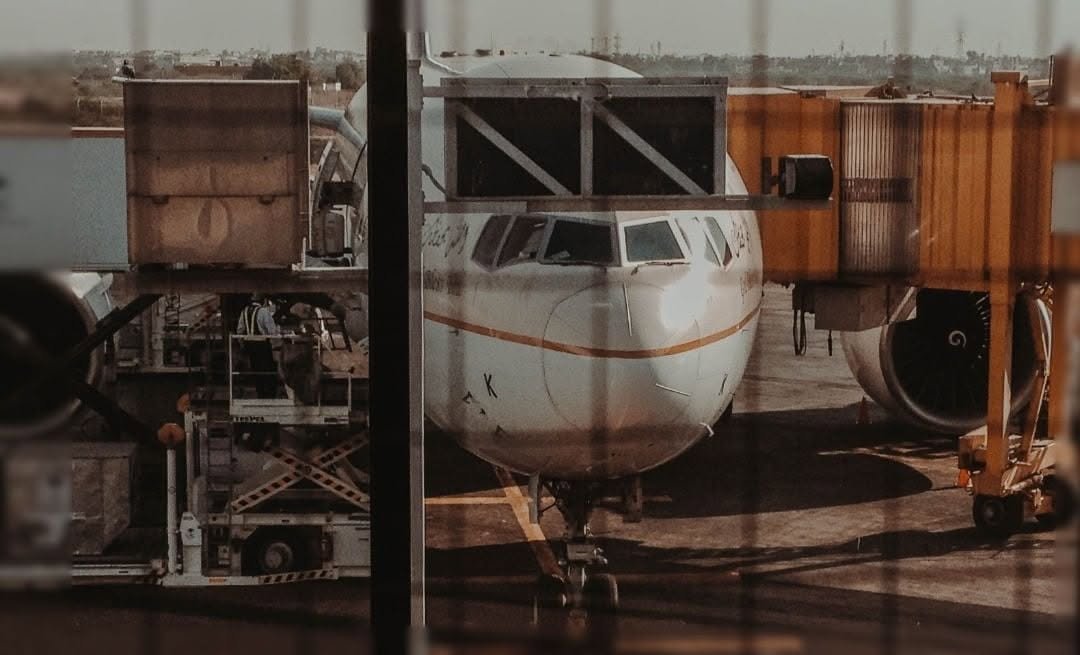
The boat is away from open water, its surfaces carrying signs of use and time. Without a visible journey to follow, the eye settles on texture, shape, and construction. This photograph adds a quieter maritime story to Karachi, one told by a vessel at rest rather than in motion.
104 · Pink on the Street
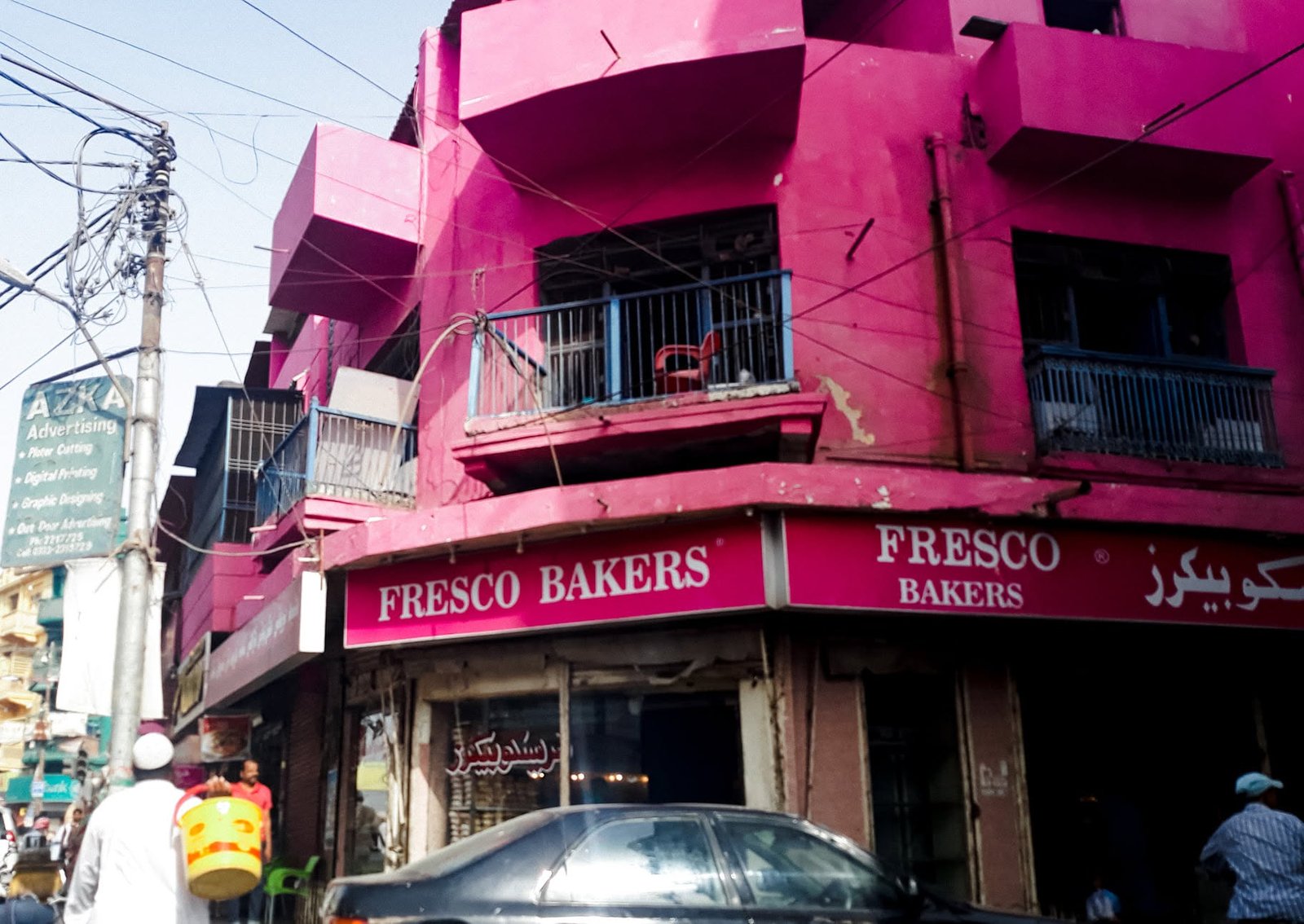
The pink facade gives the corner an immediate personality. Signs, windows, and street-level details add their own practical layers without hiding the colour. This Karachi view shows how a single building can lend a whole stretch of road a memorable mood.
105 · Evening Along the Road
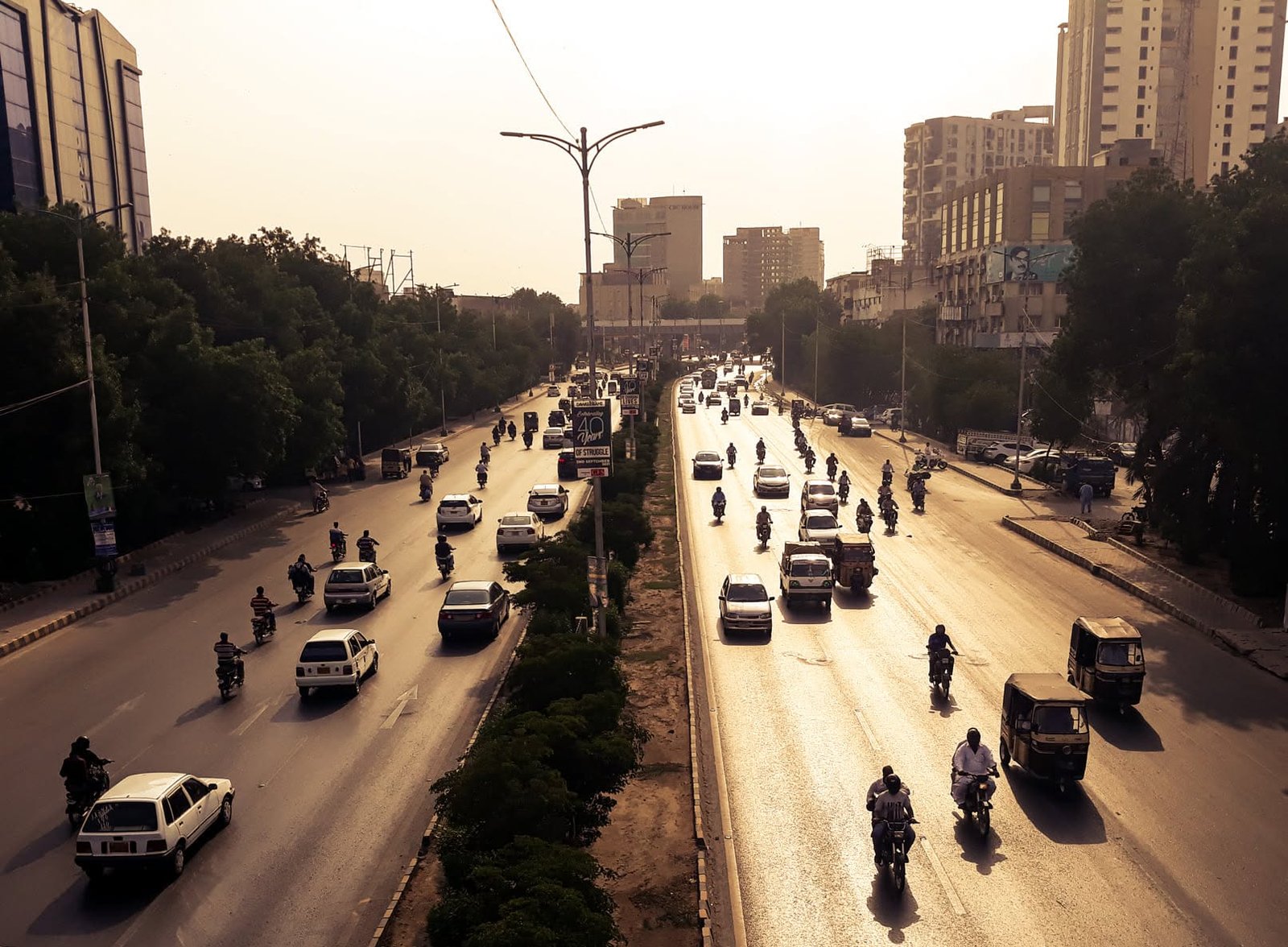
Warm light stretches along the roadway and catches the edges of moving vehicles. The scene holds the familiar feeling of a day turning toward evening while the city carries on. This photograph lets Karachi’s traffic become atmospheric, shaped as much by the light as by the road itself.
106 · Colour in a Glass
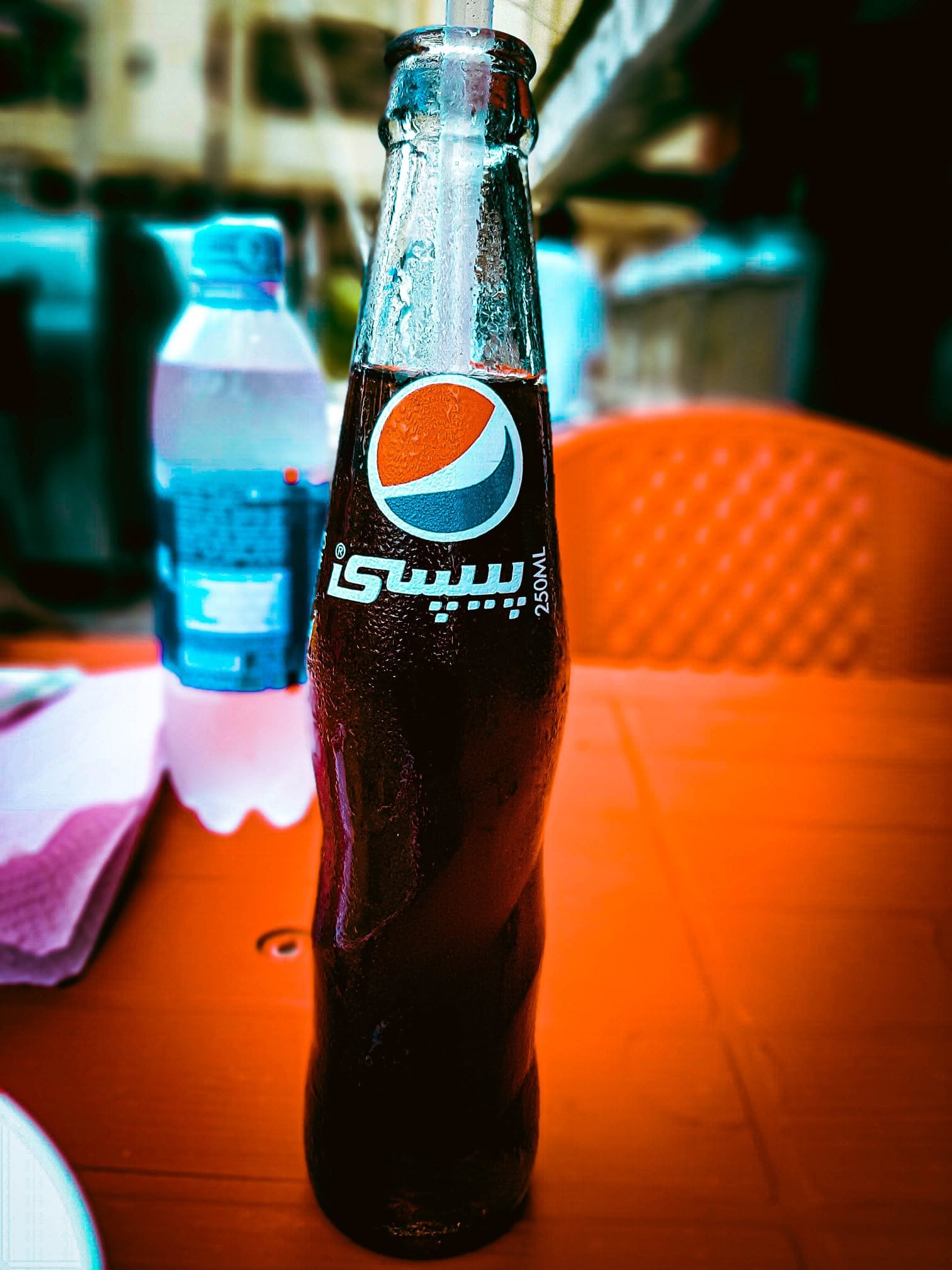
The drinks catch the light in vivid bands of colour, turning an everyday refreshment into a small still life. Their appeal is direct and cheerful. In a journey through Karachi’s markets and streets, this frame offers a simple pause for something cool, bright, and close at hand.
107 · Karachi in the Frame
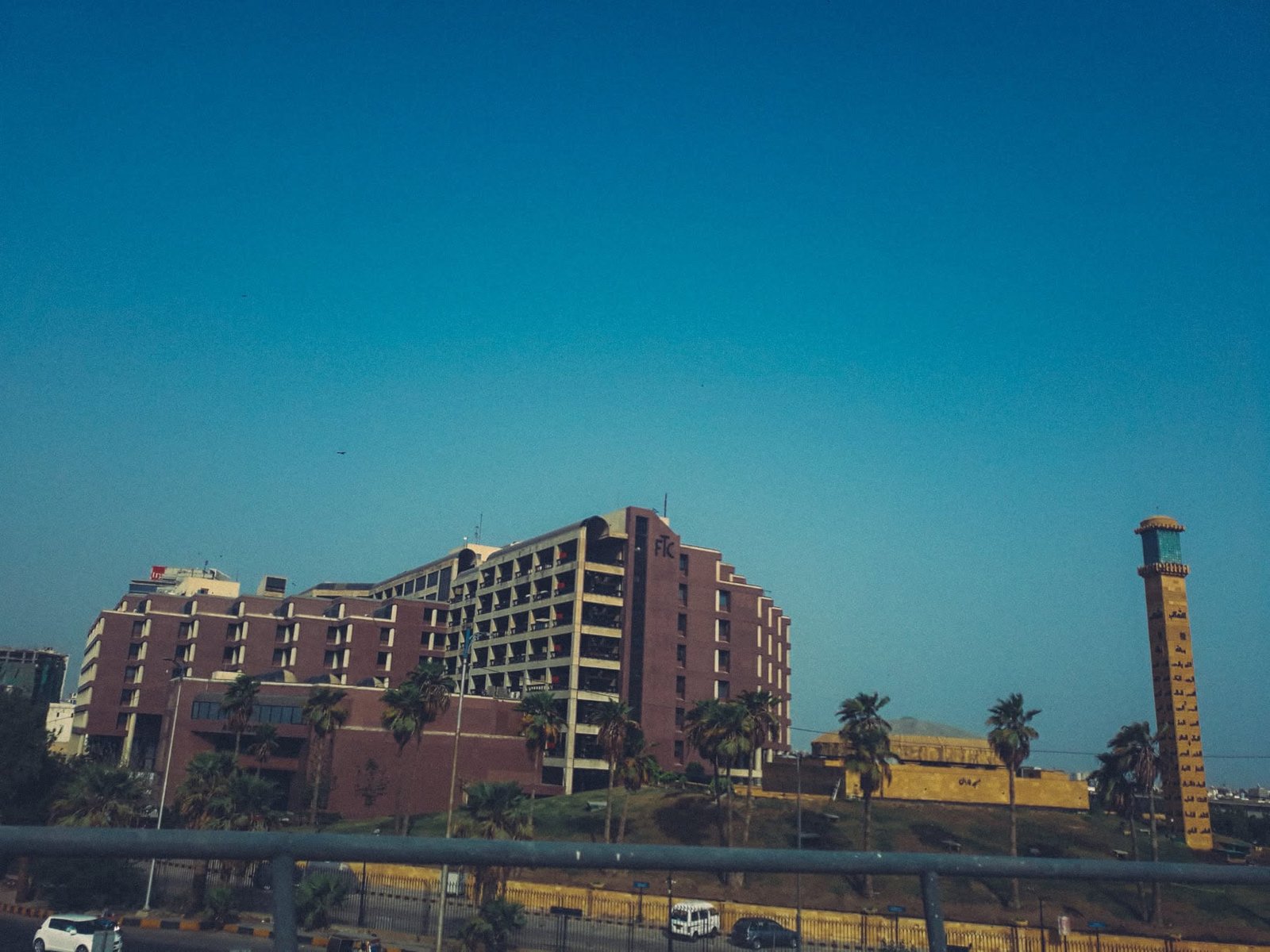
The city’s name sits within the landscape it describes, giving the photograph an immediate sense of place. Open sky and surrounding buildings add space around the letters. Within this photo essay, the image works like a visual refrain, bringing many different streets and moments back to one shared name.
108 · Food at the Stall
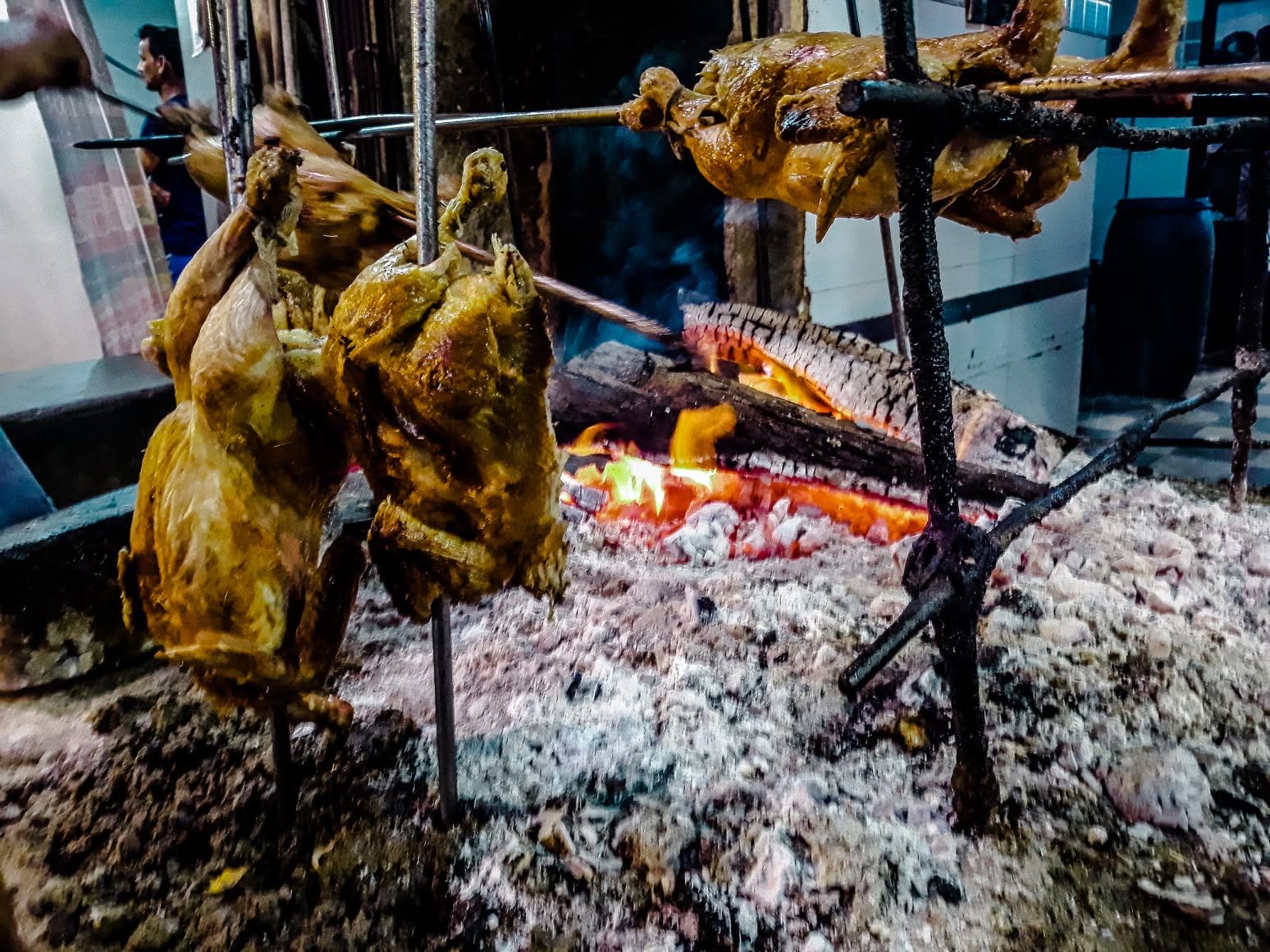
Food and working surfaces crowd together, showing the lively practical side of a street stall. The image invites attention to preparation as well as appetite. Karachi’s food stories are often found in such close views, where a few ingredients and tools suggest the care behind a quick meal.
109 · The Vendor’s Route
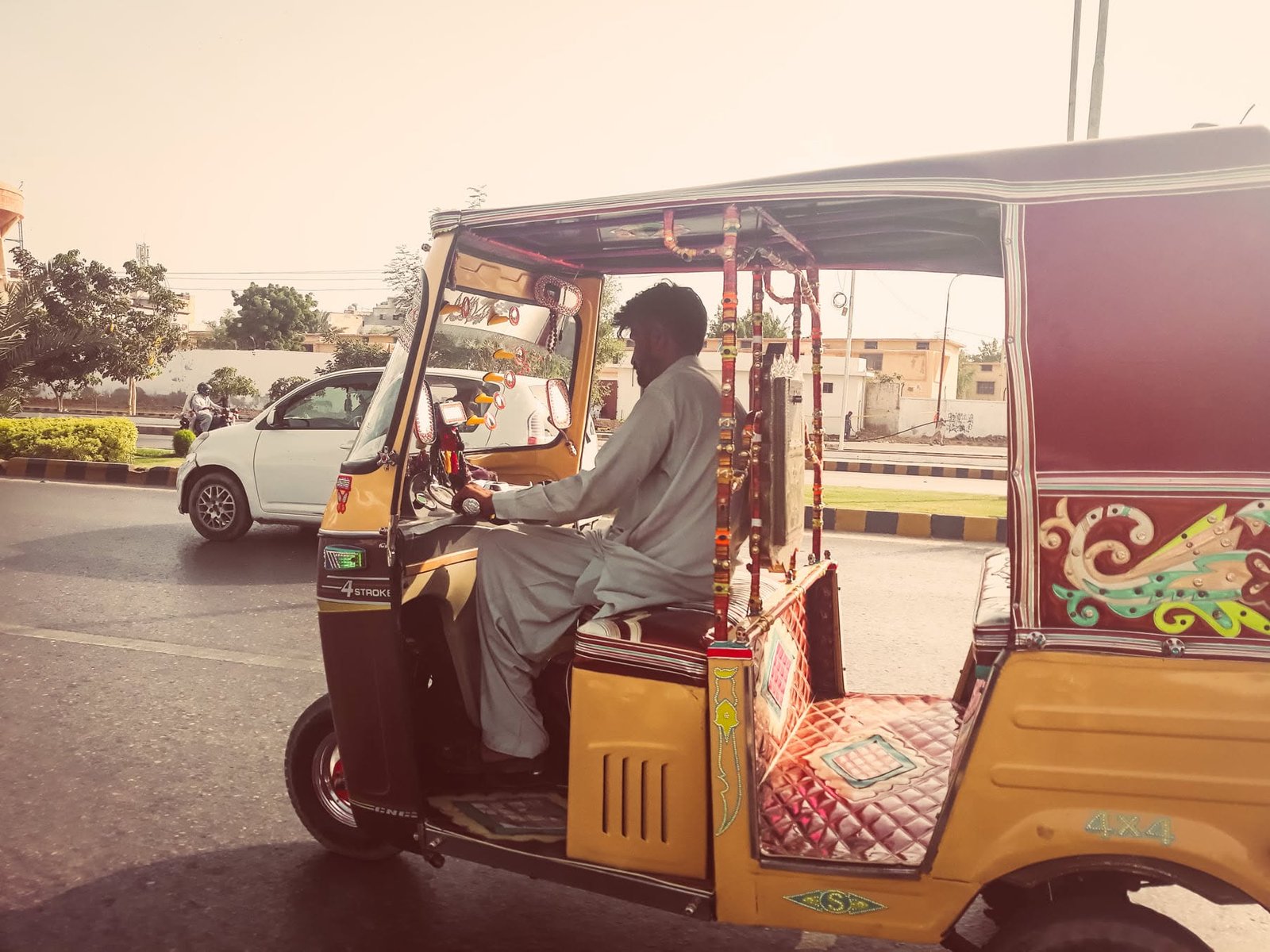
A cart creates a small working territory within the movement of the road. The vendor and the passing city occupy the same frame without losing their separate rhythms. This photograph follows Karachi through the people who bring everyday goods into the paths of those already on the move.
110 · A Conversation by the Cart
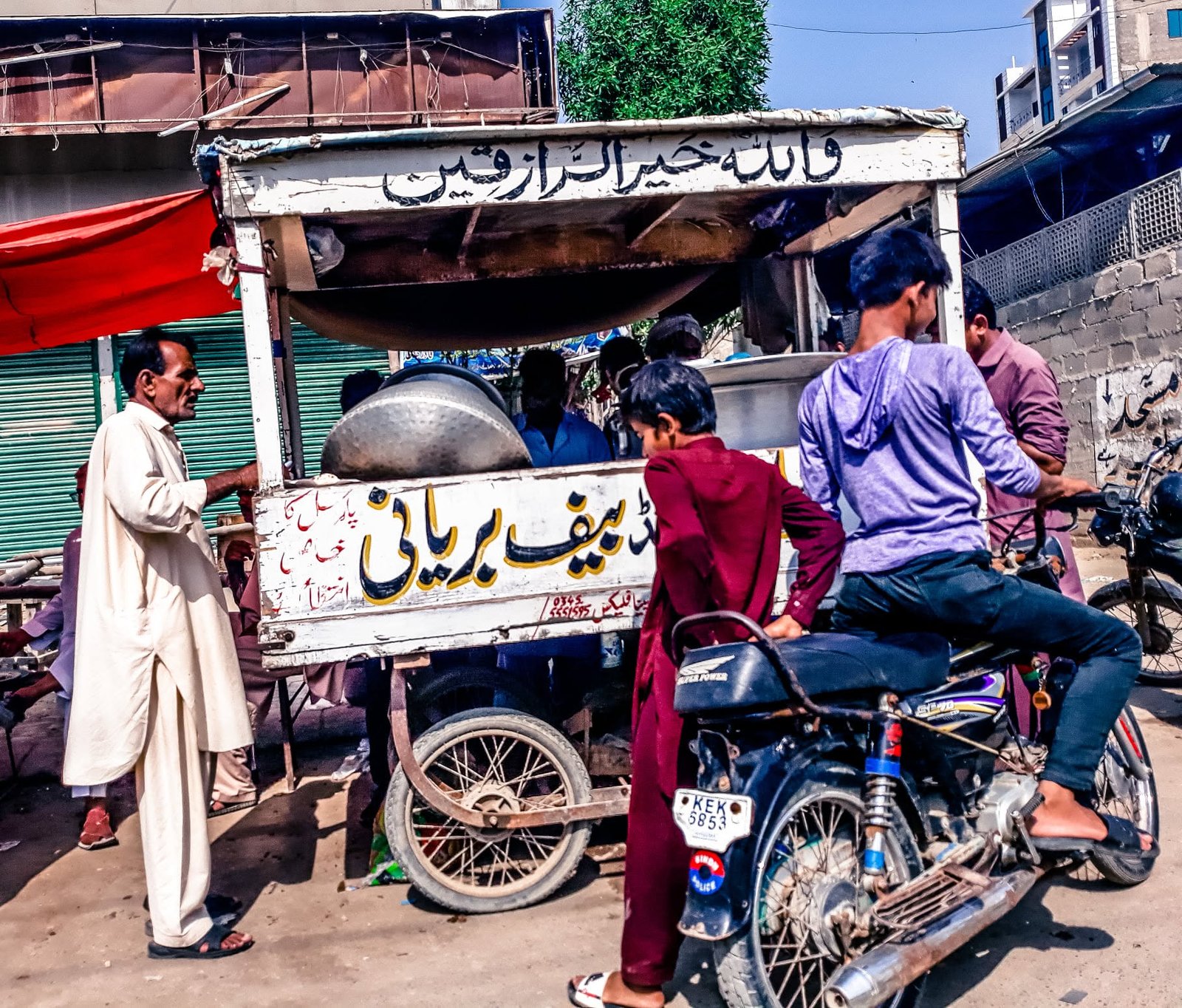
The cart is a place of trade, but the people around it make the scene feel social too. A brief stop becomes an opportunity for an exchange beyond the transaction. This Karachi street photograph catches that closeness, where work and conversation can share the same few square feet.
111 · Sun Through the Flyover
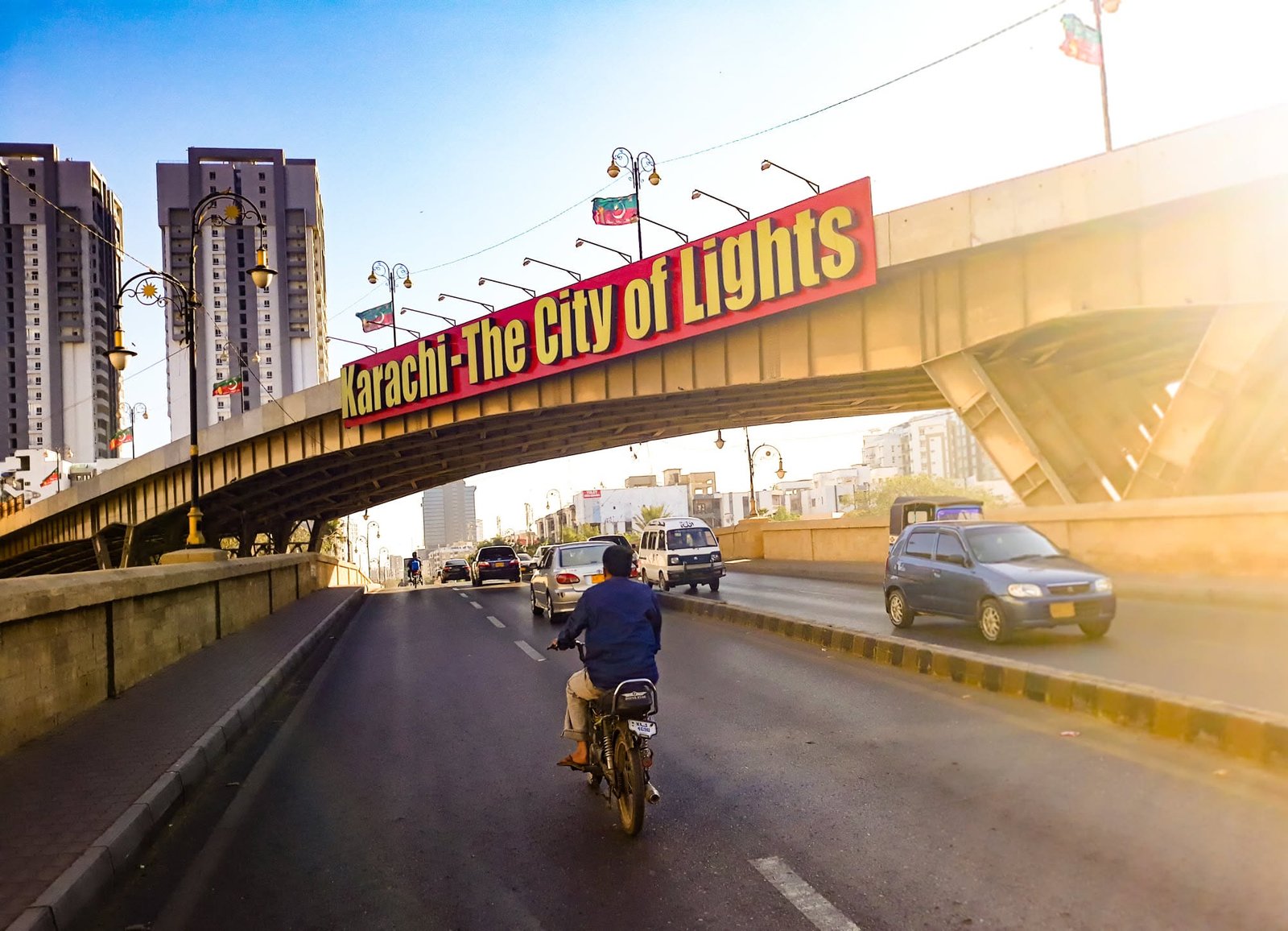
Light filters through the overhead structure and opens a bright path along the road. A cyclist gives the large infrastructure a smaller, human measure. The photograph finds a cinematic moment within Karachi’s ordinary movement, using the meeting of sun and concrete to shape the view.
112 · Colour Above the Lane
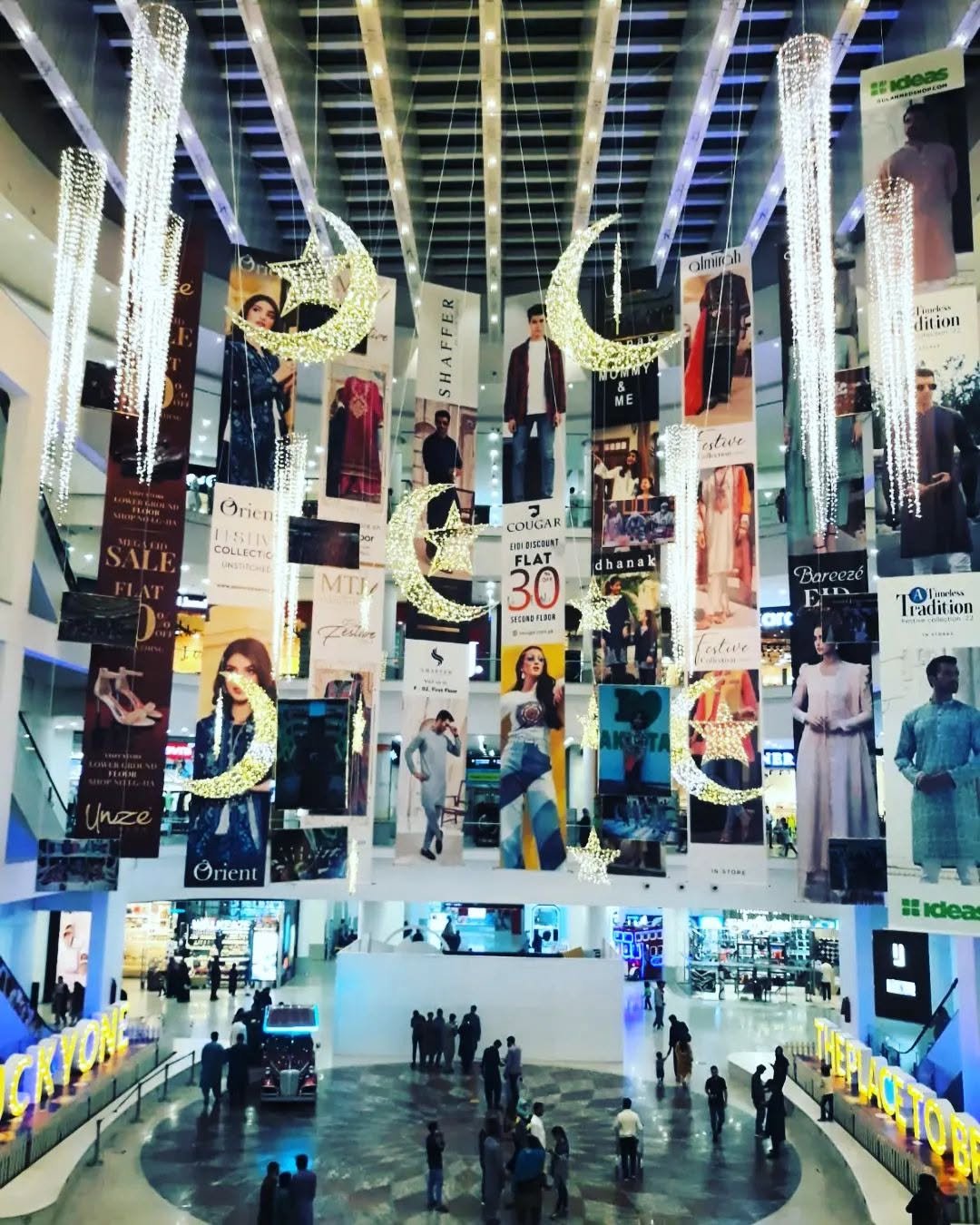
The passage fills the frame from ground level to overhead displays. Colour seems to arrive from every direction, making a simple walk feel like a sequence of discoveries. This Karachi market scene celebrates the pleasure of being visually surrounded, with another detail waiting wherever the eye turns.
113 · Flowers for the Day

Bright blossoms gather in a field of reds, greens, and small contrasting colours. The display suggests care in both arranging and choosing, though the occasion remains outside the frame. This photograph offers a celebratory note within the Karachi collection, finding abundance in a market’s smallest details.
114 · The Shopkeeper’s Space
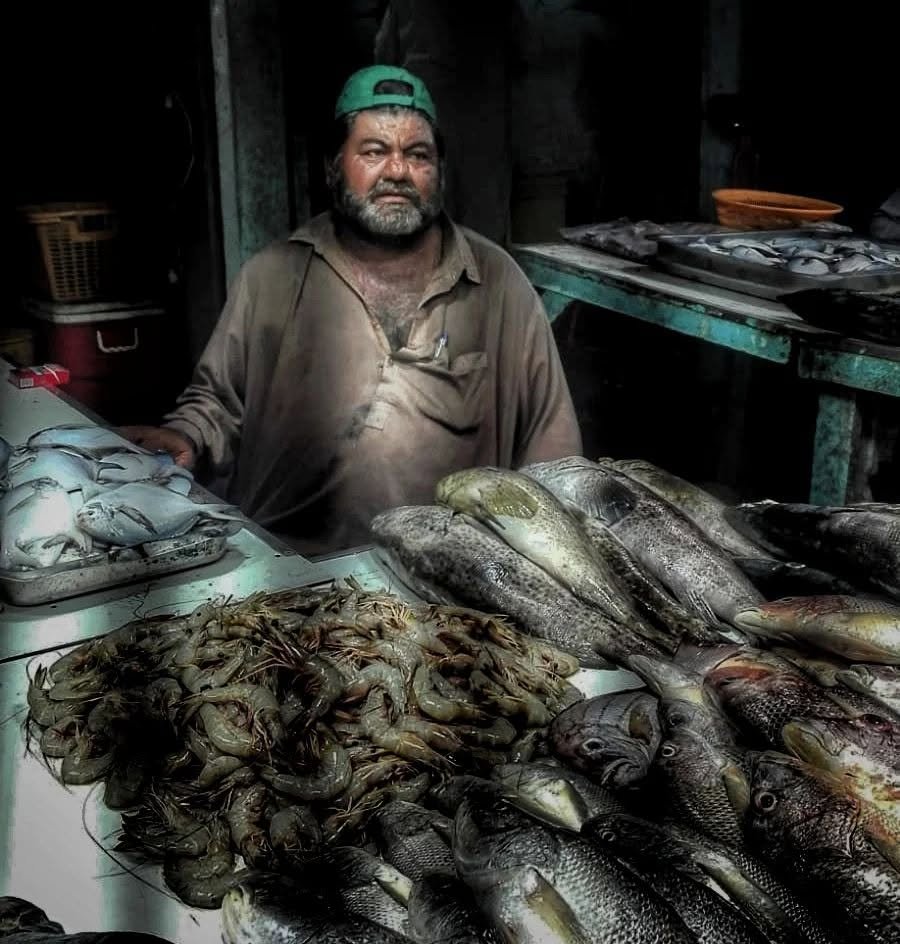
The shop’s objects form a close backdrop to the person within it. Their arrangement gives the scene texture, while the man’s presence gives it a centre. This Karachi portrait stays with the immediate encounter, allowing the working space and its occupant to tell a quiet story together.
115 · A City Moment in Monochrome
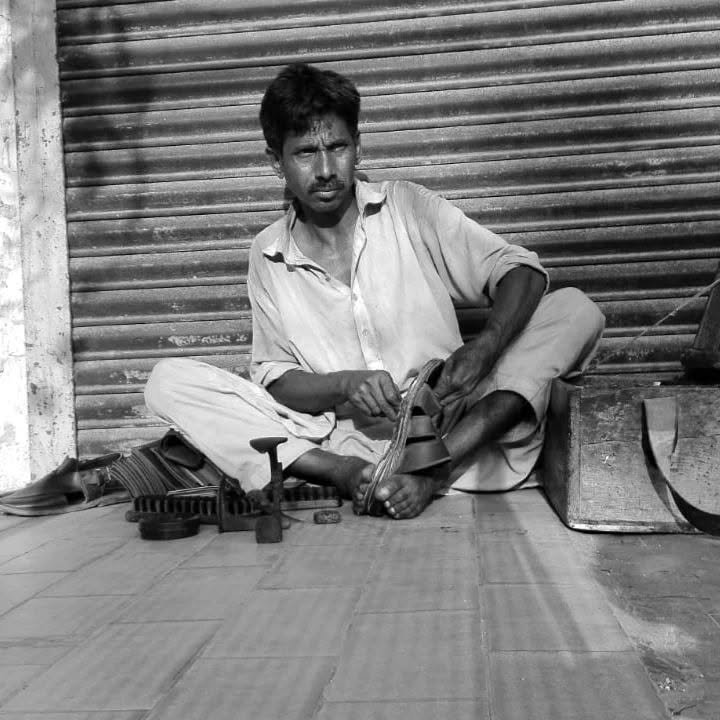
Without colour, the eye turns more readily to expression, posture, and the pattern of light across surfaces. The street’s details remain, but they speak in a different register. This monochrome photograph adds a reflective pause to the Karachi photo essay, letting a small human moment hold the frame.
116 · Wood, Weather, and Work
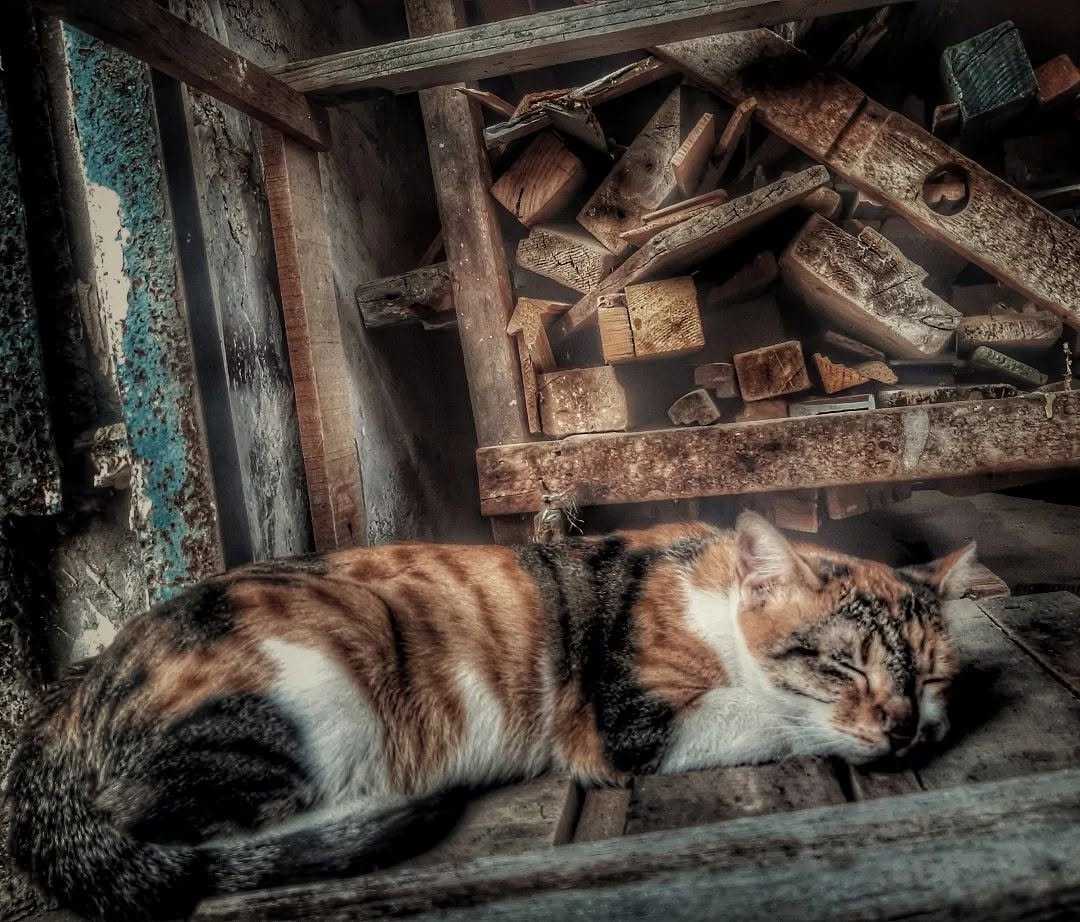
Rough wood and overlapping forms make the image feel almost tactile. The objects suggest a working environment shaped by time, yet the photograph does not need to resolve every detail. Its story is one of surfaces, reminding us that Karachi can be read through materials as well as monuments.
117 · Geometry Above the Palms
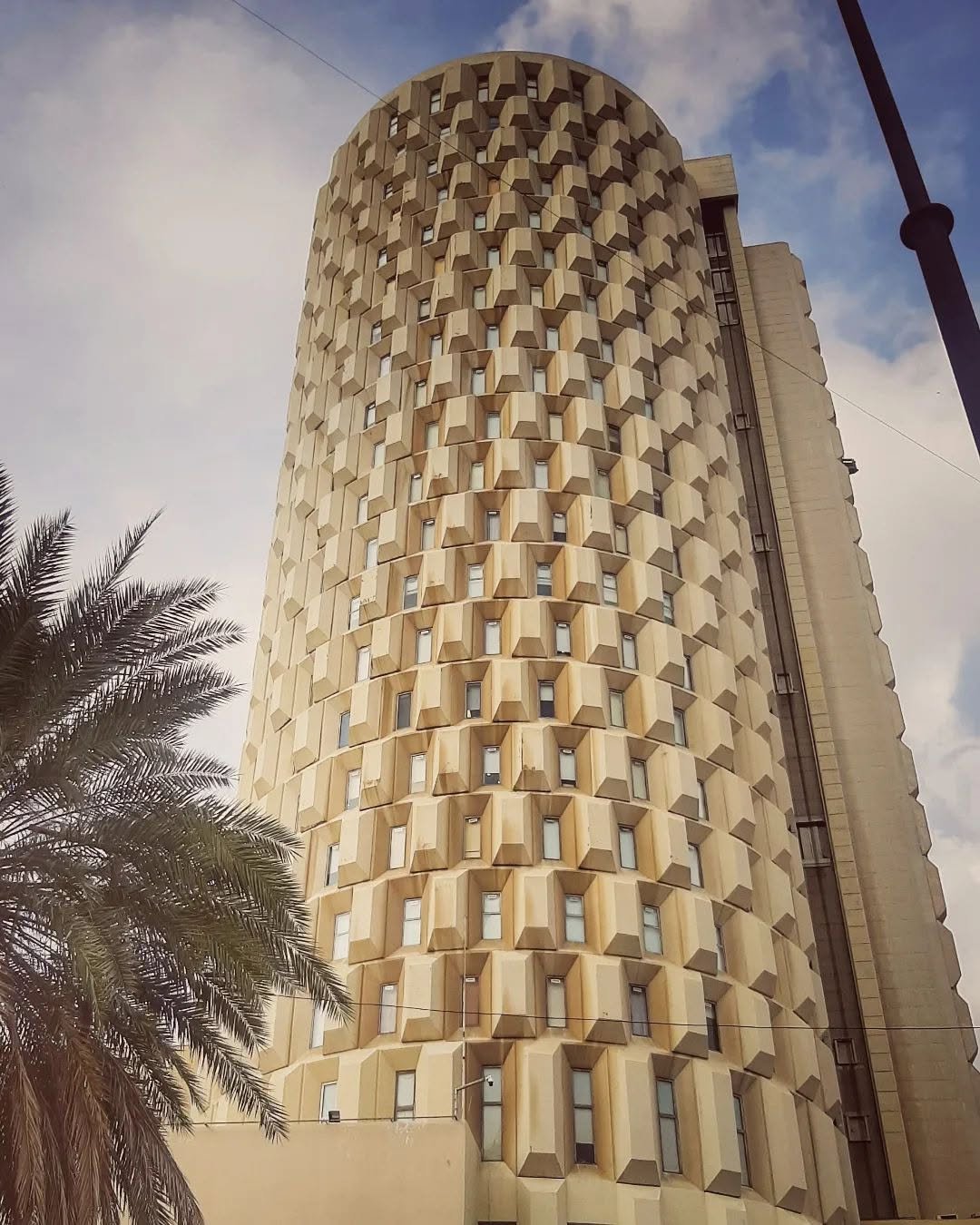
The palms break gently into the tower’s repeating geometry, bringing two very different rhythms into one view. Light and shadow make the facade seem to shift as the eye follows it upward. This architectural photograph finds Karachi between the ordered lines of buildings and the looser shapes of the living city.
118 · Clock and Covered Arches
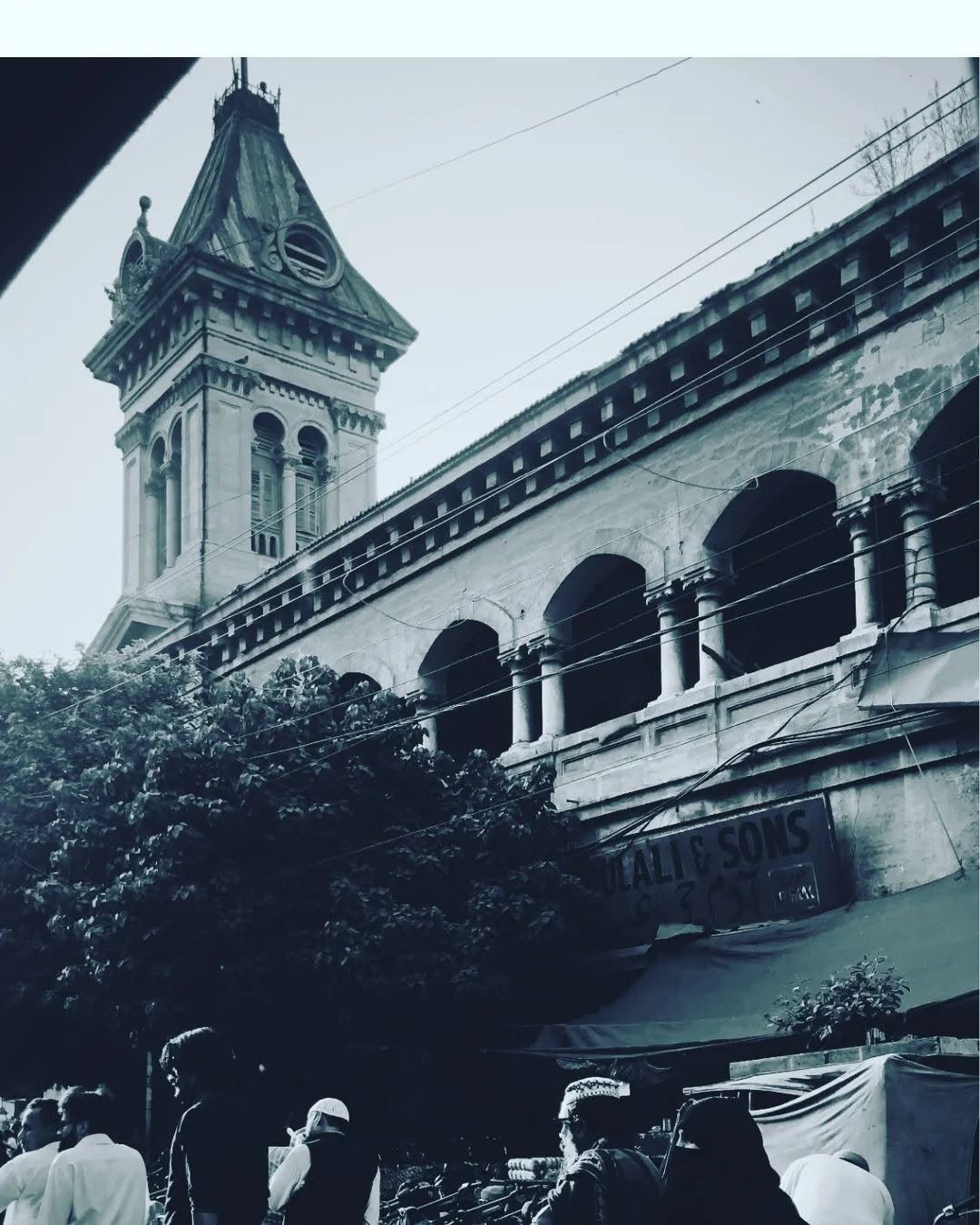
The clock and covered arches give the facade a measured, welcoming rhythm. Dark openings add depth to the pale surfaces, inviting a longer look along the building. This photograph follows Karachi through architecture that helps shape the feeling of a street, even before its exact name is known.
119 · Where the City Meets the Sea
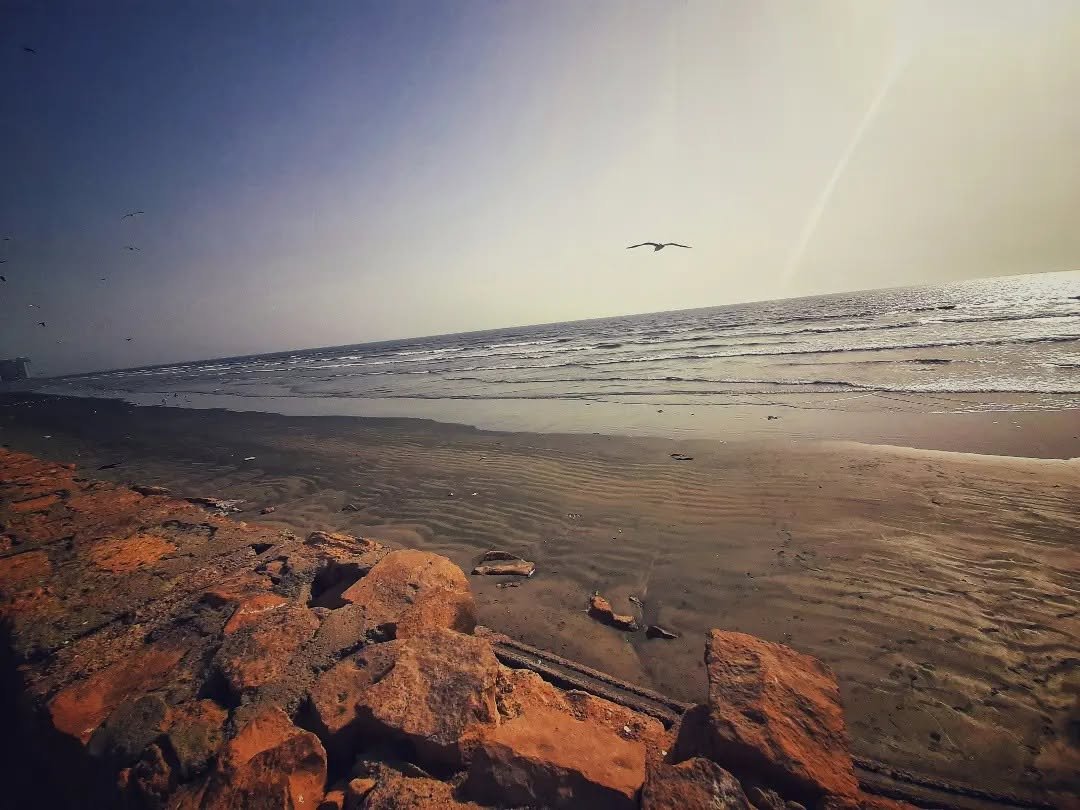
The beach opens the view after the collection’s crowded streets and close details. People appear small beside the long edge of sand and water, giving the coast its sense of scale. Here, Karachi is felt through space, breeze, and the simple pleasure of looking toward an uninterrupted horizon.
120 · The Skyline Softens
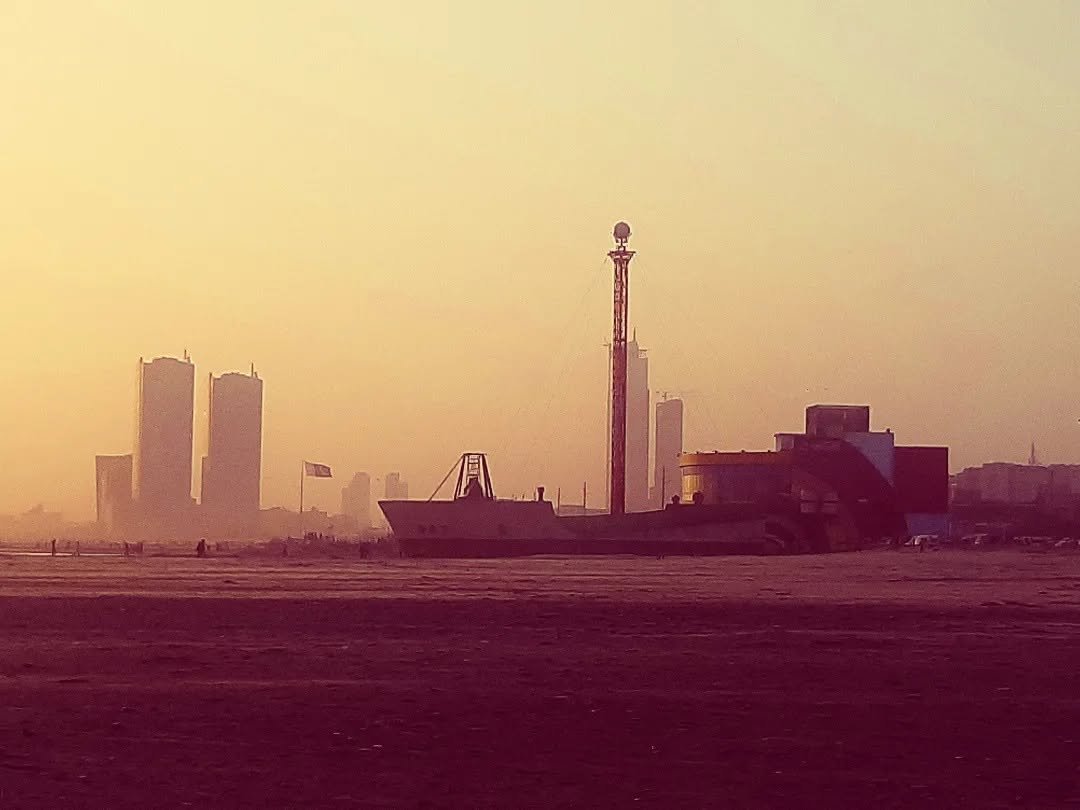
Haze draws the skyline into a gentle arrangement of silhouettes. The buildings become less about individual details and more about the shared shape they make against the light. This photograph lets Karachi settle into the distance, offering a quieter view as the visual journey begins to slow.
121 · Time Framed by the Sky
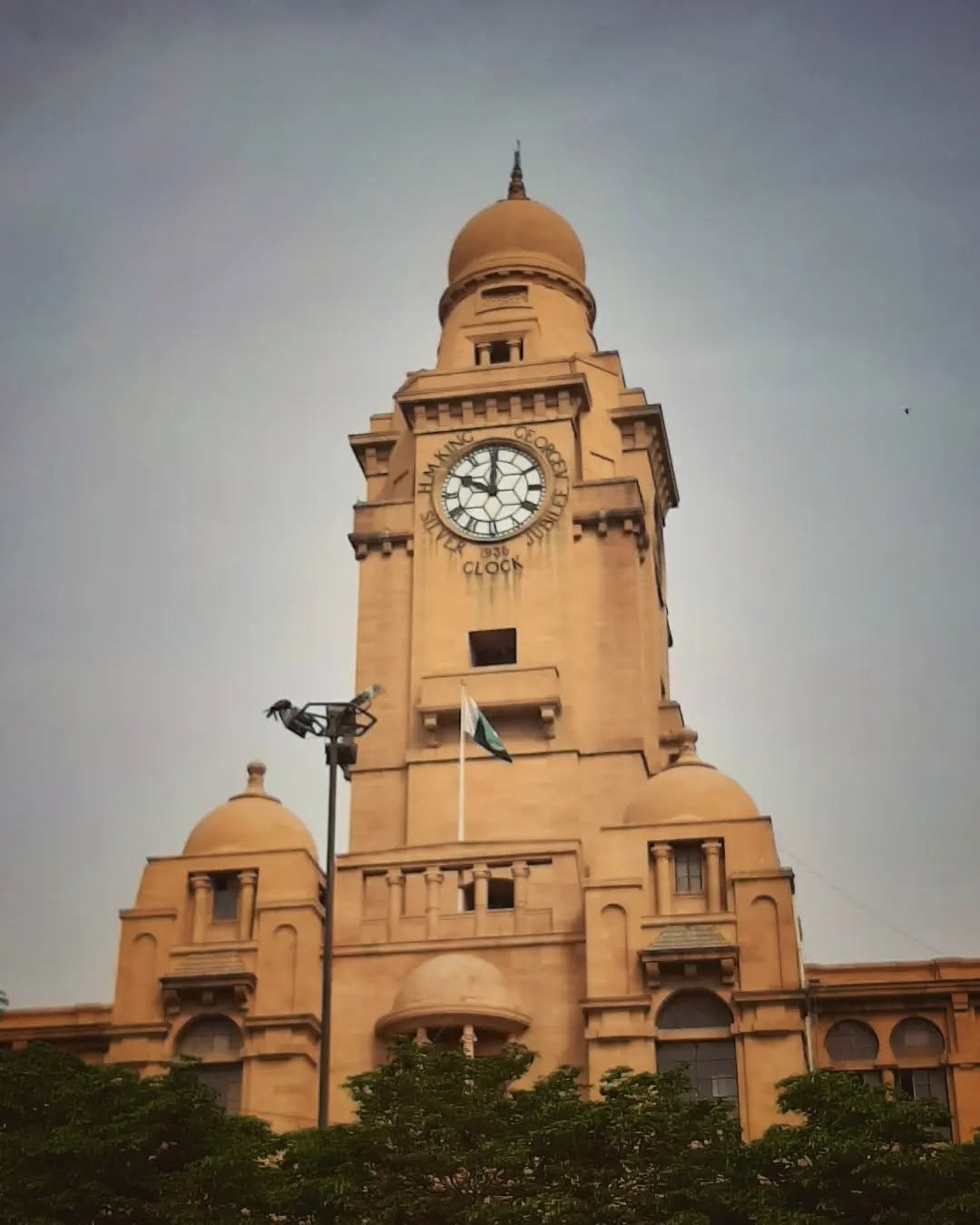
The clock face and pale tower stand cleanly against the sky, with little else competing for attention. The upward view gives the structure a sense of presence and dignity. This Karachi architectural frame finds its beauty through clarity, allowing shape, proportion, and light to carry the story.
122 · Silhouettes at the Shore
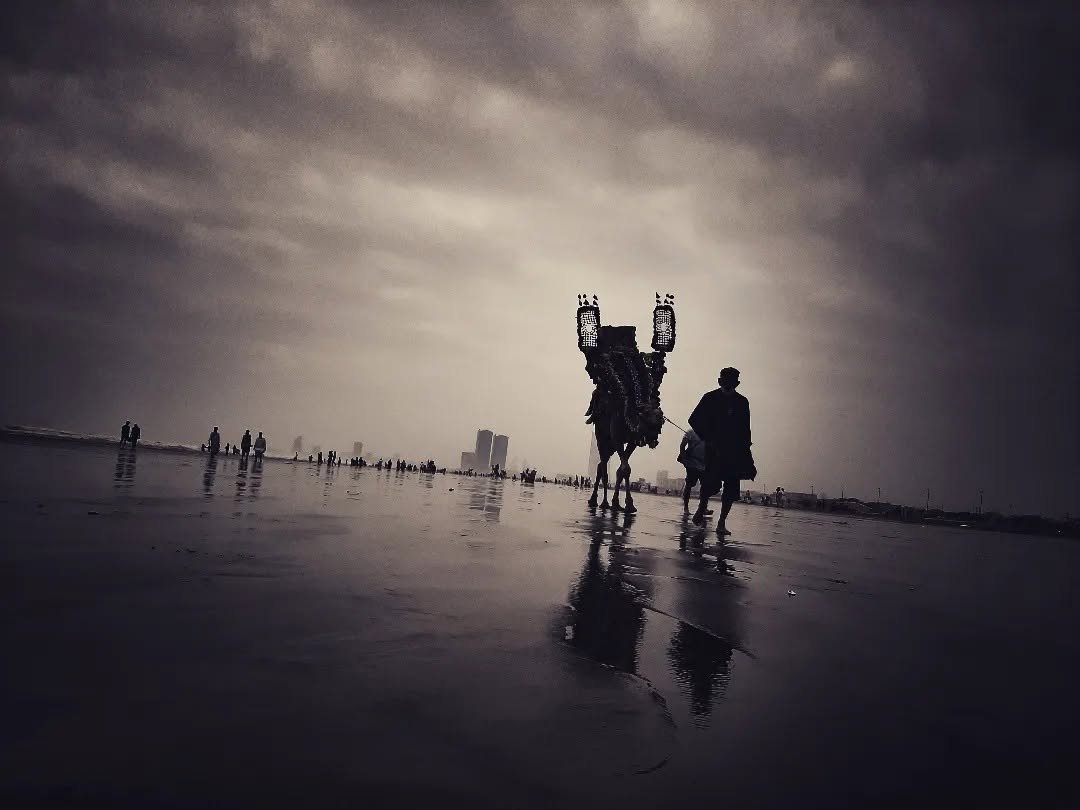
The figures and horses appear as dark shapes against the reflective shore. Clouds add depth overhead, making the scene feel larger than the few subjects within it. This coastal photograph closes the distance between an ordinary outing and an unforgettable view, one of Karachi’s quieter visual gifts.
123 · Blue Beyond the Railing
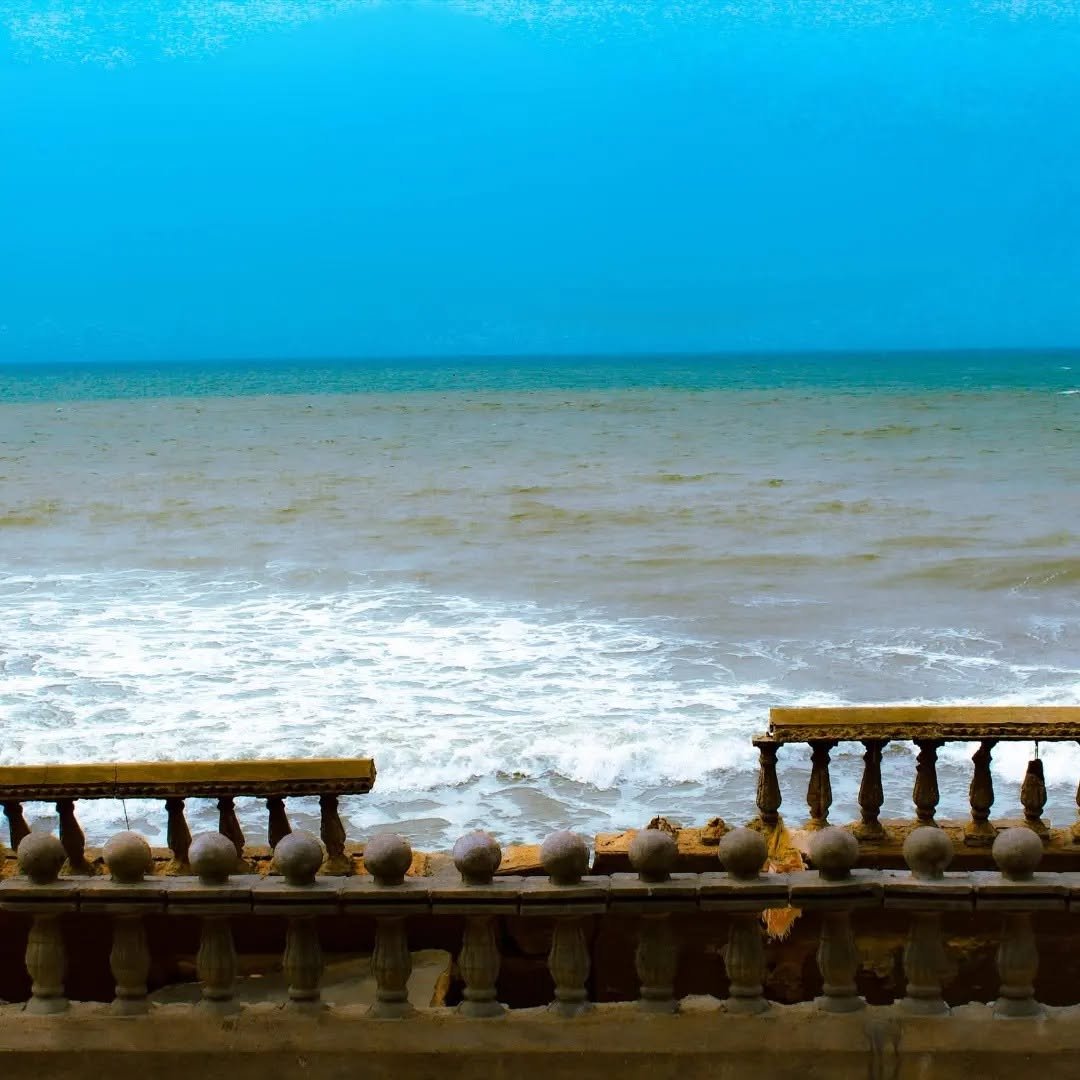
The railing marks a boundary, but the eye moves easily beyond it into bands of blue. Water and sky simplify the frame after the city’s many layered surfaces. This Karachi seafront photograph offers the feeling of taking a breath, with the horizon doing most of the talking.
124 · One More Corner
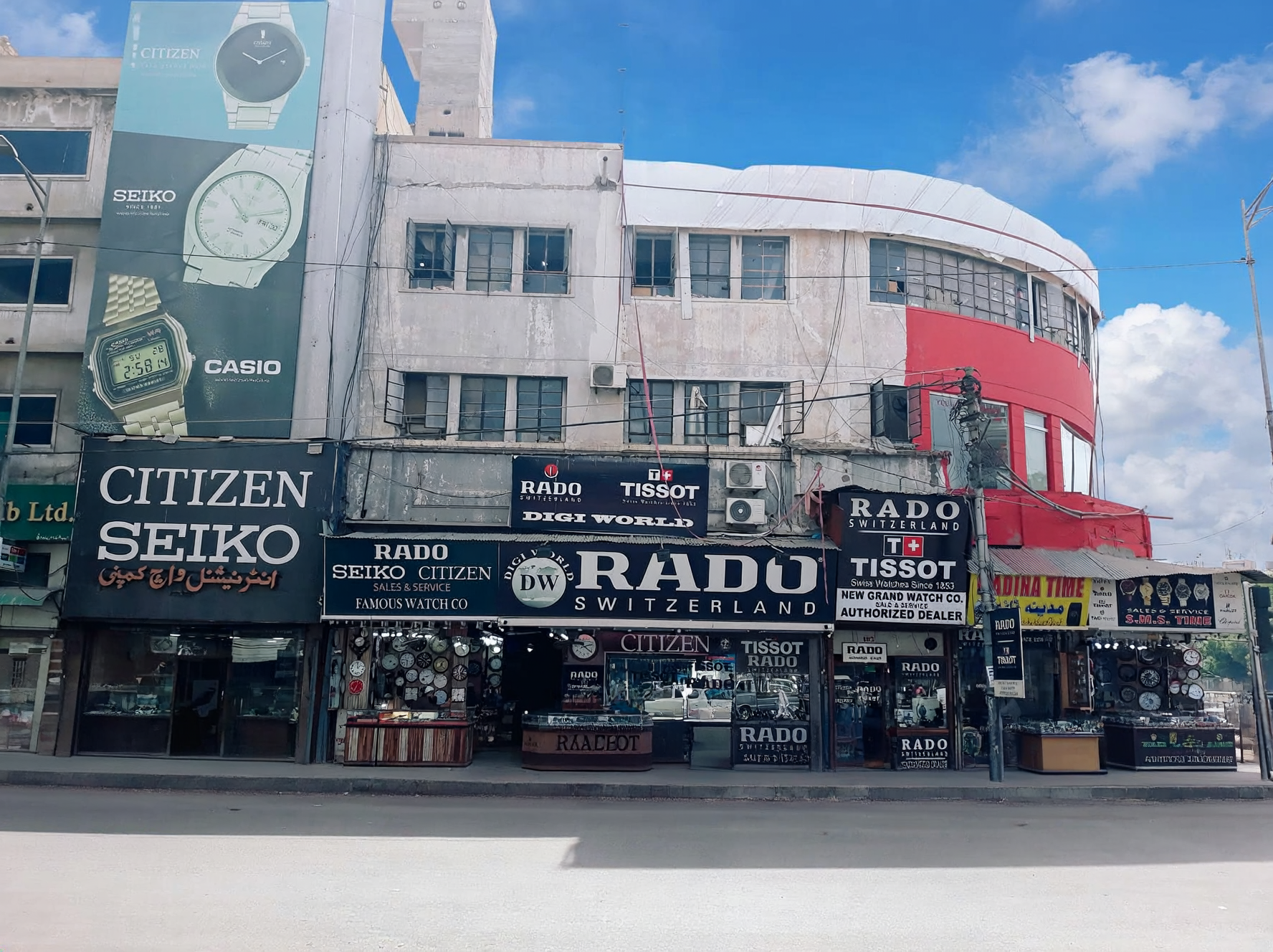
The curved frontage brings several lines of movement together around one recognisable corner. Shops continue below while windows look outward above them. Near the end of the photo essay, this image returns to the city’s everyday fabric, the familiar intersections that hold countless unrecorded stories.
125 · The Stories Carry On
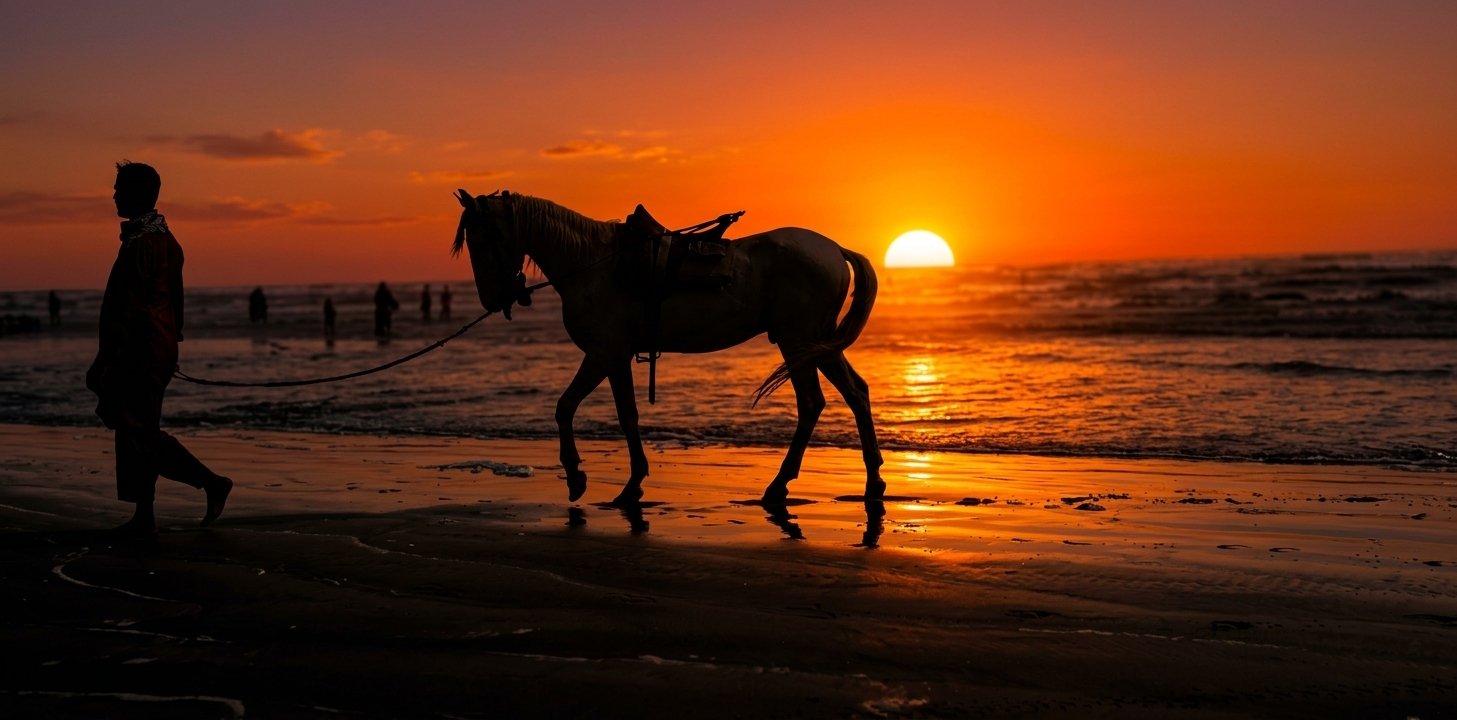
The horse stands dark against the orange light, giving the sunset a strong and simple foreground. Water reflects the last warmth of the sky while the beach becomes a quieter place. The collection ends here, at the edge of Karachi, with the feeling that the city’s stories continue beyond the photograph.
The city beyond the frame
A photograph can hold a moment, but never the whole city. Karachi continues outside these frames: in the next conversation, the next working day, and the light returning to the sea.
Follow the visual journey on Instagram @zeeshanabrar and Facebook zeeshan.abrarulhaq, or explore more visual work by Zeeshan.